Water damage restoration in Malibu and the Westside

We remove the water, dry the structure and repair what it reached. Open 24 hours, every day.

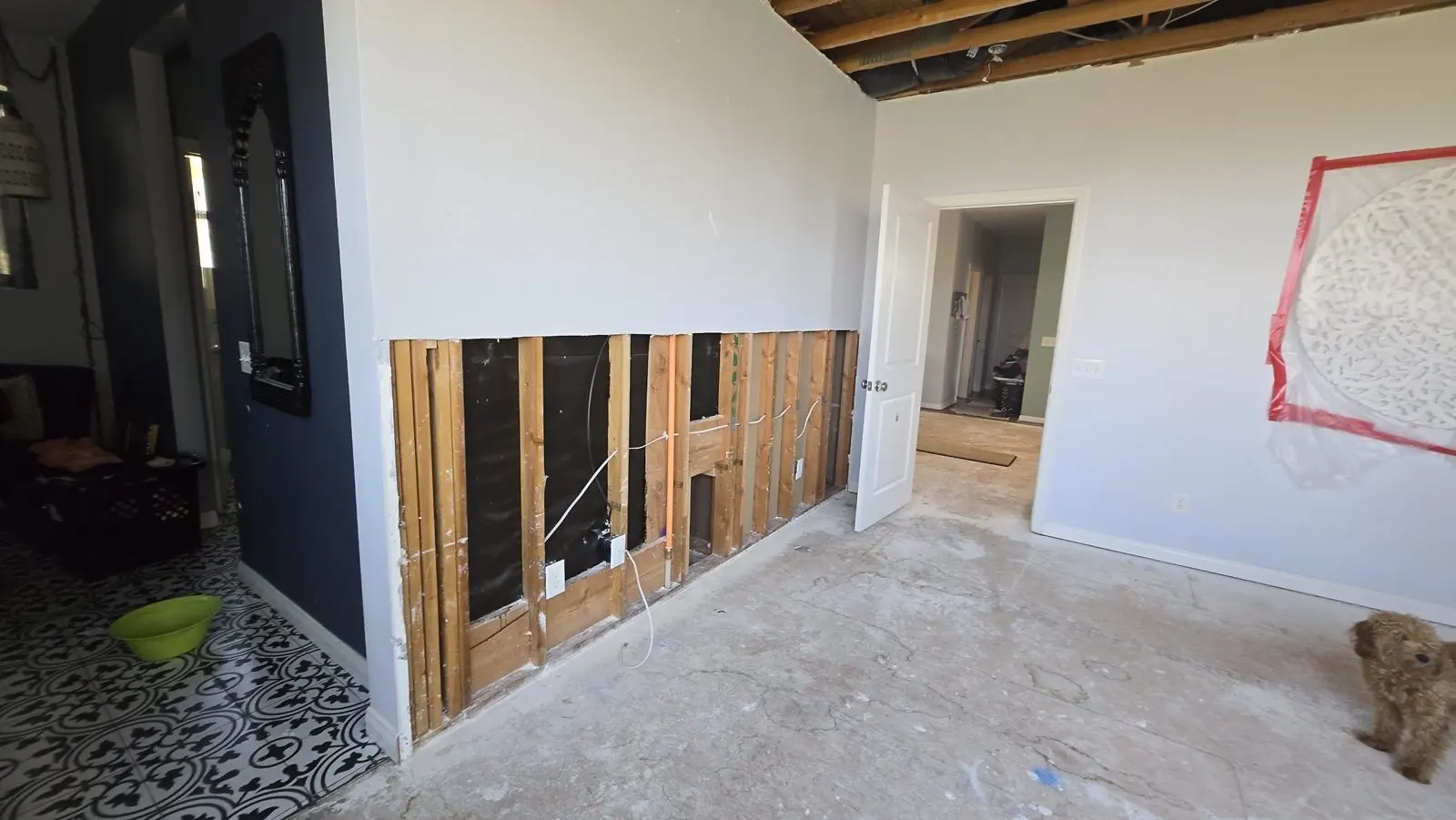
A room with the lower drywall cut away to the studs and the ceiling opened after water damage
24/7 emergency serviceSeven days a week
From cleanup to rebuildOne company for the whole job
Office in Malibu22223 Pacific Coast Hwy

What do water damage restoration and repair involve?

Water damage restoration and repair means looking at where the water came in, extracting it, drying the structure and repairing what it reached. LA Home Restorations does all of it for homes across Malibu, Pacific Palisades, Topanga, Brentwood, Santa Monica and the rest of the Westside of Los Angeles, and the same company can rebuild what has to come out.

The first hours matter most, so structural drying comes before cosmetic repairs. We open a wall or a ceiling when it cannot dry in place, take out what cannot be saved and dry the rest, because moisture left behind new finishes only hides the problem.

Whether the leak came from a pipe, an appliance, or rain through the roof, call us and we will come out to see it, and if you cannot see where the water comes from, we find it with moisture meters and thermal imaging. Near the ocean, morning fog and damp sea air keep the humidity up and wet wood and drywall give up their water slowly, so we dry the structure before the walls and floors are put back. We also document the damage, write our estimate and can bill your insurer directly.

Where the water usually comes from

  • Burst or leaking pipes
  • Appliance and water heater leaks
  • Roof and window leaks in a storm
  • Toilet, sink and shower leaks
  • Water left behind after a fire
  • A stained or sagging ceiling

What we handle after water damage

One company from the first visit to the finished repair.

Call (866) 396-7622
  • Finding the leak

    We find where the water is coming from with moisture meters and thermal imaging, so the repair covers what it reached and not only the stain.

  • Emergency water removal

    We extract standing water and pull wet carpet and pad so drying can start.

  • Structural drying

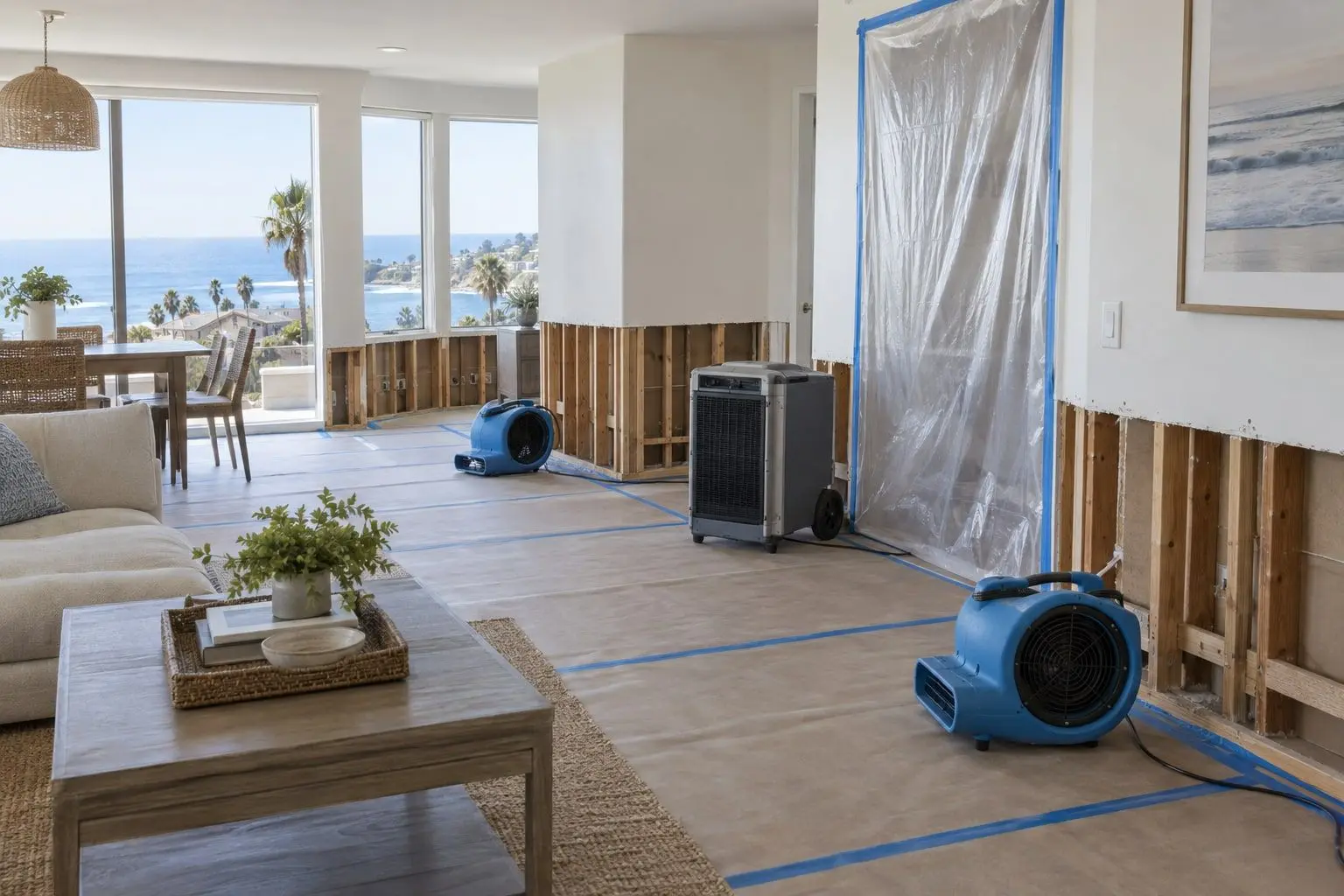
    We dry the walls, floors and ceilings with professional drying equipment: commercial dehumidifiers and air movers, with moisture meters and thermal imaging cameras to check them. Drywall and flooring do not go back in until the materials are dry.

  • Opening what cannot dry in place

    Wet drywall, insulation and flooring that cannot dry in place come out, so moisture is not trapped behind new finishes.

  • Flood, mud and sewage cleanup

    Flood water, mud and sewage or septic backups are dirty water. We clean them up, sanitize what stays and clean the rooms the water reached.

  • Repairs and rebuilds

    We repair what the water reached, from drywall and flooring to the final finishes, and rebuild a room or a floor when the damage is larger.

  • Roof tarping in a storm

    When a storm opens the roof, we tarp it so the rain stays out while the rooms below are dried.

  • Documenting the damage for your claim

    We document the damage, write our estimate and can bill your insurer directly. Coverage is always your insurer’s decision.

What to do right now after a leak

A few safe steps keep the damage from spreading while you wait for us.

After a water leak

Do

  • Shut off the water at the main valve if you can do it safely.
  • Turn off power to wet rooms only if you can reach the panel from a dry floor.
  • Move rugs, furniture and valuables off wet floors.
  • Photograph the water and its source for your insurer.

Don’t

  • Walk into rooms where water reaches outlets or cords.
  • Use a household vacuum to pick up water.
  • Turn on lights or fans under a wet or sagging ceiling.
  • Wait to call. Wet materials dry faster and with less damage when drying starts early.

Based on public safety guidance for homeowners. If anyone is hurt, or water is near live electrical equipment you cannot avoid, call 911 first.

From the first call to a dry, repaired home

Here is how a water damage job goes.

A living room being dried after water damage, with the lower walls opened
  1. You call, day or night

    Tell us what happened. We come out to see the damage.

  2. We remove the water

    We take out the standing water and the wet carpet and pad, so drying can start.

  3. Structural drying

    We open what cannot dry in place, dry the floors, walls and ceilings with dehumidifiers and air movers and check them with moisture meters.

  4. We repair and rebuild

    From drywall and flooring to the final finishes, and a rebuild when the damage is larger.

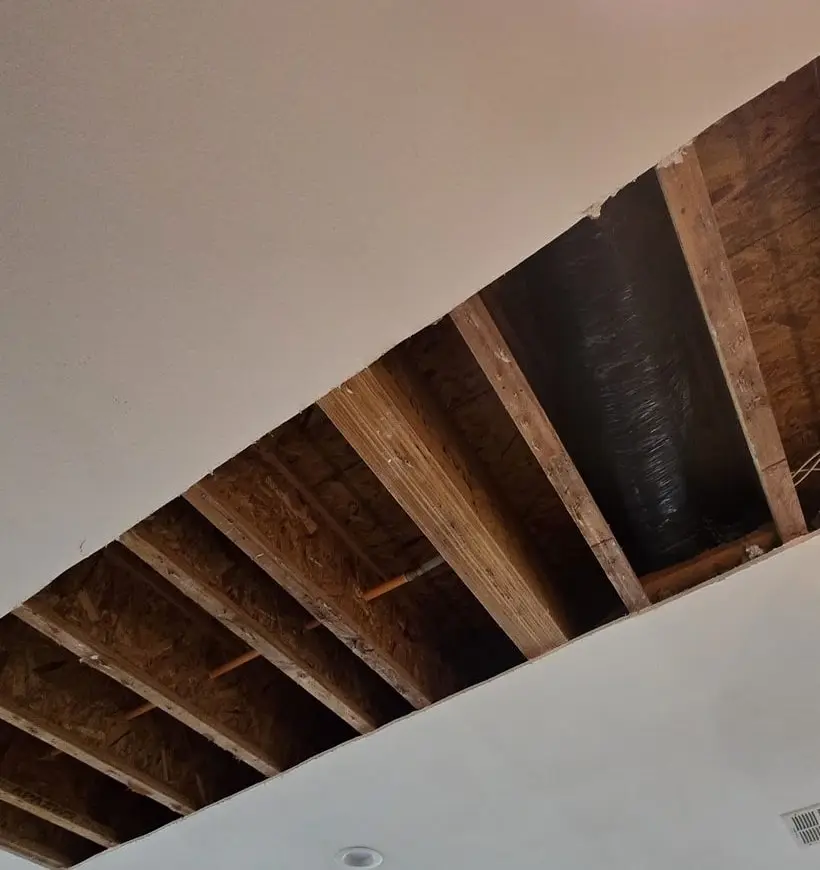
A ceiling opened to the joists so the damage can be inspected

A record of the water damage for your claim

A claim goes better with a clear record of what happened, taken before anything is moved or thrown away.

  • We photograph and write down the damage
  • We write a detailed estimate of the work
  • We can bill your insurer directly

Coverage is always your insurer’s decision. We do not negotiate or settle claims.

Rated 5.0 by our customers on Google

“From the very first call, their team was professional, responsive, and genuinely cared about helping me get my home back to normal.”

Danny W.Water damage

“My second floor and kitchen suffered serious water damage, and LA Home Restorations restored everything. They made the whole process smooth and stress-free...”

Jacob A.Water damage

Water damage restoration across the Westside

  • MalibuSalt air and coastal humidity, and canyon slopes that send water toward homes in heavy rain
  • Pacific PalisadesRebuilds in progress and surviving homes below burned slopes
  • TopangaCanyon homes near Topanga Creek, where roof leaks and burst pipes meet damp canyon air
  • BrentwoodHomes in Mandeville and Sullivan Canyons, on the county’s burn-area storm forecast
  • Santa MonicaOcean-side homes with morning fog and a rainy season from late October to late March

We also serve Calabasas, Agoura Hills, Westlake Village, Woodland Hills, Tarzana and Encino.

See all service areas

Common questions

Straight answers to what people ask most after a leak.

How fast can water damage turn into mold?

Mold can grow on wet drywall, carpet and wood soon after the water gets in, so drying should start as soon as possible, even before repairs. If water has been sitting longer and mold has already grown, we remove it as part of the job, as our mold remediation page explains.

How is water damage remediated?

We find where the water came from, remove it, dry the structure and open what cannot dry in place, clean the rooms the water reached and then repair or rebuild what it damaged. Each step comes before the next, because new finishes over a wet wall only hide the problem.

What is the difference between water damage restoration and water damage repair?

Restoration is the whole job: looking at where the water came in, extracting the water, drying the structure and cleaning the rooms it reached. Repair is the last part, putting back the drywall, flooring and finishes that had to come out. We do both, so the company that dries the home also repairs it.

Do you handle water damage in Malibu?

We are open 24 hours, every day, and our office is at 22223 Pacific Coast Hwy in Malibu. We serve Malibu, Pacific Palisades, Topanga, Brentwood and Santa Monica, and also Calabasas, Agoura Hills, Westlake Village, Woodland Hills, Tarzana and Encino. We come to your home to see the damage and tell you what the work involves.

What if the water came through the ceiling from upstairs?

Water from a bathroom or a pipe upstairs can run along the joists and come down away from where it started. Keep out from under a ceiling that sags and call us. We open the ceiling where it cannot dry in place and dry the space above it before the ceiling is put back.

Can water damage be hidden behind walls and ceilings?

Yes. Water can travel inside walls, under floors and above ceilings before anything shows. A stain, a soft spot, bubbling paint or a musty smell can mean wet materials behind the surface. If you see one of these signs, call us and we will come out to see the damage.

Can you dry my home without tearing out walls?

Sometimes. Whether a wall, ceiling or floor can dry in place depends on what it is made of and how long it has been wet. We look at each area before deciding what to dry and what to remove, and we tell you why.

Do you repair the damage after drying?

Yes. The same company that dries the structure also repairs what the water reached, from drywall and flooring to the final finishes, so you do not need to hire a second contractor.

How long does it take to dry a house after water damage?

It depends on the materials, how long they were wet and the weather. We check the walls and floors with moisture meters as they dry, and drywall and flooring do not go back in until the readings say the materials are dry, because new finishes over wet material trap the water.

How much does water damage restoration cost?

It depends on how much water got in, how long it sat and how much drywall, flooring and cabinetry has to be replaced. We give you an estimate after we see the damage.

Request an estimate

Tell us what happened and how to reach you. We will call you back to set a visit.

For an emergency, call now(866) 396-7622
Call nowEstimate