In Malibu, where kitchens often open to sweeping decks and ocean views, a cooking mishap can spread its impact far beyond the stovetop. Even a contained flare-up on a gas range can send a fine, protein-based film through adjacent rooms, while smoke drifts into soffits, pantries, and ceiling cavities. I’ve stood in homes off Malibu Road where cabinets looked unscathed yet carried a persistent odor, and in houses above Las Flores Canyon where the ventilation hood pulled smoke deep into ductwork. Repairing fire damage after a kitchen incident is as much about understanding how that residue behaves as it is about replacing what’s visibly charred. The right approach to fire damage restoration returns not just the look of your kitchen, but the clean smell and easy rhythm of how you use the space every day.
Kitchen fires are unique. They produce residues—especially from proteins and cooking oils—that can be nearly invisible while releasing a strong, stubborn odor. These films bond tightly to painted surfaces and the undersides of cabinets, and they streak if cleaned with the wrong solution. Left untreated, they continue to release odor whenever the room warms, a frustrating surprise weeks after the flames are out.
First priorities after a kitchen fire
Once the area is safe, we stabilize the space. We shut down the HVAC to keep residue from spreading, set up air filtration, and establish pathways that protect surrounding flooring. Any charred materials that release odor are removed early, along with unsalvageable foodstuffs and compromised packaging in the pantry. Documentation begins immediately so that you have a clear record for insurance and a roadmap for the repair sequence.
Appliances are assessed next. The range and hood are obvious candidates for inspection, but microwaves, dishwashers, and even refrigerators can hold residue in gasket folds and ventilation slots. We determine what can be cleaned and restored and what should be replaced, coordinating with you so functionality returns as soon as practical.
Understanding protein fires and the right way to clean them
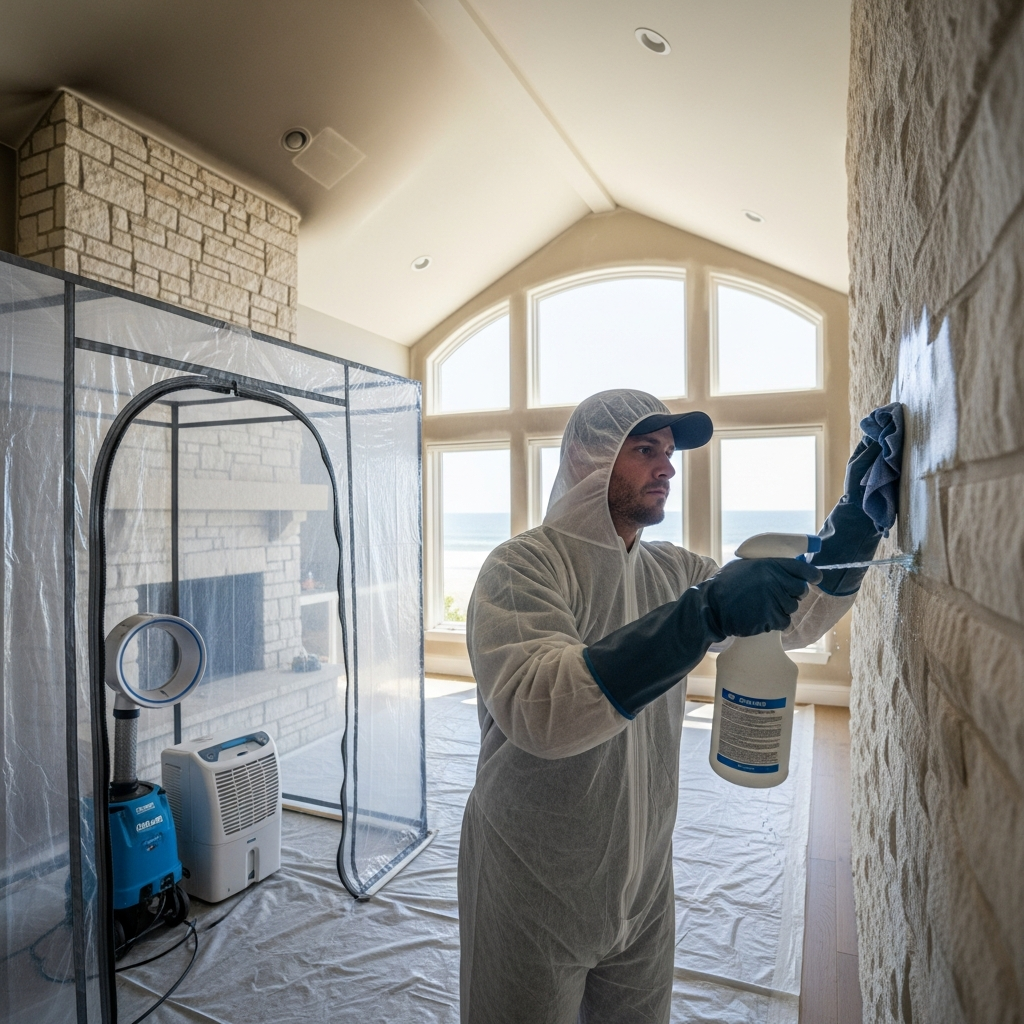
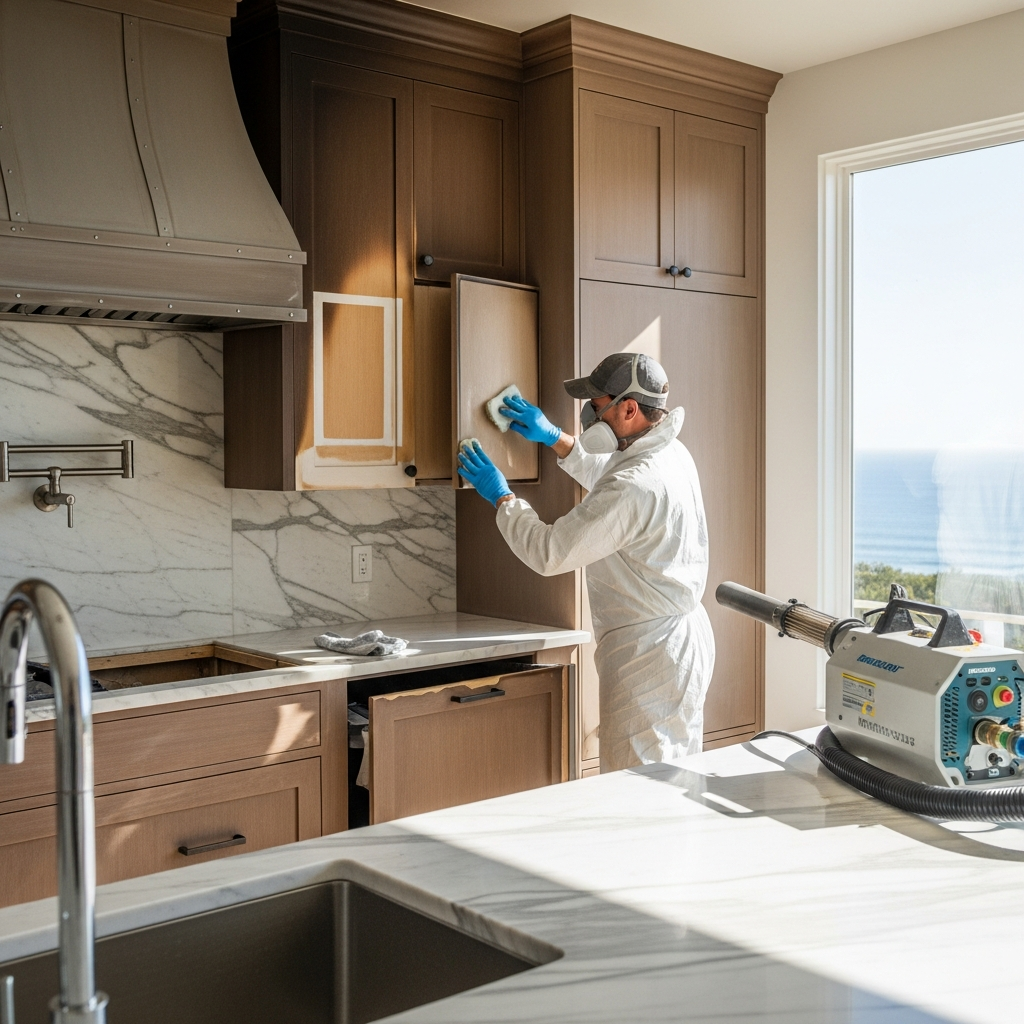
Protein residue clings tenaciously and resists ordinary cleaners. We test-clean small areas to confirm the right detergent mix for your specific finishes. On painted walls, a carefully balanced alkaline solution breaks the film without damaging the sheen. On wood cabinetry, we use staged cleaning with neutral products and, if needed, follow with a light refinish to restore luster. Stone counters—particularly marble—require gentle, non-acidic methods to avoid etching; meanwhile, stainless appliances are cleaned with products that lift residue without scratching.
Ceilings and upper cabinets often show the least visible soiling but hold the strongest odors. Warm air rises, drawing smoke to the highest points, where it cools and deposits a nearly invisible layer. Cleaning from the top down, including light fixtures and the tops of cabinet boxes, is essential to fully clear the scent.
Ventilation systems and hidden pathways
Kitchen ventilation hoods and their ductwork can become reservoirs for odor. Grease traps capture residue that later re-releases scent when the fan runs. We remove and clean filters, open accessible duct sections where possible, and coordinate specialized cleaning when runs are long or inaccessible. If smoke traveled while the HVAC was operating, returns, grills, and nearby ductwork are inspected and addressed to prevent spreading odor to rooms that seemed unaffected.
Cabinet toe-kicks and the cavities behind built-ins hide residue that simple wiping can miss. We remove toe-kick faces when appropriate and vacuum out soot and dust with HEPA filtration before wet cleaning. Pantries with wire shelving require meticulous attention to every surface to ensure no sticky film remains to scent dry goods later.
Repairing finishes with respect for your kitchen’s character
Not every surface needs replacement, and thoughtful repair preserves continuity. Where doors or drawer fronts have heat damage, we color-match finishes and replace selectively. Islands with mild smoke exposure may be restored with cleaning and a light re-oil rather than a full refinish. Backsplash grout that holds odor is cleaned and, if necessary, re-sealed. The aim is always to restore a kitchen that feels like yours, not a space that looks redone without your home’s familiar warmth.
Flooring choices in Malibu kitchens range widely, from wide-plank oak to large-format stone and resilient materials. Each responds differently to heat and cleaning. We lift soot without grinding it into wood grain, and we avoid acidic products on natural stone. Rugs and runners are removed for appropriate off-site care, with special attention to salt air and sunlight exposure that may have already affected dyes.
Water, humidity, and avoiding secondary issues
Suppression efforts—whether a portable extinguisher or the fire department’s response—introduce moisture. We measure and dry affected areas quickly, focusing on subfloors, the cavities behind base cabinets, and any drywall that wicked up water. In Malibu’s coastal environment, lingering dampness can invite microbial growth, so a disciplined drying plan protects the integrity of adjacent rooms as well.
We also check for delamination in countertops exposed to heat, especially at seams near cooktops. Adhesives can soften under high temperatures, and catching that early prevents future failures after the kitchen returns to daily use.
Odor removal done thoroughly
After source removal and detailed cleaning, we apply targeted deodorization. Hydroxyl generators are a strong option for occupied homes, and thermal fogging can reach into cabinet cavities and framing voids when needed. Soft goods—window treatments near the kitchen, seat cushions on adjacent built-ins, and even placemats and table linens—are treated or laundered so they don’t reintroduce odor the day you move back into the space.
Homeowners often notice a turning point when the kitchen stops smelling like the fire and starts smelling like the sea or evening air again. That moment arrives when hidden sources are cleared and the film is fully broken down. It’s the surest sign that you can start thinking about cooking in comfort again.
Working smoothly from cleanup to repair
Sequencing matters. We coordinate trades so that painting, minor carpentry, and appliance work dovetail rather than collide. The goal is to minimize downtime—especially important when the kitchen anchors family routines. Communication keeps everything aligned and avoids re-cleaning or backtracking that adds days to the process.
Throughout, we respect that this is your home, not just a project. Protecting adjacent rooms, maintaining clean pathways, and keeping you informed mean the work feels manageable rather than overwhelming. That calm method is the hallmark of skilled fire damage restoration in Malibu’s distinctive homes.
Frequently asked questions
Why does my kitchen still smell smoky after it looks clean?
Protein residues from cooking cling to surfaces and can be almost invisible. If a film remains—especially in warm areas like upper cabinets and near lights—odors persist. Thorough cleaning with the right chemistry and targeted deodorization remove what your eye can’t see but your nose detects.
Do I need to replace my ventilation hood and ductwork?
Not always. Many systems can be restored by cleaning or replacing filters, degreasing accessible duct sections, and treating remaining runs. We assess case by case and coordinate specialized services when needed to ensure the system won’t reintroduce odors.
Can countertops and cabinets be saved?
Often they can. Wood cabinetry typically responds well to staged cleaning and, where needed, light refinishing. Natural stone counters are cleaned with non-acidic solutions, and seams are checked for heat-related adhesive issues. Replacement is reserved for items with deep heat damage, warping, or persistent odor after treatment.
Is it safe to cook again before repairs are finished?
It’s best to wait until deodorization is complete and surfaces are fully cleaned, especially the hood and nearby cabinetry. Cooking too soon can warm remaining residue and release odors again. We help you determine a safe moment to resume normal use.
How long do kitchen fire repairs usually take?
Scope dictates timing. A smaller incident can be addressed in days to a couple of weeks, while larger repairs that include finish replacements and paint can extend several weeks. Clear sequencing and communication keep momentum steady.
What about food safety after a kitchen fire?
Any open food, items in permeable packaging, or goods exposed to heat should be discarded. Sealed items near the heat source are assessed carefully; if there is any doubt, safety comes first. Pantries are cleaned thoroughly before restocking to ensure fresh food doesn’t pick up residual odors.
If your kitchen has been disrupted by smoke, heat, or a stubborn odor that won’t let go, we are here to help you restore not just the space, but your daily rhythm. Reach out for a tailored plan, and we will coordinate cleaning, deodorization, and repair until your kitchen welcomes you back with confidence. For careful planning and proven fire damage restoration methods designed for Malibu homes, connect with us today and let’s bring your kitchen back to life.