24 Hour Fire Damage Restoration in Malibu, California
When a fire event interrupts a Malibu night, help cannot wait until morning. The coastline sleeps lightly—waves break, winds shift, fog rolls in—and a damaged structure changes with every passing hour. Soot settles deeper into porous finishes, firefighting water begins its quiet work on hardwoods and drywall, and unsealed openings invite in salty marine air. True 24-hour response means skilled people and the right equipment arriving when you need them, whether it is 2 a.m. in the Malibu Colony or dawn in the canyons above Latigo. It means moving swiftly from assessment to action so the home stabilizes and the next day does not bring new problems. Around here, round-the-clock fire damage restoration is as much about local know-how as it is about speed.
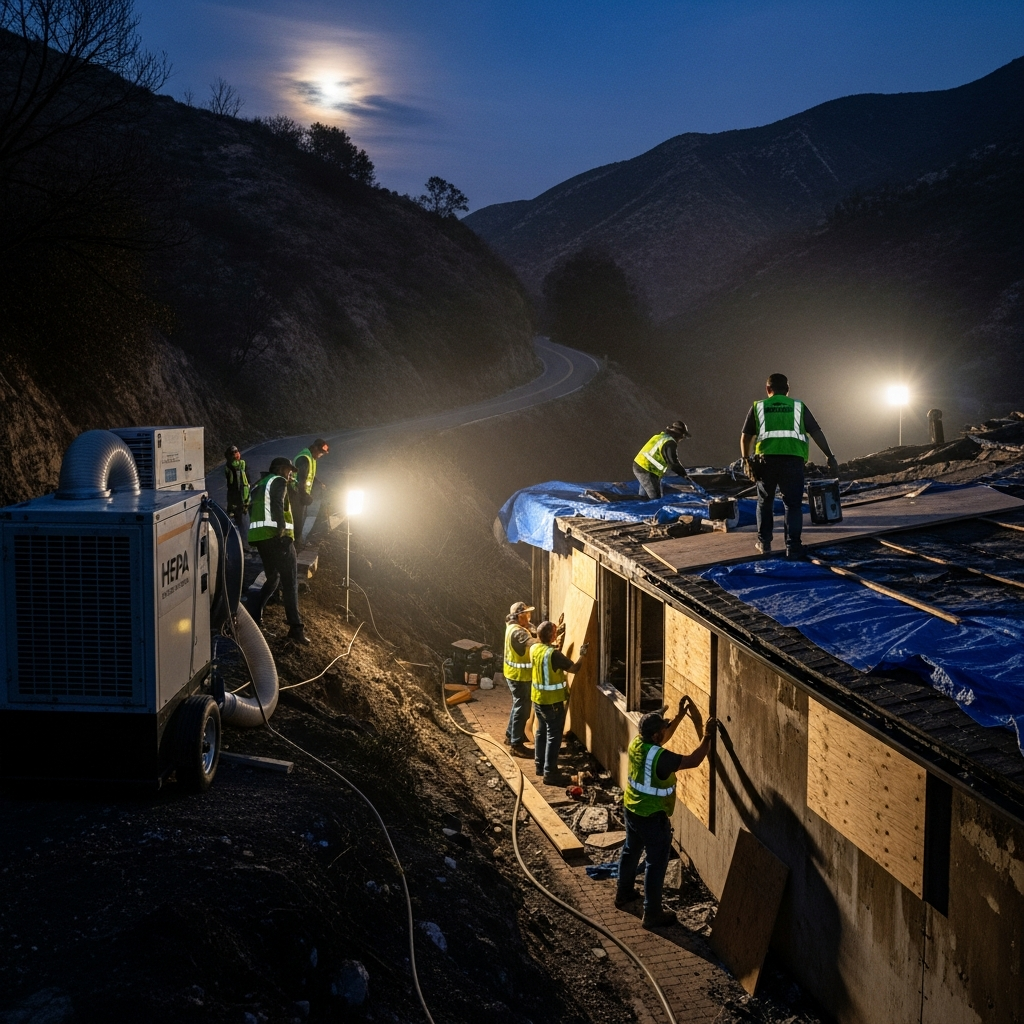
Night operations call for a particular kind of discipline. Lighting, safety perimeters, and coordination with first responders come first. Crews document conditions thoroughly—photographs, moisture readings, and initial inventories—because what you see at 3 a.m. may look very different by mid-morning. Temporary power brings key systems online for drying and filtration, while utilities are checked and isolated where needed. Roof tarps are secured against coastal gusts, and board-ups are built to withstand not only weather, but also the occasional curious coyote or raccoon. The goal is to convert a vulnerable structure into a controlled environment within hours, not days.
Why the First Hours Matter
The chemistry of soot and the physics of moisture make time-critical choices unavoidable. Soot can be acidic, and on metal fixtures or electronics, that corrosivity accelerates with humidity. Firefighting water seeps into joints and subfloors, and in Malibu’s cooler evening air, drying slows. Swift extraction, dehumidification, and air movement stop the spiral toward swelling, cupping, or microbial growth. Meanwhile, HVAC systems—especially those that ran during the event—can pull fine particulates deep into ducts, so isolating returns and replacing filters early is standard practice. When these steps happen overnight, the morning brings containment zones already established, air scrubbers humming steadily, and a space ready for deeper work.
Communication is another piece of the 24-hour puzzle. Homeowners are often away during late-night incidents or returning from evacuation. Clear, calm updates—what has been secured, which areas are safe to enter, where sensitive items have been staged—go a long way toward restoring a sense of control. For many families, there is also an immediate decision to make: remain in the home with partial occupancy, or relocate temporarily. A thoughtful team will outline what each option looks like, including noise windows for extraction and cleaning, privacy considerations, and how to safeguard remaining belongings.
From Mitigation to Methodical Cleaning
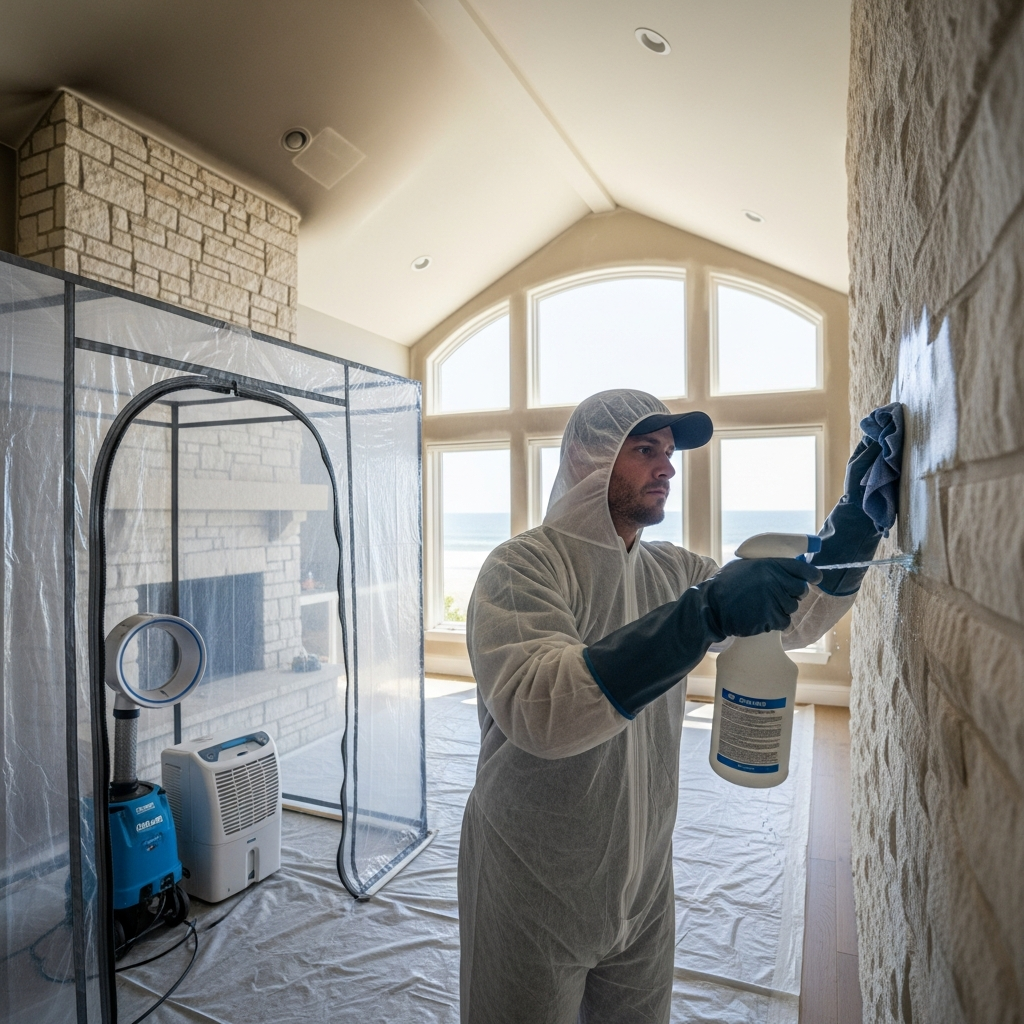
Once the site is secure and stable, 24-hour service shifts into the steady cadence of restoration. Soot removal begins with testing and classification: dry soot may lift with specialized vacuums and delicate brushes, while wet or oily residues require targeted chemistry to avoid smearing. Protein residues from kitchen fires demand different tactics than the fine particulates carried on Santa Ana winds during a broader wildfire. Malibu homes commonly feature natural stone, custom millwork, and designer finishes, each of which reacts differently to cleaning agents. Choosing the right method preserves the texture and tone of these materials while eliminating residues and odors.
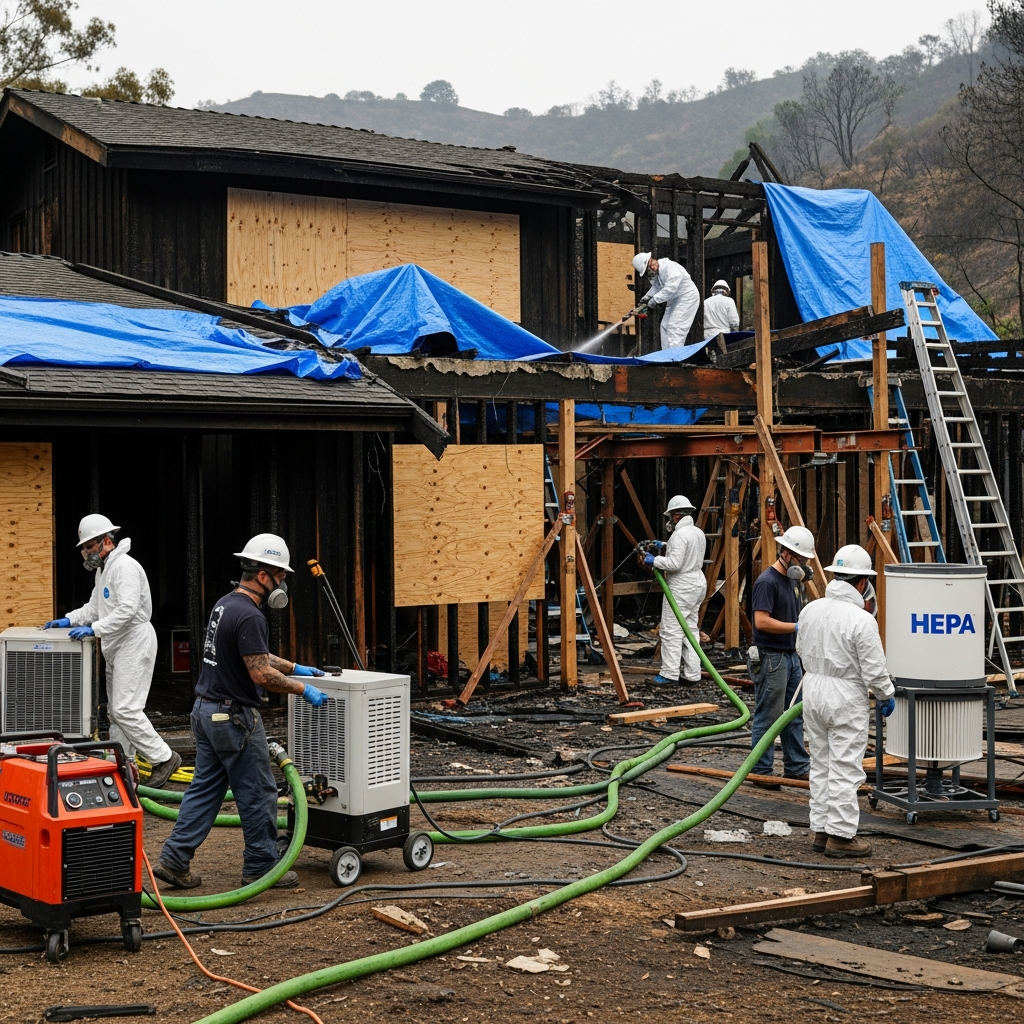
Odor control launches in parallel. HEPA filtration, negative air containment, and, when appropriate, hydroxyl generators or controlled thermal fogging attack odors at the molecular level. In night operations, maintaining occupant comfort is especially important; solutions are selected with sensitivity to sleeping areas and ventilation. Textiles—area rugs, bedding, draperies—are evaluated for on-site treatment or pack-out to a controlled facility. Electronics receive priority because corrosive soot can silently shorten their life if left unaddressed.
Local Realities: Access, Weather, and Permitting
Malibu brings its own logistical realities to 24-hour response. Narrow canyon roads, PCH closures, and coastal fog shape how crews stage equipment and move debris. A well-prepared team anticipates these factors—arranging parking on tight cul-de-sacs, securing materials for high winds, and coordinating morning deliveries to avoid commuter backups. Even in emergency mode, thinking ahead to permitting and inspections pays dividends. If reconstruction will require structural work or exterior repairs in environmentally sensitive zones, early coordination shortens timelines later.
Homes along the shore face enhanced corrosion risks from salt air, so metal fixtures, appliances, and HVAC components are top-of-list for early evaluation. In hillside properties with large spans or vaulted ceilings, structural assessments and safe access solutions (scaffolding, lift equipment) are planned early to keep cleaning moving without cross-contamination. A 24-hour mindset means not only arriving fast, but also anticipating the challenges of the next twelve and twenty-four hours, then acting before they appear.
Protecting What Makes a Home Yours
In the middle of the night, small gestures matter. Covering a beloved table before setting equipment nearby, boxing family photos before a draft can carry soot across them, or isolating a nursery so the morning routine can continue—these choices are part of genuine 24/7 care. Contents are inventoried as they are moved, with condition notes and photographs that follow each item through cleaning and deodorization. For antiques, artwork, and instruments, specialty partners are engaged early to stabilize finishes and fibers. Malibu’s creative community relies on these details; an artist’s studio or a carefully tuned instrument collection deserves the same round-the-clock precision as a structural beam or a slate roof.
Electronics and smart-home systems require particular attention. Soot particles can bridge delicate circuits, and moisture can set the stage for corrosion. With temporary power established, controlled cleaning and testing happen promptly, along with detailed documentation to support future service. A thoughtful approach to these systems ensures that when the lights return and the network comes back online, the home’s brain is as healthy as its bones.
When Wildfire Smoke Reaches the Coast
Malibu knows too well that fire is not always a house fire. Regional wildfires push smoke and ash miles beyond the flames, and onshore winds can pull them into coastal neighborhoods. In those events, 24-hour restoration focuses on indoor air quality, surface decontamination, and preventing long-term odor absorption. Attics, crawl spaces, and mechanical rooms often hold the heaviest residues, so they are cleaned and sealed methodically to avoid recontamination. For families returning from evacuation late at night, arriving to pre-set filtration and a plan for staged cleaning turns an overwhelming homecoming into a manageable one.
Throughout, documentation supports clarity. When work begins at midnight, detailed notes and photographs ensure the morning team picks up seamlessly. Homeowners receive updates that translate the technical into the practical—what has been done, what is next, and why it matters—so decisions can be made with confidence even when sleep is scarce.
Choosing a True 24/7 Partner
Not every company that answers a phone after hours operates with a true 24-hour playbook. Look for signs that the team is ready for night work: well-lit mobile rigs, safety gear for low-visibility conditions, containment materials that withstand wind, and technicians trained to work quietly and respectfully while households rest. Ask how they handle contents at odd hours, whether they can establish temporary power, and how they coordinate with neighbors in close-knit communities. The best partners understand Malibu’s rhythms and treat your home as a place to be cared for, not merely a project to be completed.
Most importantly, the right team blends urgency with craftsmanship. Speed without precision risks spreading soot or missing hidden moisture; precision without speed allows small problems to grow. When both come together, the morning after a fire looks different: a protected structure, a plan in motion, and a path back to normal that feels steady underfoot. In the thick of it, that balance is the difference between reacting and truly restoring.
FAQ: 24-Hour Fire Damage Restoration
Q: How fast can crews arrive in Malibu after hours?
A: A true 24/7 operation can mobilize within hours, often faster depending on location and access. Night response includes lighting, safety perimeters, and immediate stabilization so the site is protected before dawn.
Q: Is night work as effective as daytime restoration?
A: Yes, when crews are trained and equipped for it. Night work focuses on stabilization—water extraction, containment, tarping, and initial cleaning—so daylight hours can be devoted to deeper cleaning and repairs without losing time.
Q: Can I sleep in the home while work happens overnight?
A: Often, yes. Technicians can stage equipment away from bedrooms, manage noise windows, and create containment zones to maintain indoor air quality. Your comfort and safety guide the plan.
Q: What happens to my valuables during an overnight response?
A: High-priority items are inventoried, boxed, and moved to protected areas or off-site facilities as needed. Chain-of-custody and condition notes follow each item so nothing is misplaced or damaged.
Q: How are odors managed immediately?
A: Early HEPA filtration and targeted odor treatments begin right away. Source removal is the foundation; as residues are cleaned, molecular-level deodorization prevents odors from rebounding.
Q: What makes Malibu different for 24/7 response?
A: Coastal humidity, salt air, canyon winds, and access challenges demand planning and equipment tailored to local conditions. Teams that know Malibu anticipate these realities and keep work moving smoothly at all hours.
Ready for Help Any Hour, Any Day
If a fire has upended your plans—tonight, this weekend, or at first light—reach out to a local team that treats urgency with care and precision. From board-ups to air quality control and the first deep clean, the work can begin immediately and continue seamlessly into the day. Start your recovery now with expert fire damage restoration support, and let a steady 24-hour response turn disruption into a clear, confident path home.