Fire does not wait for business hours, and in Malibu, neither should restoration. From late-night kitchen flare-ups to wind-driven embers that settle silently after midnight, the first hours shape everything that follows. Around here, we measure response not just by speed but by relevance—knowledge of canyon access routes, awareness of coastal humidity swings, and respect for the architectural nuances that define local homes. The moment firefighters give the all-clear, a calm, methodical plan should begin. That plan draws on proven fire damage restoration methods adapted for Malibu’s marine climate and hillside neighborhoods, activating day or night so that safety, cleanliness, and comfort can return as quickly as possible.
Twenty-four-hour service is not merely an answering machine and a promise to call in the morning. It is boots on the ground, tools in hand, and decisions made in real time. It is knowing when to board a window and when to shore a roofline, how to isolate power safely in salt-exposed panels, and where to look for hidden water that can cause tomorrow’s problems. Whether your home sits close to the surf or up a winding road above Las Flores Canyon, night operations demand planning that respects the property and the people in it.
The First Night: Stabilization With Care
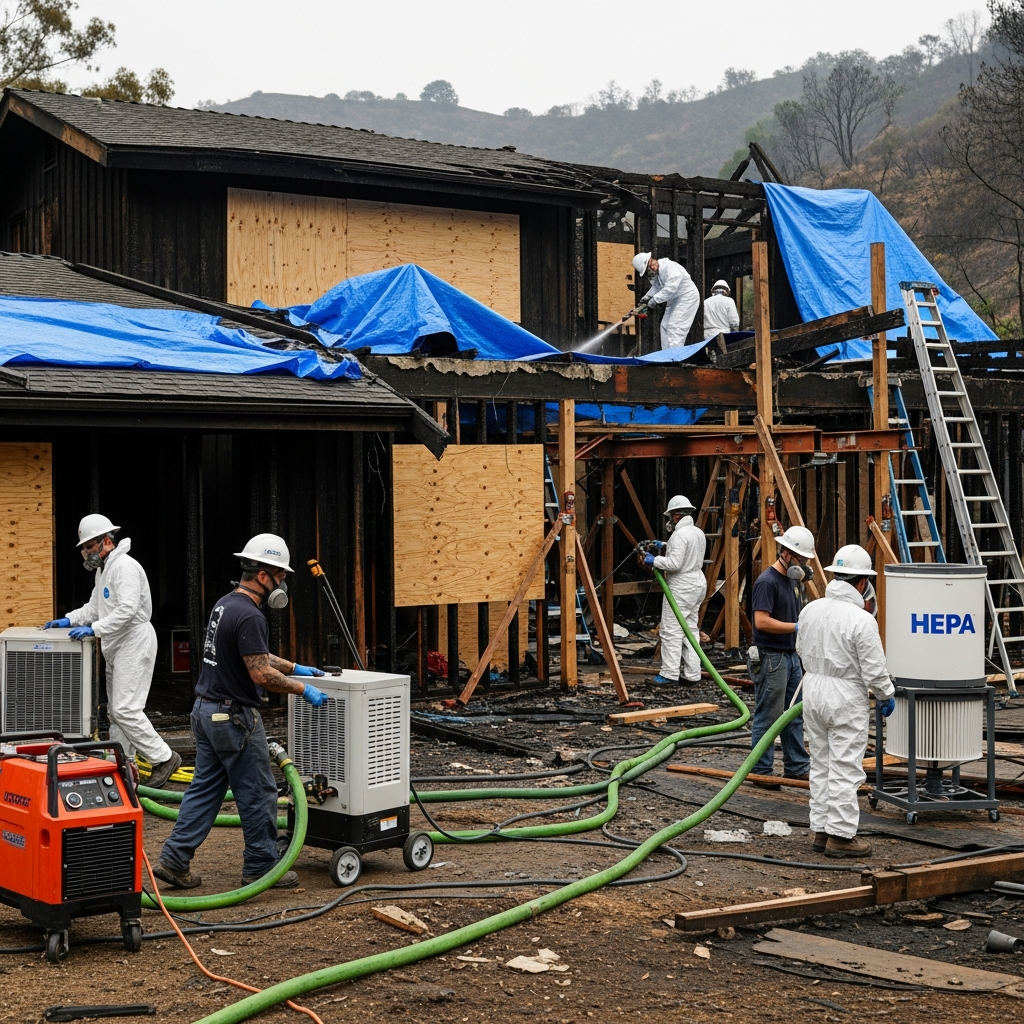
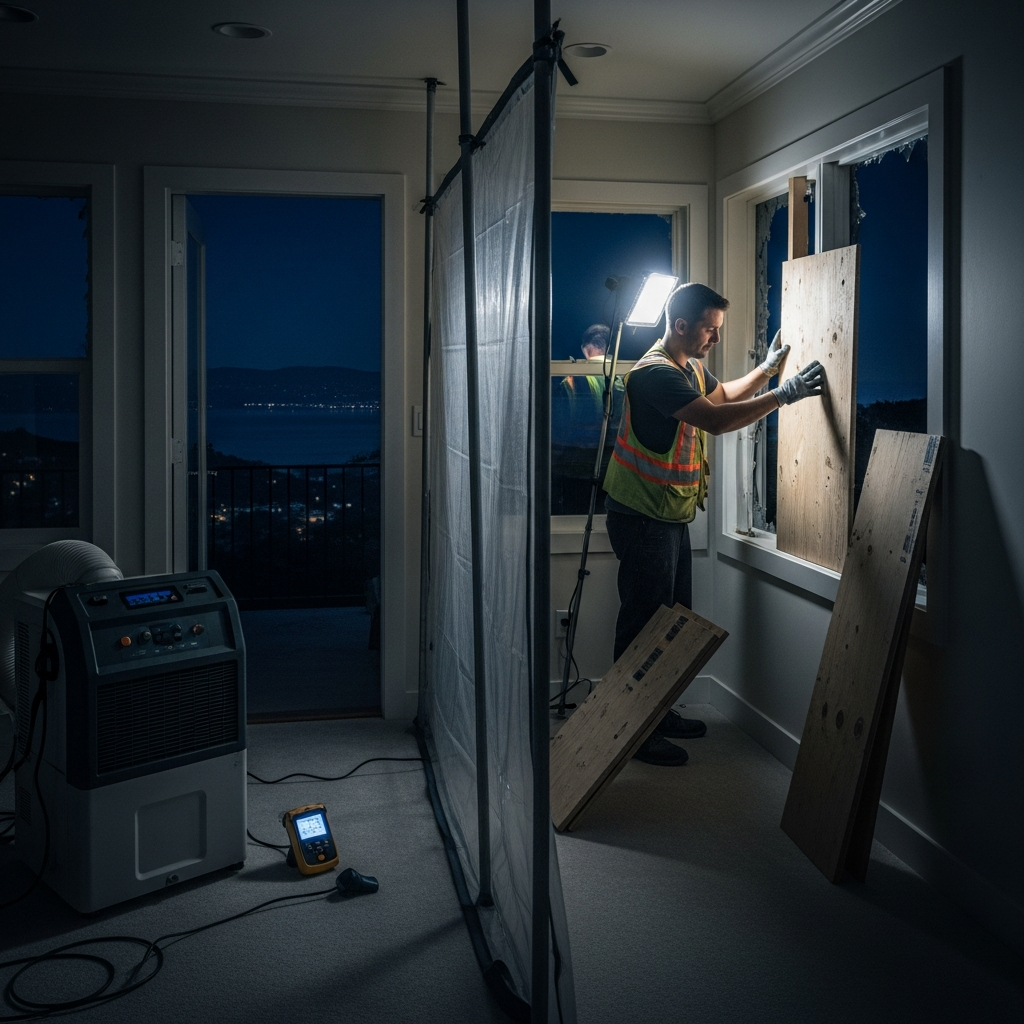
When we arrive after hours, we begin with a safety and structural assessment. Flashlights reveal what daylight will confirm: the shape of heat exposure across framing, the way smoke has tracked across ceilings and walls, and any movement in doors or windows that suggests structural stress. We secure the property—board-ups, temporary tarps, and shoring if needed—so the home is weather-tight and protected from intrusion. Firefighting water is extracted immediately, and dehumidification begins to prevent swelling, warping, and microbial growth. In Malibu’s climate, that moisture control is pivotal; coastal air can keep surfaces damp longer than you might expect.
We also start documentation right away. Photos, readings, and notes taken at night are invaluable for insurance and for planning the next day’s work. This nighttime record captures conditions before anything is moved, showing true soot patterns and water lines that guide efficient cleanup.
Nighttime Smoke Control: Quiet Work With Big Impact
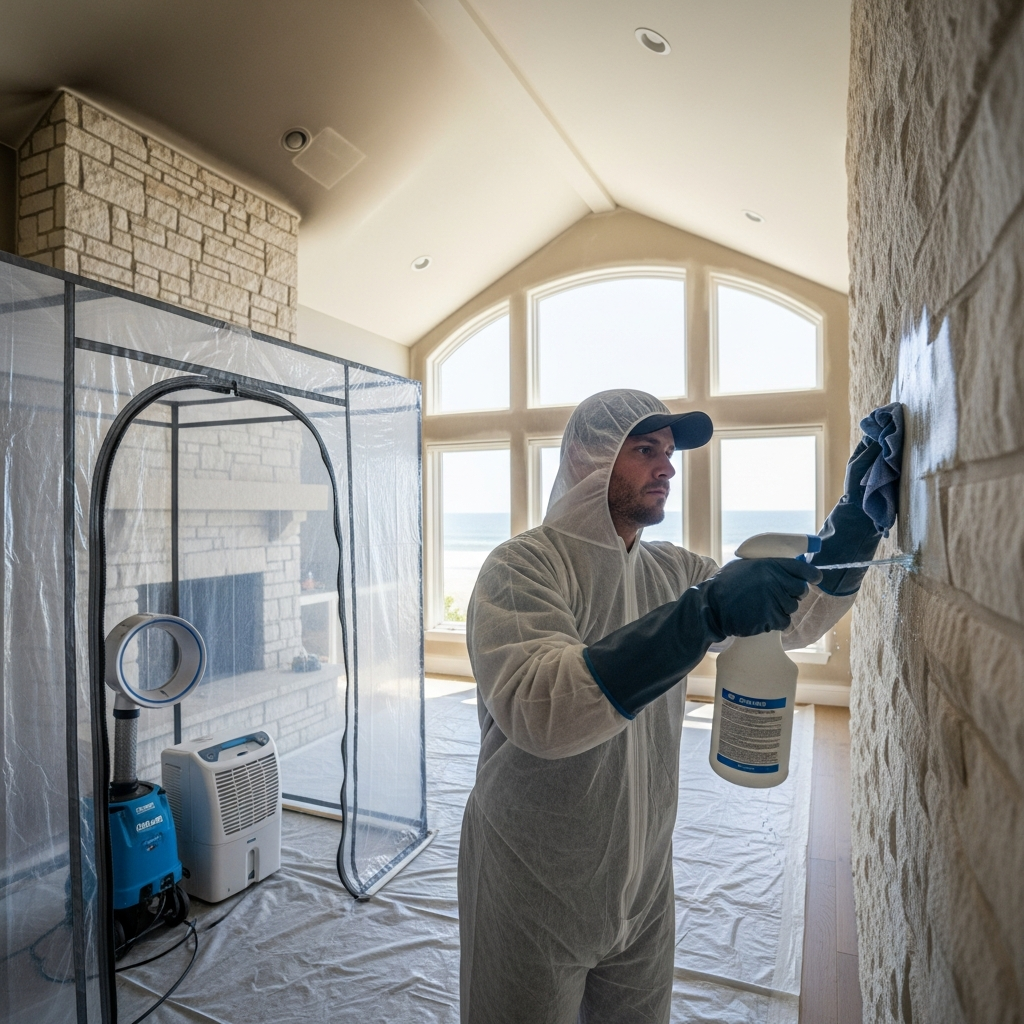
Even in the small hours, there are steps that transform tomorrow’s workload. We set up containment to prevent soot drift as doors open and close. HEPA air filtration reduces particulates, improving air quality for families who remain on site. Priority surfaces—stainless steel, glass, and plumbing fixtures—are wiped and stabilized to stop corrosion, a must in the marine layer that often settles before dawn. Odor source removal may begin in limited zones, especially in kitchens where protein smoke is present. These early actions create a safer, cleaner start when daylight returns.
For families with children, pets, or older adults, nighttime comfort matters. We carve out a clean, quiet zone—a bedroom or den—sealed from the rest of the home so that everyone can rest. It is a small thing with a big emotional impact, especially after a long and difficult night.
From Night to Day: Seamless Handoffs
At sunrise, the project shifts from triage to a measured, comprehensive plan. We meet you on site, walk the home, and outline next steps. Cleaning proceeds in a logical order, from HEPA vacuuming to dry sponging and then wet methods matched to surfaces. Soot removal is paired with moisture management so that drying curves stay gentle for hardwood and plaster. Malibu’s mix of materials calls for material-specific care; what is right for a contemporary stucco home off PCH differs from a wood-forward cottage above Zuma.
As the day unfolds, contents are sorted. Salvageable items are cleaned or packed out for specialized care in a controlled environment. Electronics are evaluated; textiles follow tailored deodorization and cleaning methods. We pay close attention to areas where smoke travels invisibly—attics, crawl spaces, and HVAC systems—so that odor does not return later.
Repair Begins With a Clean Slate
True 24-hour restoration implies momentum. By the end of the first full day, the home should be stable, drying evenly, and moving into active soot removal and odor control. Only then do repairs start. Structural members are evaluated for charring and heat impact; where replacement is needed, we proceed cleanly, sealing adjacent materials so new work bonds well. Drywall repair, paint, and finish carpentry follow, timed so that no trade contaminates another’s completed area. In Malibu’s climate, this choreography is critical for both quality and speed.
HVAC cleaning may begin early in the timeline to prevent reintroduction of particulates into cleaned spaces. Ducts are addressed with negative air machines, and filters are swapped in stages to capture any lingering particles as work progresses. Coastal homes receive added inspection of metal components for corrosion risk, and protective coatings may be used post-cleaning to extend equipment life.
Communication That Respects the Hour
During night operations, communication must be clear and calm. We explain what is happening now and what will happen next, so that at 2 a.m. you have real answers, not guesses. We establish a contact routine—morning updates, midday check-ins, and end-of-day summaries—so you always know where the project stands. When insurance representatives enter the picture, our documentation is already organized, with photos and readings time-stamped from the first night to support decisions swiftly.
We also coordinate with Malibu’s permitting framework for repairs that require it. While permit offices observe daytime hours, our planning anticipates the submittals and inspections that will be needed, allowing essential cleaning and stabilization to proceed while longer-lead repairs queue up.
Odor Neutralization for Coastal Conditions
Smoke odor is stubborn under a marine layer. The secret to lasting results is to remove the sources, treat the air and cavities properly, and apply sealers only after neutralization is verified. We schedule follow-up checks aligned with typical humidity swings—morning marine layer, afternoon burn-off—to confirm that odors do not reappear. In kitchens affected by protein fires, we target cabinets, paints, and ventilation upgrades to eliminate the most persistent smells and prevent recurrence.
Midway through most projects, homeowners can feel the difference. The house smells neutral, the air is clearer, and progress is visible room to room. At that juncture, we review the remaining work, confirm finish choices, and reinforce best practices in fire damage restoration to ensure new paint, flooring, and cabinetry sit on a foundation that will not betray them later.
Protecting Belongings When Every Minute Counts
Night operations put a premium on protecting contents. We triage items quickly: what must be moved to prevent secondary damage, what can be cleaned in place, and what should be packed for specialized care. Malibu homes often hold art, surf gear, and heirlooms; each is handled according to material and condition, with a focus on preventing corrosion, staining, or lingering odor. Labeling and photo inventories happen even after hours so that nothing is misplaced and every item finds its way back when the home is ready.
After the Rush: Monitoring and Maintenance
Once the urgent phase subsides, we transition to monitoring. Moisture readings confirm drying is complete, and odor checks at different times of day verify that treatment has been successful. We provide guidance on filter schedules, housekeeping methods for cleaned stone or wood, and simple steps to keep the home resilient during wildfire season—vent maintenance, defensible space planning, and practical upgrades that align with Malibu’s style.
Frequently Asked Questions
Q: How quickly can 24-hour teams arrive in Malibu? A: Response begins as soon as you call. Because we are local and know the routes and neighborhoods, we mobilize rapidly, even during late-night hours or when conditions are changing.
Q: Can you make a part of the home livable the first night? A: When conditions allow, yes. We create a clean, sealed zone for rest, even as the rest of the home remains under stabilization and cleaning.
Q: Will odors return with the morning marine layer? A: Not when source removal and proper treatments are completed in sequence. We schedule checks to confirm success under typical humidity swings.
Q: Do you coordinate with insurance outside business hours? A: Documentation starts immediately, with time-stamped photos and readings. Formal communications follow during business hours, but the groundwork is laid at night to speed approvals.
Q: What about safety during night operations? A: We establish clear lighting, secure hazards, and follow strict protocols for electrical and structural safety. Night work is calm, careful, and thorough.
Q: How soon do repairs begin? A: After stabilization, extraction, and initial cleaning are underway. The goal is to build on a clean, dry foundation so that repairs last and finishes perform as intended.
When a fire interrupts your night, know that help in Malibu does not wait for sunrise. Call, and we will respond with a steady plan, clear communication, and meticulous execution. From the first board-up to the last coat of paint, our team brings round-the-clock focus and proven fire damage restoration expertise so you can rest easier and return to a home that feels whole again.