Emergencies in Malibu rarely arrive with gentle warnings. When a fire event sweeps through a street or smolders in a single residence, the hours immediately after are a test of coordination, science, and compassion. Emergency fire damage cleanup in Malibu California is not only about removing debris; it is a targeted, time-sensitive effort to stop ongoing harm, protect structural elements, preserve what can be saved, and lay the groundwork for a healthy return. The way that first day unfolds can shorten the overall timeline by weeks and save important parts of your home from secondary damage that is both invisible and stubborn.
From Point Dume to the upper reaches of Kanan, Malibu’s microclimates and terrain demand a response calibrated to wind, humidity, and access. An effective team arrives with the materials and equipment to act without delay. They do not simply board up windows and leave. They establish a plan that addresses safety, moisture, soot, and indoor air quality in the same breath. It is in these first conversations that you will hear about fire damage restoration as a discipline, the framework that unites emergency cleanup with the later phases of cleaning, deodorization, and rebuild.
When firefighters roll up hoses and utilities are assessed, your property’s most fragile moment begins. Every minute, residues settle more deeply into porous materials, moisture wicks farther into framing, and odors bind to textiles and finishes. Emergency crews that understand Malibu’s conditions counter those trends immediately. Their actions deliver calm where adrenaline still runs high and translate fear into a series of manageable steps that return control to you.
Stabilization begins with safety and access
The first priority is a thorough safety assessment. This includes checking for structural compromise, verifying that power is safe to use for equipment, and evaluating the site for hazards like loose roofing or glass underfoot. If there is doubt about the integrity of a portion of the building, temporary shoring is installed before anyone enters that area. Clear, well-lit paths of travel are established so that every movement is efficient and prevents additional damage.
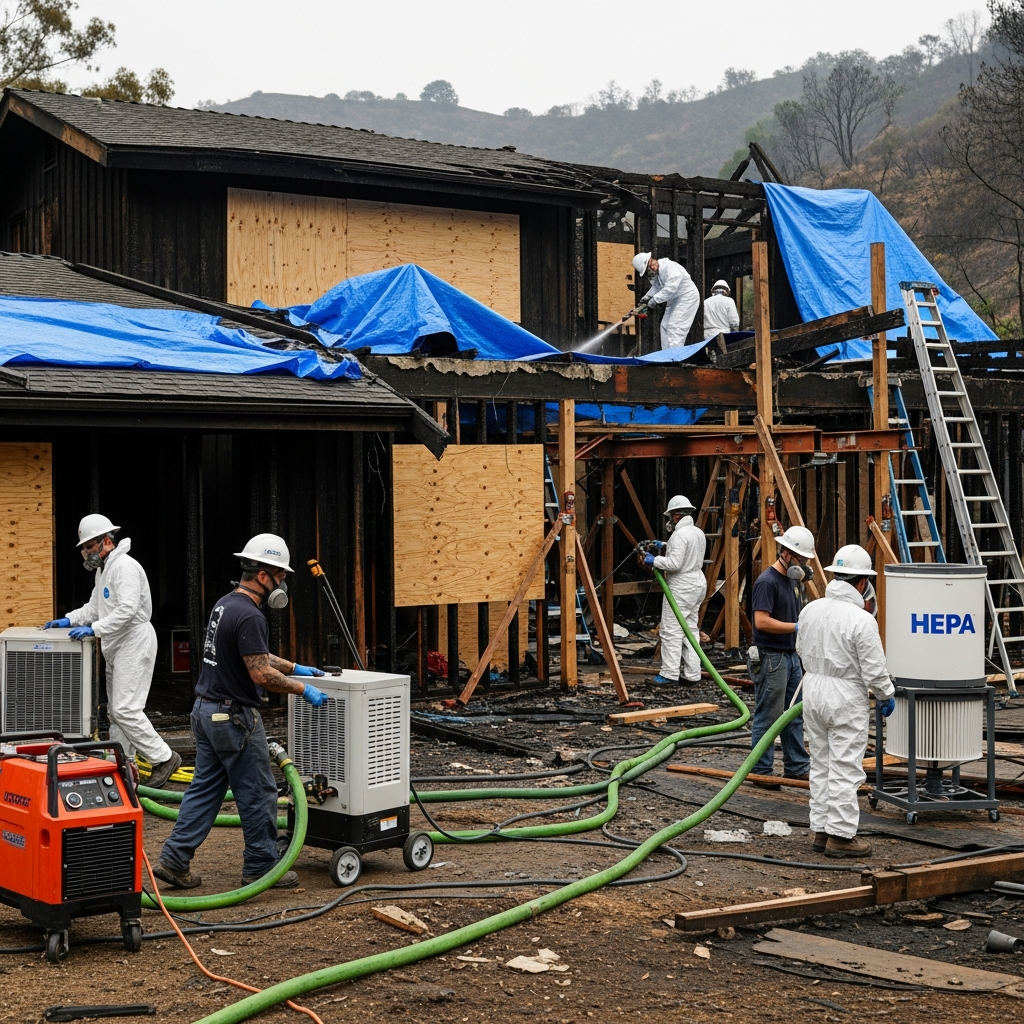
In Malibu’s canyons and on steep driveways, staging requires thoughtful planning so trucks, generators, and drying equipment are positioned where they will not impede first responders or neighbors. In many cases, this means setting up a command area on flatter ground and transporting tools to the structure in stages. Experienced teams know how to work within these constraints, keeping operations smooth and avoiding the complications that come with rushed or poorly organized setups.
Containment and air control are key
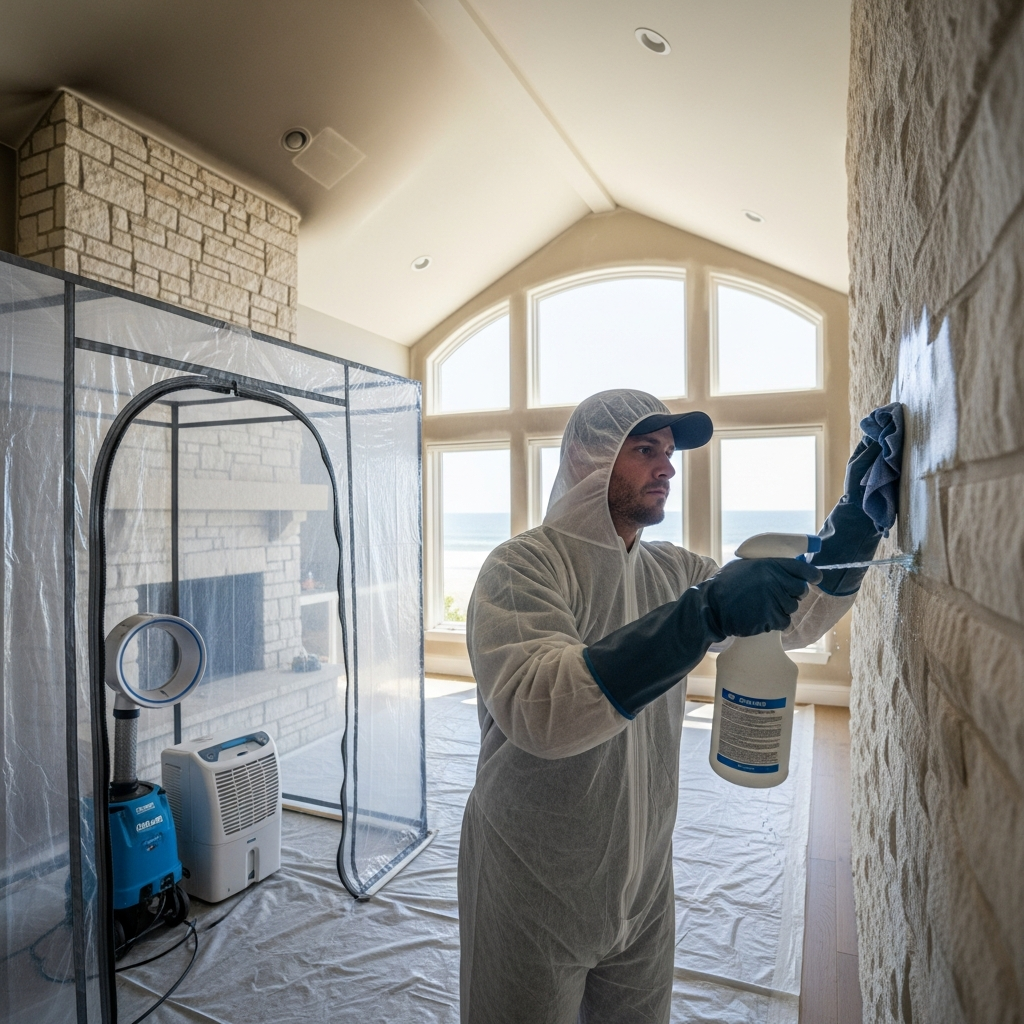
Emergency cleanup is not only about removing what is broken; it is about preventing contaminants from spreading to areas that survived the fire. Containment barriers are erected quickly to isolate affected zones. Negative air machines with HEPA filtration are deployed to capture airborne particulates and create directional airflow that protects cleaner spaces. In a coastal environment where morning moisture can change how soot behaves, air control also helps manage humidity as a complement to drying plans.
These barriers and filtration systems are not a formality. They are the backbone of a workflow that keeps the home livable when possible and sets up the detailed cleaning phase to succeed. In Malibu, where many families hope to remain on site during portions of the work, containment allows life to continue with less disruption while protecting health and progress.
Water extraction and structural drying begin at once
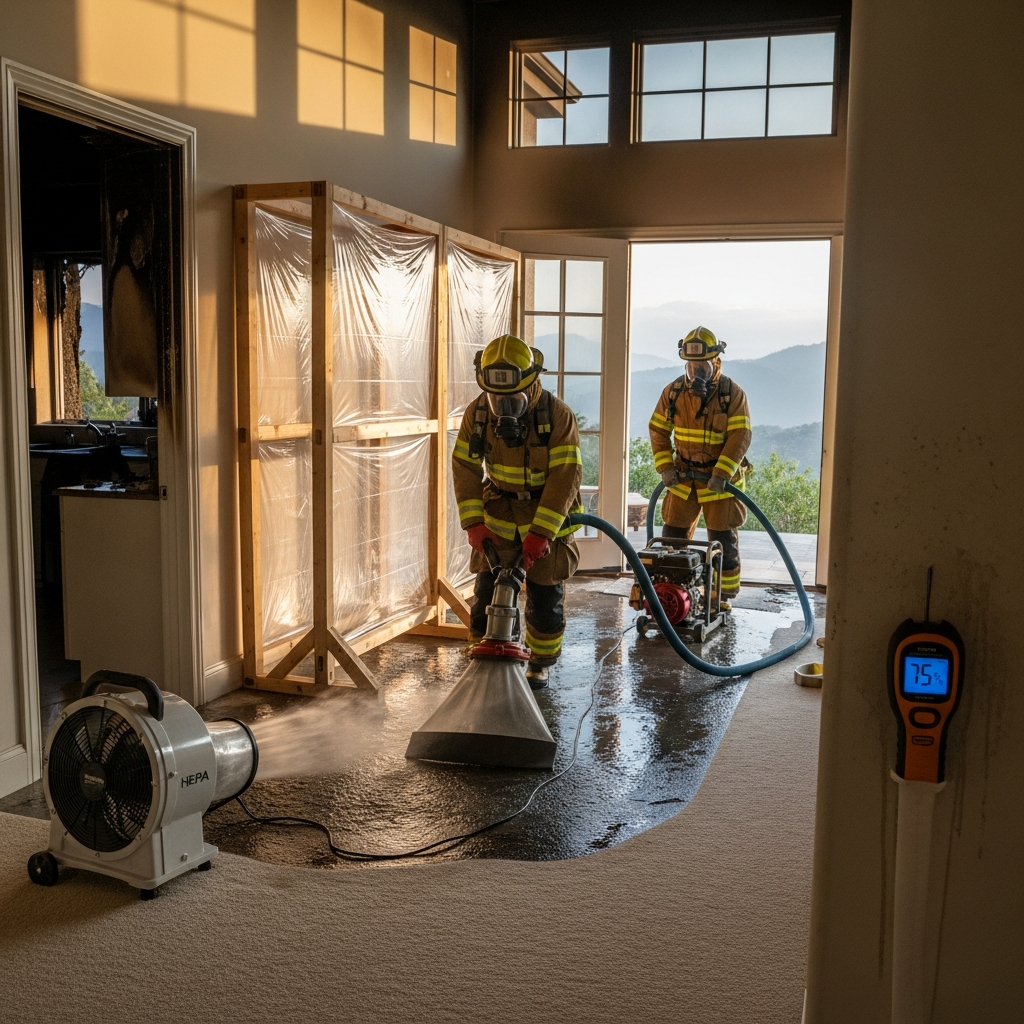
Even a small fire can trigger sprinkler activation or vigorous suppression efforts that leave gallons of water behind. Left unchecked, that moisture migrates into subfloors, insulation, and wall cavities. The emergency team’s job is to map moisture with precision and start extraction and drying without wasting a single hour. Weighted extraction tools, wall cavity drying tactics, and targeted dehumidification reduce the risks of swelling, staining, and microbial growth that would otherwise compound the damage.
In Malibu’s alternating dry and marine layers, day-to-night humidity swings complicate drying plans. Technicians factor those shifts into their equipment settings and verify progress with daily readings. This data-driven approach transforms what might feel like guesswork into a clear trajectory, with charts that show when materials are trending toward safe levels and when tactics need to be adjusted.
Source removal and soot triage
Removing charred materials early reduces odor sources and allows teams to see the structure clearly. At the same time, not everything that looks damaged must be discarded. Emergency cleanup crews perform quick but careful test cleans to determine whether surfaces will respond to professional methods. In kitchen fires, for instance, protein residues can be almost invisible yet powerfully odorous; recognizing that signature quickly guides the selection of cleaning agents that break down the film without driving it deeper.
This triage phase also identifies sensitive finishes—lacquered cabinets, natural stone, and specialty flooring—that need protective measures before extensive cleaning begins. A house is a collection of materials, each with its own chemistry, and emergency crews who respect that save you time and heartbreak later. They leave notes for the detailed cleaning team, aligning short-term actions with long-term goals so nothing is done twice or undone by accident.
Personal property protection
Textiles and contents act like sponges for smoke. During emergency cleanup, teams collect priority items—bedding, clothing, children’s essentials, and documents—that benefit from immediate handling. Bagging protocols separate odorous items from cleaner ones, and a clear inventory keeps you connected to where everything goes. If off-site processing is needed, property is transported in clean, closed vehicles to a facility where cleaning and deodorization proceed without the chaos of an active job site.
For Malibu households that include surf gear, musical instruments, or art, specialized handling is available even in the first twenty-four hours. Coordinating with conservators or textile experts at this early stage can change outcomes dramatically, especially for water-sensitive items. It is the difference between rushing and acting swiftly with intention.
Communication that calms and clarifies
In emergency cleanup, explanations are as important as actions. A clear plan with immediate, short-term, and next-step goals brings relief. You should know what will happen before nightfall, what the next two days look like, and how those efforts hand off to detailed cleaning, deodorization, and rebuilding. Teams who work in Malibu understand that neighbors and HOAs may need updates, too, and they deliver those updates in a way that respects privacy while smoothing site logistics.
Documentation—from photo logs to moisture maps—supports insurance coordination and sets a record that you can review at any time. This transparency builds trust and helps everyone move in sync, reducing the friction that often follows an emergency.
Mid-project reassessment keeps progress on track
Emergency cleanup is a sprint that feeds into a marathon. Once stabilization is complete, a mid-project assessment confirms what remains to be done. Are drying goals on target? Do test cleans support the plan for finishes and textiles? Are there hidden cavities that require opening based on odor or moisture readings? This is the moment to revisit priorities and make sure that the path ahead fits what your home is telling the team.
When you look for alignment, focus on fundamentals. Crews that tie their recommendations to proven fire damage restoration principles—testing, containment, source removal, and verification—give you more than reassurance; they provide a rationale that stands up to scrutiny and guides good decisions.
Preparing for the detailed cleaning phase
As the emergency phase winds down, the home shifts from crisis to careful attention. Containment stays in place, but the tools change. Instead of extractors and shoring, you will see specialized vacuums, detergents matched to soot types, and odor-neutralizing technologies. The foundation laid by emergency cleanup—controlled airflow, moisture under control, protected surfaces—makes this phase more efficient and effective.
In Malibu, where coastal air can resurrect faint odors on damp mornings, detailed cleaning includes verification steps timed to those shifts. A room that smells fine at 2 p.m. in dry sun may reveal a whisper of smoke at 7 a.m. under fog. Experienced teams plan for that reality, scheduling checks that confirm success in more than one set of conditions.
FAQ: Emergency fire damage cleanup in Malibu
How soon should emergency cleanup start after a fire? The work should begin as soon as the site is safe and released by authorities. The first hours are critical for preventing secondary damage, controlling odor, and protecting contents. In Malibu, that often means same-day board-up, containment, and moisture control.
Can I begin cleaning surfaces myself?
Light ventilation and removing loose debris can help, but avoid wiping soot without guidance. Different residues require different methods, and the wrong cleaner can set stains or spread contamination. Waiting for a professional assessment prevents unintentional damage.
What happens if water from firefighting is not addressed quickly?
Unmanaged moisture migrates into building cavities and materials, leading to swelling, staining, and microbial growth. Prompt extraction and controlled drying minimize these risks and protect structural elements, flooring, and finishes that might otherwise be lost.
Will emergency crews remove all damaged materials right away?
They remove hazards and clear obvious debris, but they also perform test cleans and consider salvage potential. Some materials are stabilized for later detailed treatment rather than being discarded on day one. The goal is to balance speed with smart decision-making that maximizes recovery.
How do you control smoke odor during the emergency phase?
Odor control begins with source removal and containment, then continues with HEPA filtration and, when appropriate, targeted odor-neutralizing agents that are safe for occupied spaces. Full deodorization follows during detailed cleaning, but early steps reduce intensity and prevent spread.
Do I need to contact my insurance before cleanup starts?
It is best to notify your insurer as soon as possible, but necessary emergency measures—securing the property, stopping water impact, and ensuring safety—should proceed right away. Thorough documentation of those actions supports the claim and keeps the process moving.
When you are ready for decisive help
In the wake of a fire, decisive action and clear communication turn a long night into a structured recovery. Partner with local professionals who understand Malibu’s winds, roads, and building nuances, and who can integrate emergency measures seamlessly into a full plan. When it is time to move from chaos to a steady course home, choose proven fire damage restoration practices that protect your health and accelerate your return.