Speed matters in Malibu when smoke and soot settle after a fire. In the span of a marine-layer morning, acidic residues can etch polished stone, spot stainless steel, and embed odors into porous woods and textiles. Rapid does not mean rushed; it means sequenced, skilled action that halts deterioration, contains contamination, and prepares a home for thorough recovery. Local crews versed in canyon winds, beachfront humidity, and the quirks of older renovations know how to move decisively without collateral damage. Effective fire damage restoration in Malibu begins with a sprint to stabilize and continues with a marathon of careful cleaning that returns rooms to calm air and clear light.
Why Soot Cleanup Is a Race Against Chemistry
Soot is not uniform. Dry soot from high-heat flames behaves like a fine powder that lifts with chem sponges and HEPA vacuuming. Wet soot from smoldering materials smears easily and requires adjusted pH cleaners and patient agitation. Protein residues—often invisible—produce outsized, lingering odors in kitchens. In Malibu, add chloride-bearing moisture from the sea and the stakes rise quickly: corrosion gets a head start, and etching accelerates. The rapid response is about deploying the right technique for the residue in front of you, not a one-size-fits-all wipe.
Another reason to move fast: spread. Air currents carry ultrafine particles into closets, drawers, and HVAC systems. Without containment and negative air, every footstep becomes a puff of redistribution. Early barriers and air management freeze the field so that cleaning gains are not undone by drift.
Stabilize, Then Clean: The First Hours
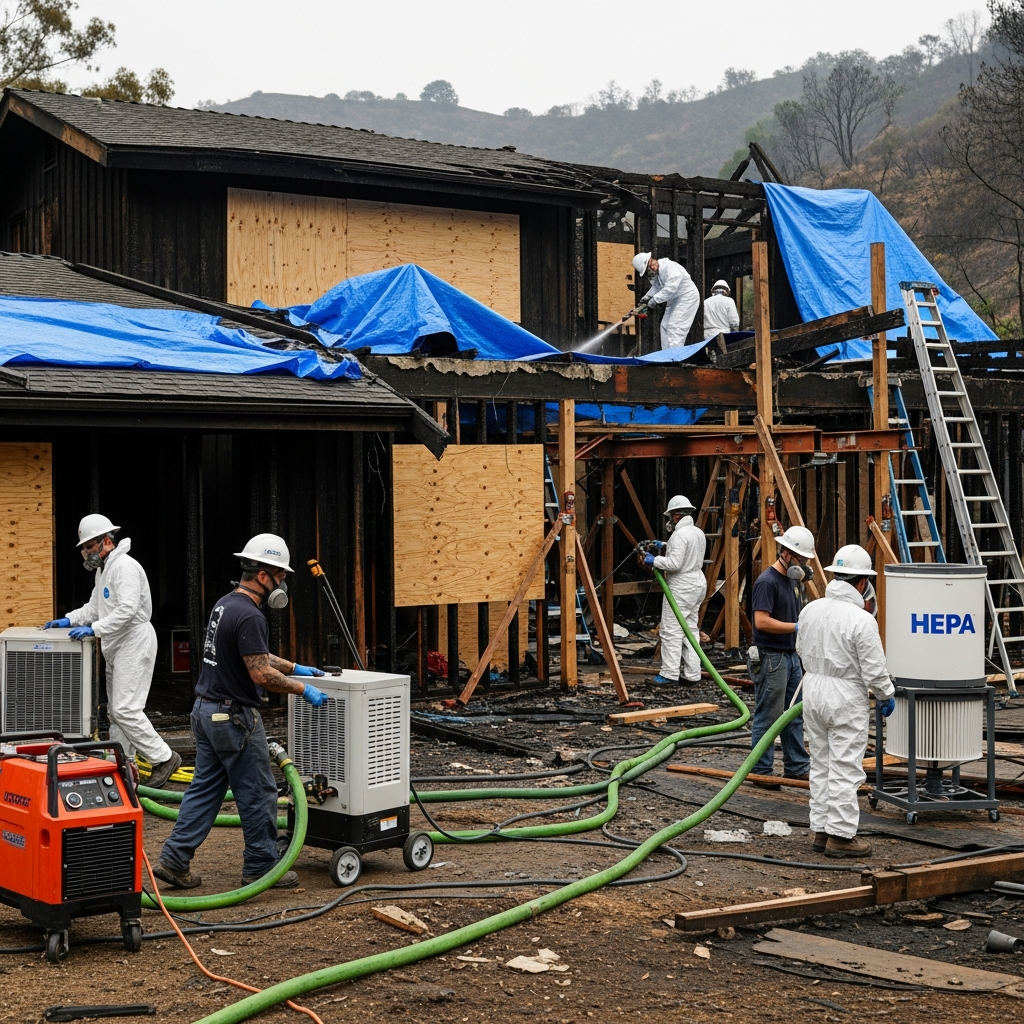
After authorities release the site, crews secure openings to control wind and moisture, shut off power and gas until verified safe, and map moisture from firefighting water. Extraction and targeted drying begin, because damp soot is far messier than dry soot. In kitchens and baths, technicians neutralize and protect chrome and stainless to prevent spotting. On stone surfaces—marble vanities, limestone floors—dry removal comes first, followed by carefully chosen cleaners that will not worsen etching. Meanwhile, a pack-out plan removes especially vulnerable or valuable contents—electronics, instruments, fine metals—to a controlled environment where they can be addressed without salt-air pressures.
Containment and Air Control: Keeping Progress Clean
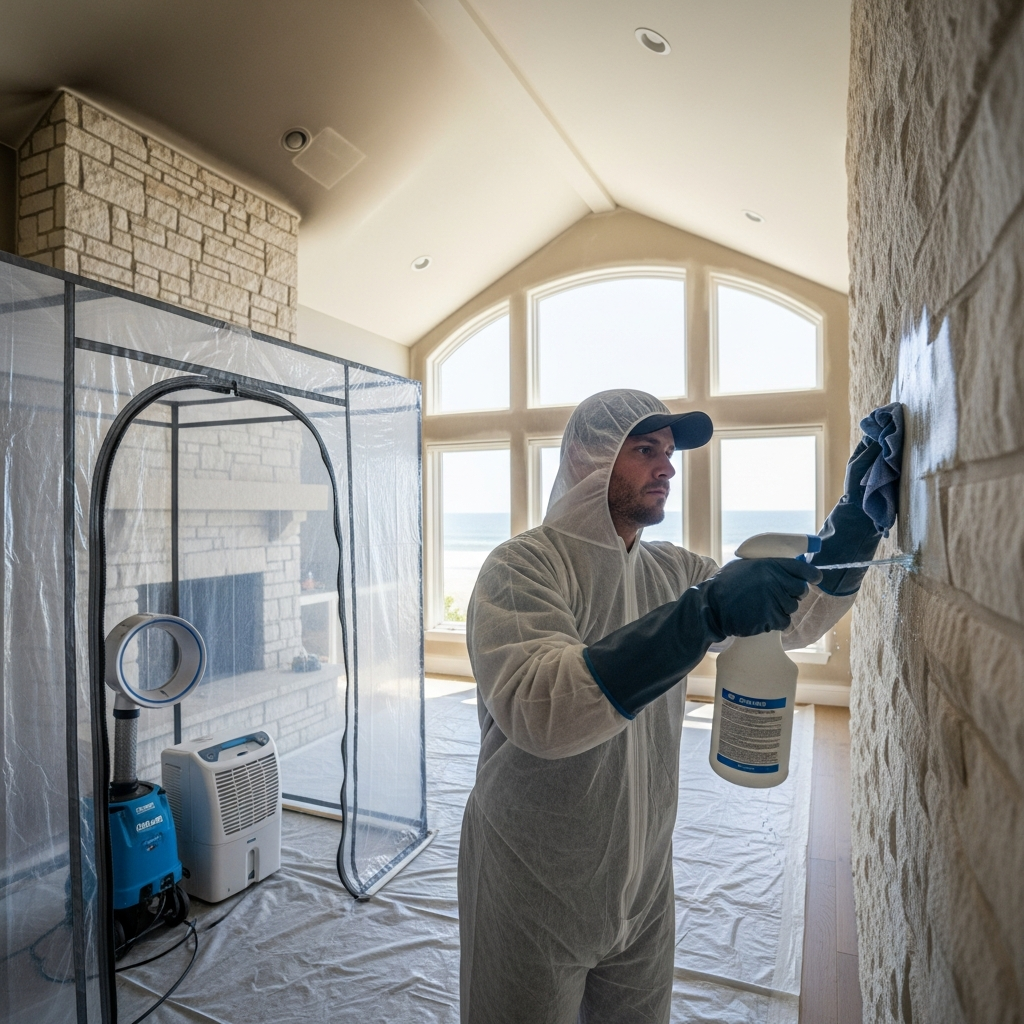
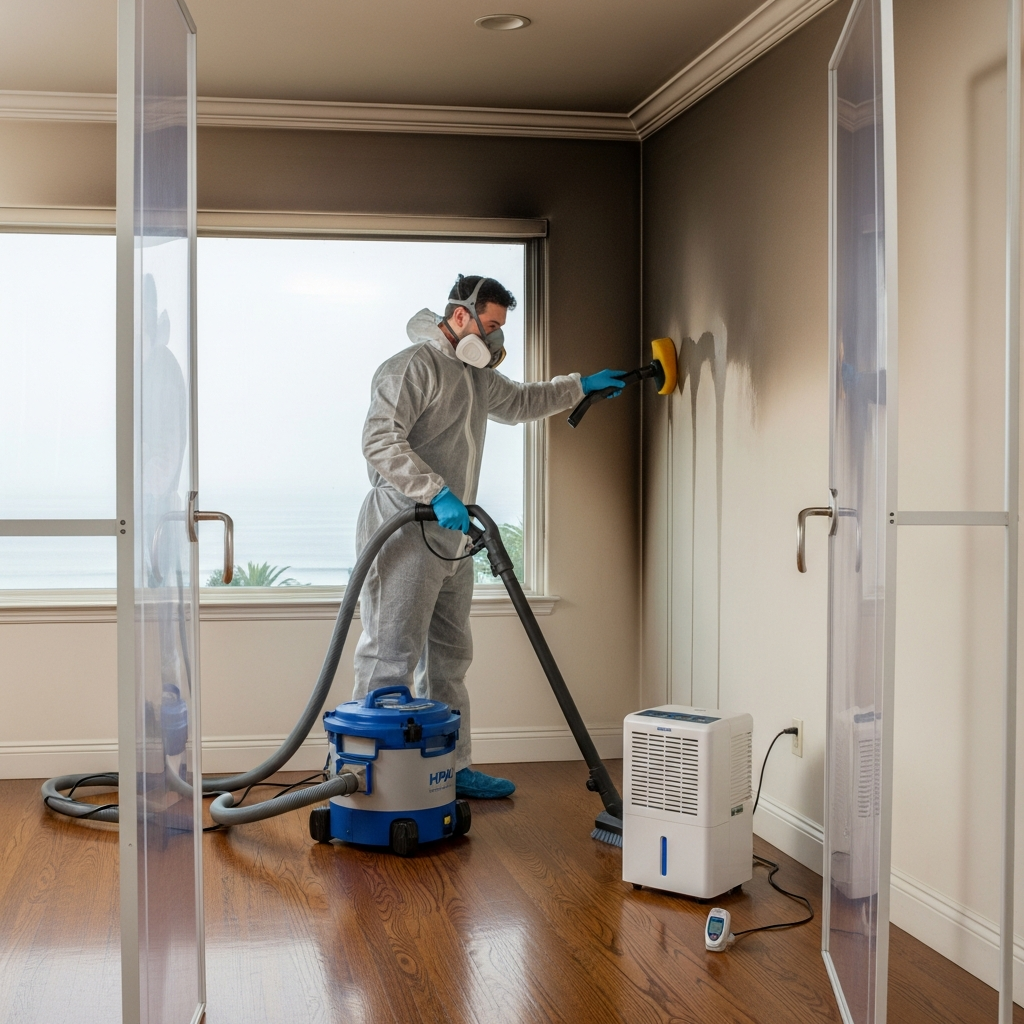
Clear plastic barriers and zipper doors divide work from living zones; negative air machines with HEPA filtration pull contaminants out and prevent re-settling. Filter changes are scheduled as demolition and cleaning generate new dust loads. Ducts and returns are covered during heavy work, then professionally cleaned as the site transitions toward rebuild. On foggy mornings when humidity peaks, dehumidification stabilizes the indoor climate so that soot does not become tacky and harder to remove.
Surface Strategies: From Walls to Hardware
Walls and ceilings get dry sponged to lift dry soot without smearing. Where residues are greasy or protein-based, alkaline cleaners break bonds so that wiping removes rather than spreads. Matte paints demand lighter pressure; gloss finishes tolerate more aggressive work. Trim and doors, especially those facing the ocean, are wiped and then neutralized to stop corrosion on hinges and handles. Windows and sliders receive special attention: tracks are vacuumed and flushed, rollers cleaned and lubricated, and weep holes cleared so post-fog drainage works. This keeps freshly cleaned glass from streaking after the first marine mist returns.
Cabinetry and built-ins hold hidden soot in grooves and hardware cups. Technicians remove adjustable shelves and hardware where practical to clean fully. Protecting adjacent undamaged finishes with tape edges and soft covers avoids creating clean halos that telegraph later under paint or stain. This is precise, patient work, but it pays back with rooms that stay clean and odor-free.
Textiles, Rugs, and Soft Goods
Soft materials are soot sponges. Early HEPA vacuuming with gentle tools removes loose particulates before any wet steps. Draperies, upholstery, and area rugs benefit from ozone-free deodorization like hydroxyl treatment and carefully matched cleaning methods. In beach houses where slipcovers are common, off-site laundering in controlled conditions prevents re-deposition from salty ambient air. Bedding and clothing that look clean may still carry odor; professional textile restoration ensures the home smells right when you return to routine.
Kitchens and the Challenge of Protein Residue
Kitchen fires produce light, sticky films that hide while smelling strong. Cabinets above the hood, soffits, and even inside closed drawers can harbor residue. Cleaners formulated for protein deposits, combined with warm-water rinses and thorough drying, remove the film. Stainless appliances get immediate neutralization to stop spotting. Undersides of counters and the backs of pulls deserve attention to prevent odors from drifting out later, especially when the next coastal fog raises humidity.
Electronics and the Coastal Corrosion Clock
Electronics exposed to smoke are at risk even when they power on. Soot and salt accelerate corrosion on boards and contacts. Rapid triage—disconnect, label, and move to an electronics restoration vendor—preserves data and function. Waiting invites hidden failures weeks or months later. Malibu’s humidity shortens the grace period; trusted vendors move quickly and document serials and conditions for insurance alignment.
Odor Elimination Without Masking
Genuine odor removal starts with removing residue. Once surfaces and air pathways are clean, deodorization technologies like hydroxyl generators neutralize stubborn molecules. Thermal fogging can be effective in unoccupied conditions when it mirrors smoke’s original pathway, but it is never a substitute for cleaning. Closing the loop means sealing select substrates after cleaning so odor cannot wick back out. Homes near the ocean demand vigilant humidity control during these steps so that moisture does not wake up faint smells.
Mid-Project Verification: Proving Clean is Clean
Halfway through a rapid cleanup, the home should feel different: air clearer, surfaces no longer tacky, and odors markedly reduced. Particle counts or simple white-glove tests in test zones confirm progress. This is the moment to realign on remaining hotspots—attics, crawlspaces, behind built-ins—and to set the plan for any selective demolition still required. It is also an ideal time to share homeowner-friendly resources on fire damage restoration so expectations for finish work and timelines are transparent.
Preventing Recontamination During Rebuild
Cleanup momentum can be lost if new construction dust and materials are introduced without controls. Trusted teams maintain containment as trades arrive, keep scrubbers running, and schedule final cleans at smart intervals. HVAC filters are changed as phases turn, and registers stay protected until the day they are cleaned and the system is commissioned. The goal is a handoff to rebuild that feels like stepping into a blank, fresh canvas—ready for paint, tile, and finish carpentry without a hint of the past.
FAQ: Rapid Smoke and Soot Cleanup in Malibu
How fast should soot cleanup start? As soon as the site is released. Early action halts etching and corrosion and makes all subsequent cleaning easier and more effective.
Why can’t I just wipe surfaces with household cleaners? The wrong cleaner can smear residues, set stains, or etch finishes. Professional methods match the residue and material to the right chemistry and tools.
Are odors really removable? Yes, when cleaning is thorough and deodorization is science-based. Masking scents wear off; proper removal and neutralization do not.
Will my rugs and upholstery be okay? Most textiles respond well to early HEPA vacuuming, appropriate cleaning, and controlled drying. Off-site treatment helps prevent re-odorization in marine air.
Do I need to replace my HVAC system? Usually not. Professional cleaning of ducts, coils, and housings, followed by filter changes, often restores air quality without replacement.
What about electronics? Rapid decontamination by specialized vendors can save many devices and protect data. Delay increases the risk of corrosion-related failure.
Can I stay in the house during cleanup? Sometimes, with containment and clean zones, but many families prefer a short relocation to speed work and keep life comfortable.
Call for Fast, Disciplined Help
If smoke and soot have just touched your Malibu home, swift, smart action will protect finishes, preserve belongings, and clear the air—literally and figuratively. Connect with coastal pros who understand how speed and sequence work together, and who can stage a clean, safe return to normal. Start by exploring proven methods for fire damage restoration, then schedule a visit. The quicker the plan starts, the sooner the surf, the light, and the easy breath of home are fully yours again.