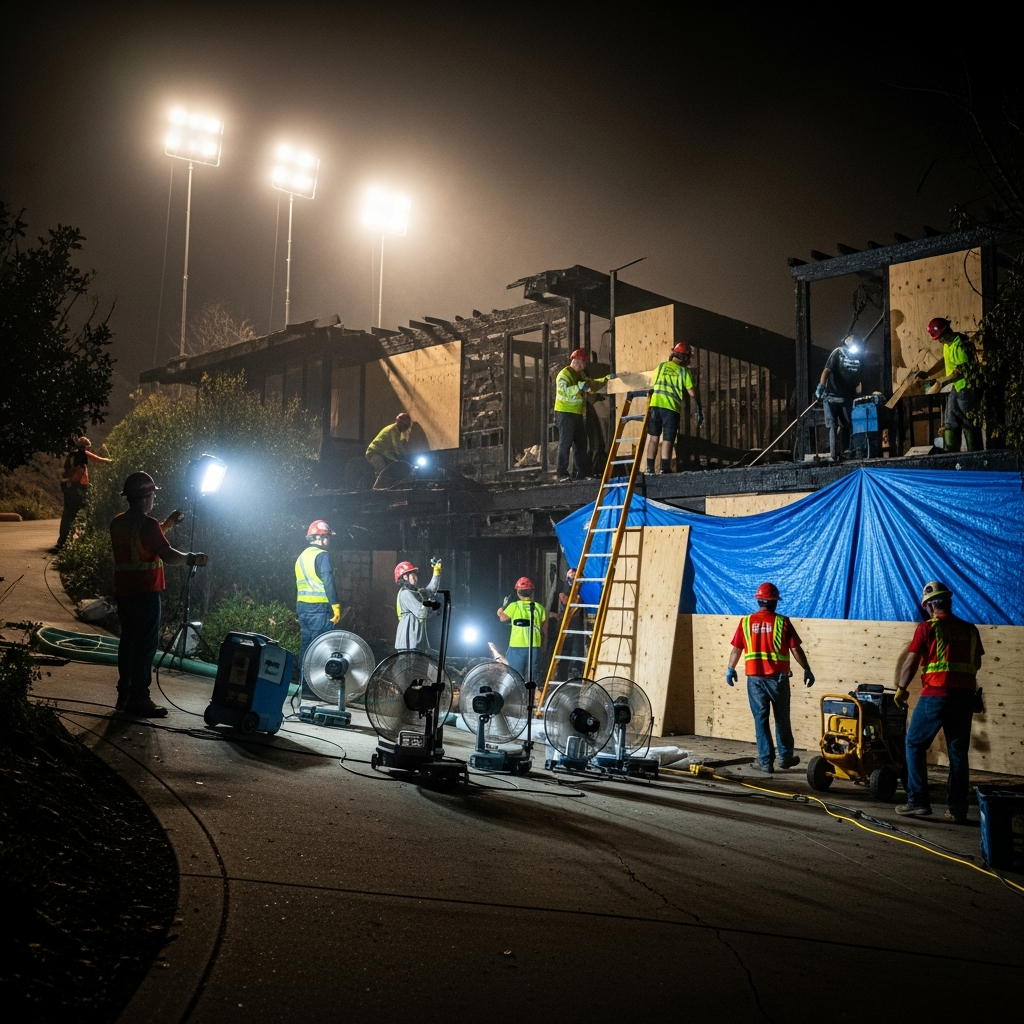
In Malibu, emergencies rarely wait for daylight. Winds shift after dark, embers ride unseen across canyon saddles, and a fire that looked distant at sunset can change course by midnight. That’s why true emergency response must be built around readiness, not convenience. When the call comes, it’s about mobilizing safely, arriving prepared, and stabilizing the property so tomorrow’s work can begin on solid ground. The difference between a chaotic night and a controlled recovery is measured in minutes, decisions, and experience—especially in a coastal community where steep driveways, limited access, and marine weather create added complexity.
Over the years, I’ve stepped onto properties along the Pacific Coast Highway, tucked-away homes off Encinal Canyon, and hillside residences above Las Flores in the small hours, lit by engine lights and the lingering glow of hot spots. In those moments, homeowners don’t need promises; they need action. The first objective is protection: secure the site, prevent secondary damage, and ensure the air is safe to breathe. From that point forward, the work unfolds in a proven sequence that turns crisis into plan. When you choose emergency fire damage restoration, you are choosing a team that respects the clock and the craft in equal measure.
Arrival and Initial Safety Measures
Each response begins with a safety sweep. Utilities are checked, structural hazards are identified, and zones are established to keep everyone secure. In Malibu’s terrain, this can include assessing slope stability after firefighting water use and confirming roof integrity before anyone sets foot there for tarping. It’s not dramatic, but it’s vital. Stabilization prevents additional loss and sets the stage for a methodical cleanup. Communication runs in parallel: owners get a clear picture of what’s happening now and what will unfold in the next few hours.
Board-Up, Tarping, and Weather Defense
Even on a calm night, coastal moisture is never far away. Open windows, damaged roofing, and compromised doors are vulnerabilities that must be addressed immediately. Temporary board-ups and roof covers are placed with an eye toward the wind and the slope, so the protection holds until permanent repairs are made. These steps buy time, stopping rain, marine layer moisture, and curious wildlife from entering the structure and compounding the damage.
Water and Soot: Dual Threat, Dual Strategy
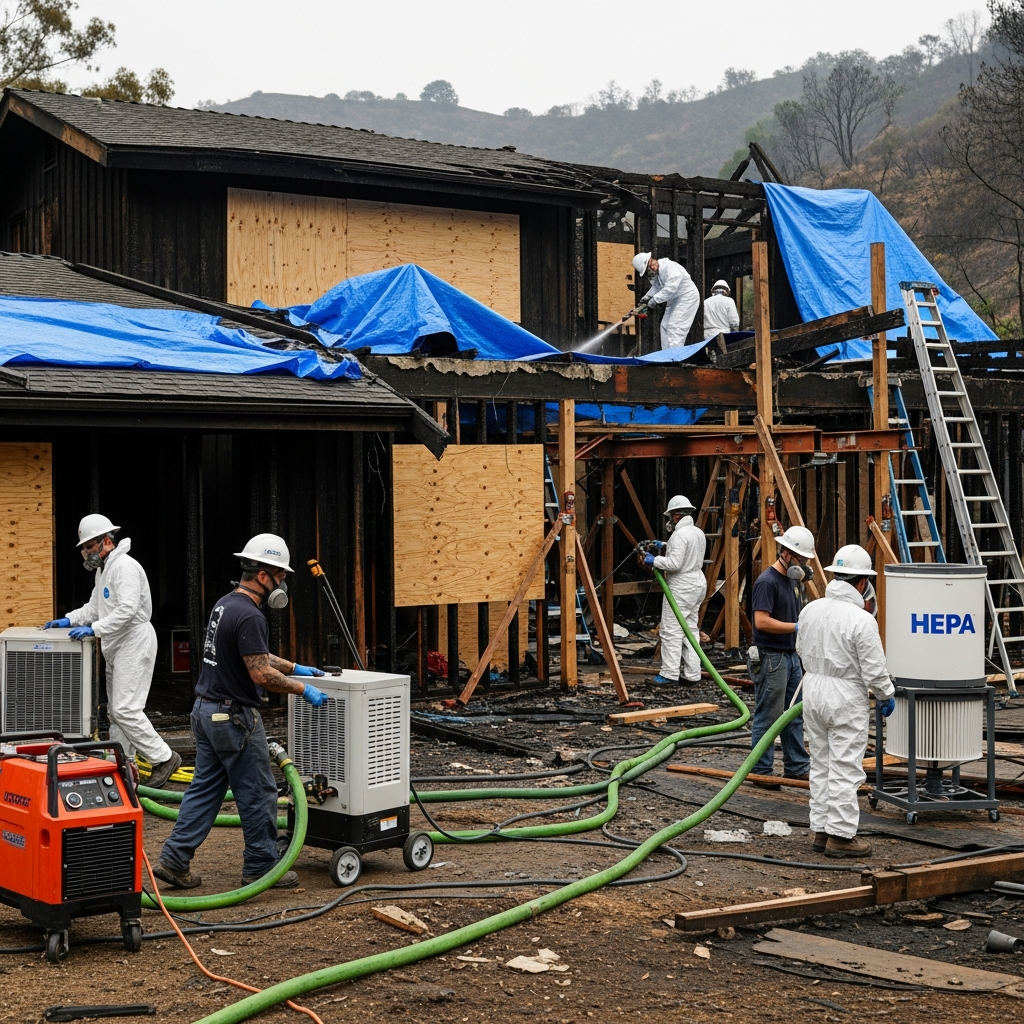
Firefighting saves structures, but water and foam can saturate building materials and contents. Emergency extraction and strategic drying begin quickly, working alongside soot control measures that focus on capture rather than spread. High-heat areas may be unsafe for immediate entry, but cooler zones often benefit from early interventions that halt damage progression. The art is knowing what to touch and when, balancing urgency with the patience that prevents mistakes.
Containment and Air Quality
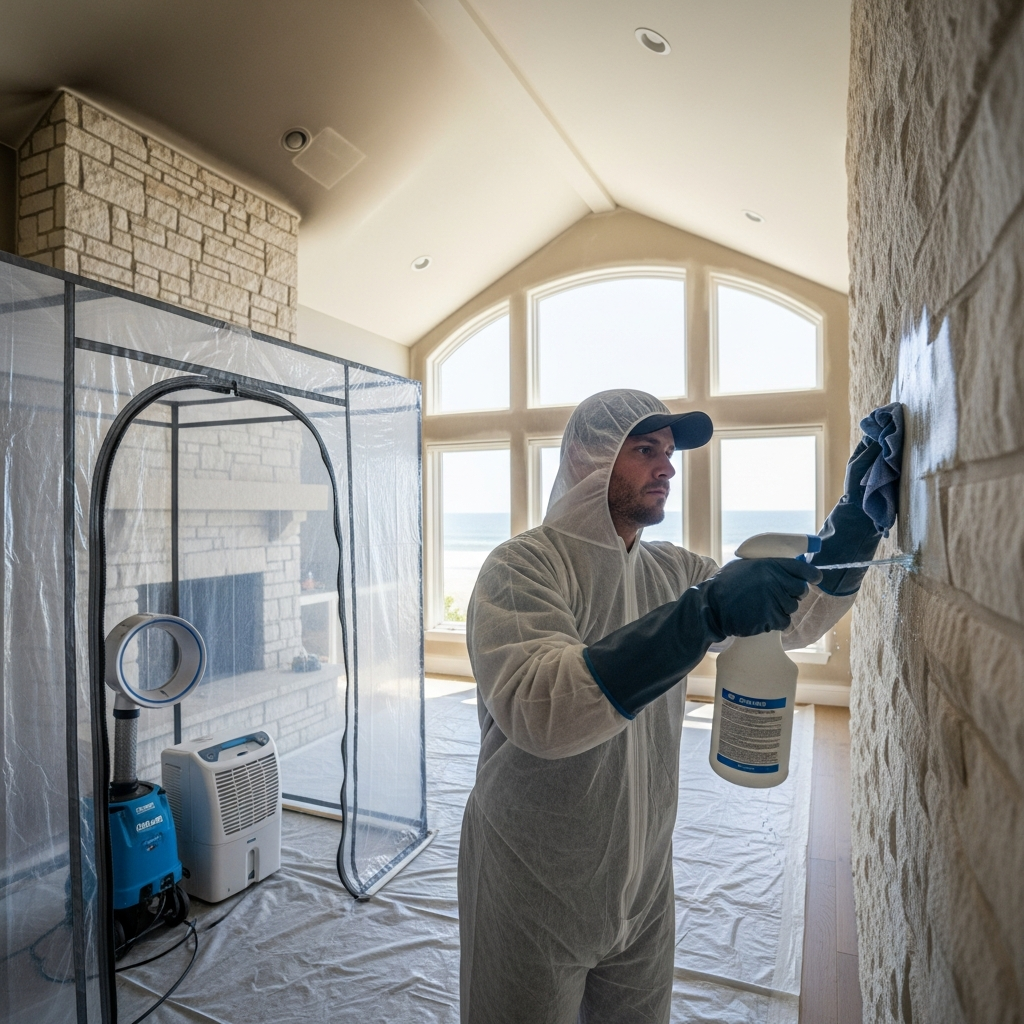
Smoke particulates don’t respect room boundaries. In a live emergency environment, setting up smart containment reduces cross-contamination as crews work. Air filtration units run continuously to scrub out particulates and reduce odors, making the space safer for everyone. Even at 2 a.m., documentation begins—photos, notes, and initial scope outlines that capture the scene faithfully and support the decisions that will follow.
Contents Triage
During the first night, not everything can be packed out, but some items should be prioritized. Sentimental belongings, critical documents, and sensitive electronics may be stabilized or relocated to prevent further harm. A measured triage keeps the focus on what matters most, while a fuller inventory proceeds once daylight and full crews arrive. This is where local insight helps—understanding humidity patterns, salt exposure, and the delicate balance between speed and care.
Communication: The Anchor in a Long Night
Emergencies are less frightening when you know what comes next. Throughout the night, communication remains steady: what’s been secured, what’s drying, what’s scheduled for first light. Owners rest easier when they understand the immediate plan and the milestones we’re working toward. Clarity calms the noise of the moment and creates trust that carries into the days ahead.
Morning Transition: From Emergency to Restoration
With stabilization complete, the handoff to the full restoration team is seamless. Detailed notes, photographs, and measurements become the blueprint for the next phases: detailed cleaning, HVAC assessment, odor neutralization, and structural repair planning. The same discipline that shapes a 3 a.m. tarp installation guides a midday conversation about finishes and sequencing. In a well-run response, momentum never drops; it merely shifts gears.
Mid-Project Controls and Verifications
As the project matures, checkpoints prevent drift: moisture readings trend toward dry standards, soot levels fall in successive cleanings, and odor evaluations confirm progress. When decisions arise—remove or restore, seal or replace—they’re made with the data at hand. Malibu homes often feature a mix of materials and custom details; verification keeps those complexities from turning into delays. This is the point where focused fire damage restoration expertise pays dividends, tightening timelines without sacrificing thoroughness.
Unique Malibu Logistics
Responding in Malibu comes with its own rulebook. Access routes may be limited; driveways are steep; and neighbors are close, each dealing with their own urgent needs. Coordinating parking, staging, and equipment placement is as much an art as a science. Coastal conditions can shift quickly, so tarps and protections are chosen to withstand sudden gusts or that surprise afternoon drizzle. Being prepared for these factors shortens the path to normal life.
Health-Conscious Practices
Emergency work respects the body as much as the building. Crews use protective equipment, and the plan prioritizes air quality from the first hour. This creates safer conditions for any necessary owner access and for pets who may still be on-site. Thoughtful scheduling of noisy or disruptive tasks reduces stress during a time when sleep and calm are already in short supply.
Insurance Communication Without the Jargon
While policy details vary, everyone benefits from transparent documentation and timelines. Night-of photos, measurements, and stabilization logs support the story of the loss with facts, not guesswork. As the restoration progresses, scope notes and verification data keep the process on track and prevent repetitive work. The goal is to pair craftsmanship with clarity so the focus can stay on the rebuild rather than red tape.
Resilience Planning Starts Early
Even in the first 24 hours, opportunities for future resilience present themselves. Upgrades to vents, refinements to defensible space, and smarter material choices can be captured in the plan so they roll naturally into reconstruction. Malibu’s beauty is non-negotiable; safety can be, too, if we integrate these decisions from the start.
FAQ: 24/7 Emergency Fire Restoration in Malibu
Q: How fast can crews arrive in Malibu?
A: Response times vary with conditions and access, but true 24/7 teams are built to mobilize quickly. The first objectives are safety, stabilization, and prevention of secondary damage so the following day’s work begins efficiently.
Q: What happens if it’s still smoky or windy?
A: Crews adapt with containment and protection strategies that account for active conditions. The plan balances immediate needs with safety, ensuring tasks like roof tarping, board-up, and extraction proceed without creating new hazards.
Q: Can anything be saved during the first night?
A: Yes. Priority items—documents, heirlooms, critical electronics—can often be stabilized or relocated. Comprehensive pack-out generally follows during daylight when resources and visibility are optimal.
Q: Will my home smell like chemicals after emergency work?
A: Emergency steps focus on stabilization, dry removal, and filtration. Any deodorization is chosen carefully to support, not replace, thorough cleaning. The aim is a neutral interior that reads as clean rather than perfumed.
Q: How do you prevent cross-contamination?
A: Strategic containment, negative air where appropriate, and methodical cleaning sequences limit the spread of soot. HEPA filtration runs early and often to capture particulates that otherwise travel room to room.
Q: What should I do while crews are working overnight?
A: Stay safe, stay informed, and let the team manage the hazards. Clear communication ensures you know what’s happening now and what to expect at first light. Rest, if possible, is a vital part of the process.
Emergencies test more than buildings; they test resolve. If you’re facing a long night and need steady hands, we’re here to turn urgency into order. From the first board on a broken window to the final polish on a rebuilt room, our approach is measured, local, and proven by years on these hills and beaches. When you’re ready for calm, call for a response that begins now and finishes strong—with end-to-end fire damage restoration that respects your home and your peace of mind.