There is a rhythm to living in Malibu that locals understand instinctively, a cadence defined by the ocean’s breath and the canyons’ quiet. That same rhythm shapes how homes are built and cared for here, especially when water finds its way where it does not belong. Choosing among water damage restoration companies is not just about who can arrive with fans and dehumidifiers; it is about who truly understands our coastal climate, our hillside roads, our varied architectural styles, and the way salt air and marine layers change the rules of building science. When the stakes are your home’s health and your family’s comfort, it pays to start with experts who live and work here and can guide you from first call to final handoff. And because timing matters, you will often see neighbors lean on specialists in water damage restoration who already know how Malibu homes are put together.
From Carbon Beach to Big Rock, Point Dume to the Malibu Colony, each neighborhood presents a different profile of risks. Oceanfront properties wrestle with wind-driven rain and salt-laden mist that can creep into window assemblies and corrode fasteners long before a leak shows up on drywall. Canyon homes face steep driveways, seasonal run-off, and the occasional road closure that tests a team’s logistics. Restoration companies that thrive in Malibu do so because they anticipate these layers. They arrive not only with moisture meters and infrared cameras, but with a plan for access, staging, and noise control that respects both your schedule and your neighbors’ peace.
A credible restoration partner blends technical pedigree with local sensibility. Certifications matter—professionals trained in modern drying, microbial remediation, and building physics can differentiate between a cosmetic issue and a structural risk. Yet paper credentials are not enough. The best teams know the small cues: the way a faint musty note in a closet can trace back to a tiny roof penetration over the stairwell, or how a subtle buckle in an engineered wood plank often points to vapor pressure under a slab after an irrigation line break. They recognize when a bath’s stone tile needs careful removal to preserve pattern-matched slabs for reinstallation, and when a custom baseboard profile from a 1970s ranch requires documentation for exact replication later.
What sets Malibu specialists apart
Malibu homes are a study in contrasts—glass-and-steel modernist pavilions perched above the surf, shingled beach cottages refreshed generation after generation, and canyon retreats where timber and stone meet the chaparral. Each responds to water differently. Ocean spray accelerates oxidation, so fasteners behind cladding can fail sooner than expected. Coastal fog means higher ambient humidity, which changes drying strategies; sometimes it is wiser to create a controlled microclimate inside containment than to rely on outside air exchanges. A team attuned to these nuances will tailor the approach, choosing desiccant or refrigerant dehumidifiers based on dew points, or balancing negative pressure to capture aerosols while protecting intact rooms.
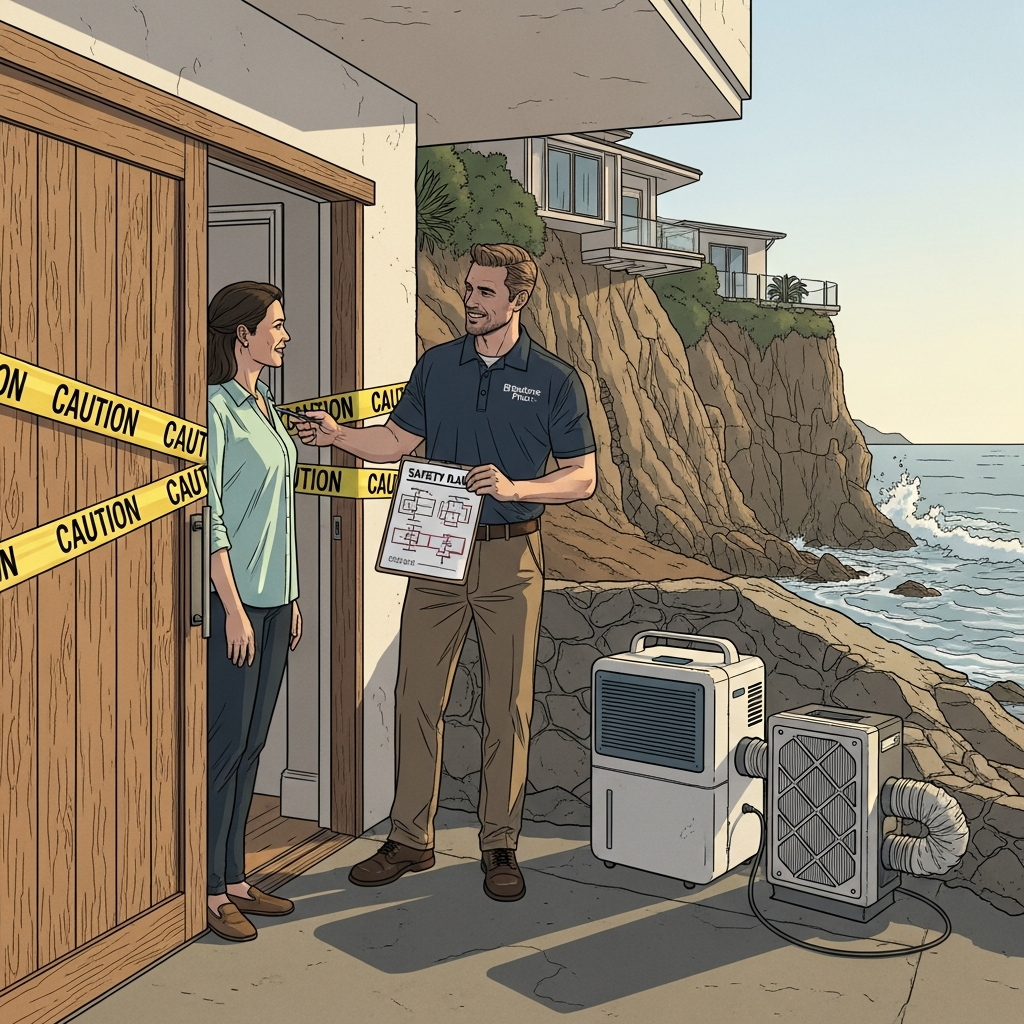
Access is another defining factor. The same scenic roads that make Malibu beautiful can complicate logistics. On narrow streets above the Pacific Coast Highway, staging equipment without blocking traffic takes forethought, and in certain canyons, cell reception is fickle at best. Crews who work here regularly make communication a priority, setting expectations for check-ins and documenting every step so you are informed even if a morning marine layer delays drying cycle changes until the afternoon.
From first drip to full recovery
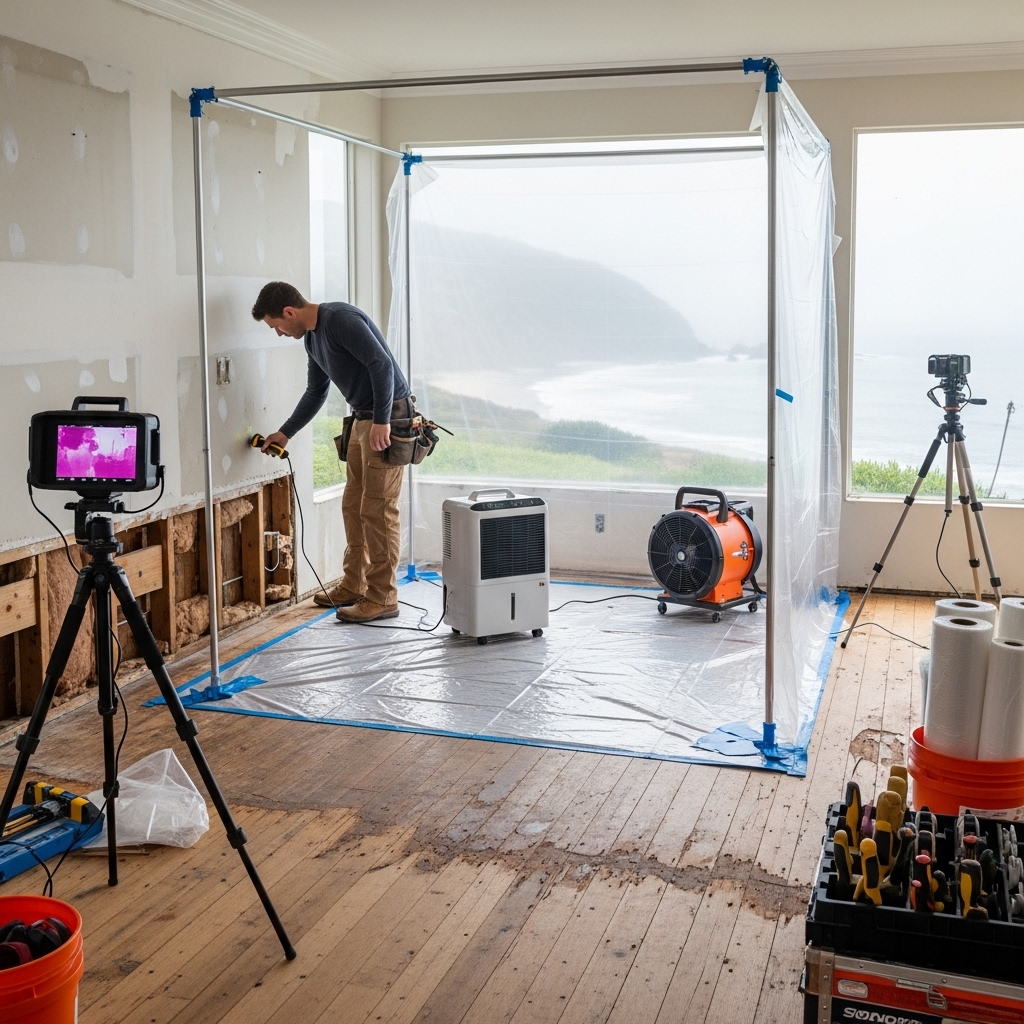
When restoration goes well, it feels coordinated and calm. The first tactical move is to stop the source and stabilize the structure. That might mean shutting off a supply line, tarping a skylight after wind-driven rain, or isolating a drain line to prevent backflow. Next comes assessment: reading walls and floors with calibrated moisture meters, using thermal imaging to find hidden wet pockets, and tracing migration paths through base plates and under thresholds. Seasoned technicians map the loss with photos and notes not as busywork but as a blueprint for decisions.
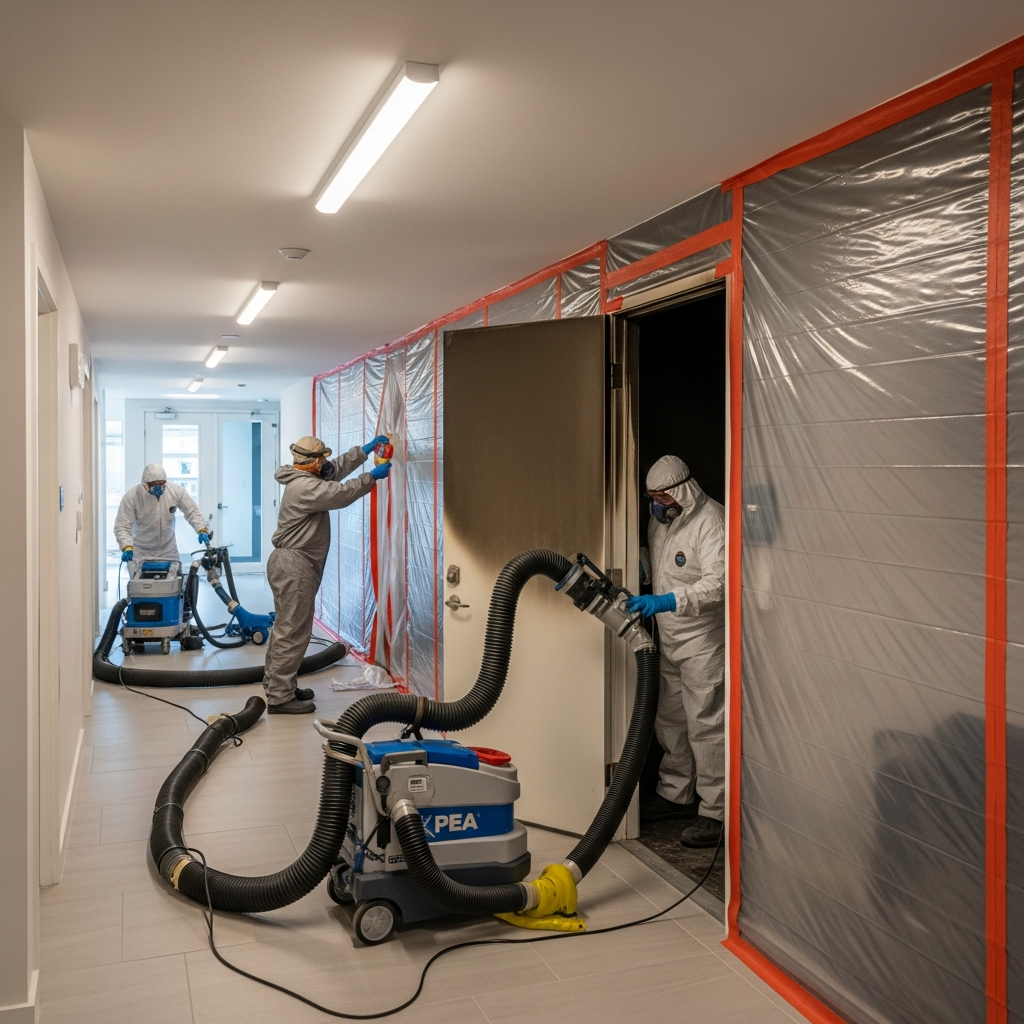
Containment is often established early: plastic and tape are not just barriers, they form a pressure-controlled zone that keeps dust, spores, and odors from traveling. Inside those zones, selective demolition can be surprisingly surgical. A baseboard removal may be enough to allow dry air to travel behind a wall; in other cases, small flood cuts preserve most of the finish while exposing the cavities that must be addressed. Behind the scenes, air movers are positioned to create laminar flow across wet surfaces, while dehumidifiers capture vapor and protect unaffected rooms.
As the dry-out progresses, consistent monitoring prevents over-drying delicate materials like aged hardwoods and maintains a balance to safeguard adhesives, veneers, and finishes. Midway through the project is a good moment to review the plan, confirm findings, and prepare for the transition to repairs. It is also an ideal time to align expectations with your insurer and design team, and to ensure that your partner in Malibu water damage restoration documents materials, patterns, and paint formulas you will want perfectly matched when reconstruction begins.
Insurance and documentation that actually helps
Anyone who has navigated a property claim knows paperwork can overwhelm. In Malibu, where custom finishes are common, documentation is not simply about quantity but about quality. Clear, date-stamped photos, moisture logs that show progress, and itemized notes about materials removed are invaluable. When an adjuster sees that drywall was cut to a specific line to preserve a Venetian plaster finish, or that a floating floor section was removed as a panel to protect the interlocking system, approvals tend to move faster. The right company becomes a translator between field reality and claim requirements, reducing friction for everyone involved.
There is also a human side to this. Good teams respect that a living room is more than furniture and finishes; it is where birthdays have been celebrated and quiet mornings have begun. Thoughtful pack-out and storage practices protect the irreplaceable. Labeling matters, gentle handling matters, and honest communication about what can be cleaned, what can be salvaged, and what must be replaced matters most of all.
Common Malibu scenarios and how pros manage them
Wind-driven rain through large sliding doors is a recurring culprit along the coast, particularly during strong systems that push water at unusual angles. The fix may involve more than drying; it can require adjusting weep holes, recalibrating door panels, and confirming that flashing and sealants are performing as designed. In the canyons, long-running pinhole leaks in copper behind stone showers can leave telltale efflorescence. Successful remediation includes not only drying the framing but verifying that mineral deposits and trapped moisture do not set the stage for future microbial growth.
Wildfire-related events create their own category of complexity. When heat triggers residential sprinkler systems or causes water tanks to discharge, the resulting saturation can be widespread, even if flames never reach the property. Ash and soot introduce particulate that must be captured and cleaned with HEPA filtration while water damage is addressed. A restoration firm experienced with post-wildfire moisture knows how to integrate air quality control into the drying plan from the first day.
Quiet, clean, and considerate restoration
Malibu living is as much about tranquility as it is about views, and a respectful company protects that. Low-profile mats protect floors where equipment is staged, cord runs are secured to avoid trip hazards, and equipment is adjusted to minimize noise during key hours. Where power is limited, smart load management prevents nuisance breaker trips. When vehicles must stage on tight streets, crews coordinate with neighbors and observe HOA or neighborhood guidelines with the same care they bring to your interiors.
Choosing the right partner for your home
When you evaluate companies, listen for fluency in our local variables: coastal humidity, canyon access, marine layer drying strategies, and the realities of Pacific storms. Ask how they verify dry standards and how they protect unaffected spaces. Look for an approach that blends science and craftsmanship, and for people who respect your home as a living space, not a jobsite. Most importantly, choose a team that communicates clearly and anticipates your questions before you ask them.
What makes Malibu water damage different from other coastal cities?
Our mix of microclimates—cool marine layers, hot canyon winds, and seasonal storms—creates fluctuating temperature and humidity profiles that directly affect drying methods. Salt air also accelerates corrosion behind finishes, so fasteners or window components may fail sooner, and that influences both prevention and restoration strategies.
How quickly should I act after discovering a leak?
Immediately. Even small leaks can migrate under floors and behind baseboards within hours. Early stabilization limits secondary damage and shortens the path back to normal. The first call should focus on stopping the source and setting containment, then a measured assessment guides what comes next.
Will restoration disrupt my daily life?
There will be some disruption, but skilled teams minimize it with thoughtful containment, noise management, and clear schedules. Many homeowners remain in place during drying, and the process can be structured around work and family routines as long as safety and air quality are maintained.
Do I need to worry about mold after water damage?
Moisture and time are the two ingredients mold needs. If water is addressed quickly and materials are dried to target levels, the risk falls dramatically. If there is a delay or materials remain damp, a remediation plan becomes part of the restoration, with containment and filtration to protect the rest of the home.
How do restoration teams protect high-end finishes?
By documenting thoroughly, removing carefully, and planning for reinstallation from day one. That can include cataloging tile patterns, protecting stone panels, and saving custom millwork profiles so repairs blend seamlessly.
Can you coordinate with my insurer and contractor?
Yes. The best outcomes happen when restoration, insurance, and rebuilding are aligned. A good restoration partner communicates with all parties to keep decisions clear and timelines realistic.
When your home needs help, choose a neighbor as much as a contractor—someone who knows our streets, our weather, and our standards. If you are ready to move forward, connect with a trusted local team for expert water damage restoration and get your Malibu home back to itself with care and confidence.