In Malibu, the line between water damage and mold growth can be surprisingly thin. Marine layers linger in the mornings, canyon winds shift humidity through the day, and a small, hidden leak can give spores the time they need to take hold behind finishes. Restoring a home in this environment requires a dual focus: remove moisture quickly and remediate any microbial growth with precision. The most effective projects weave these two threads together from the first phone call, aligning containment, filtration, and drying so that each step protects the next. Homeowners who have lived through a rainy winter or a misty summer know why a local approach matters, and many begin by consulting trusted specialists in water damage restoration who are equally comfortable with the rigor of mold remediation.
Moisture is the spark; time is the fuel. The longer materials remain damp, the more likely spores will colonize. That is why early stabilization—stopping the source, setting containment, and starting controlled drying—is vital. In some situations, it becomes clear during assessment that mold has already developed, whether from the current event or a previous, unnoticed leak. When that happens, the project expands to include remediation protocols designed to protect the rest of the home while addressing the affected assemblies.
Containment as the backbone
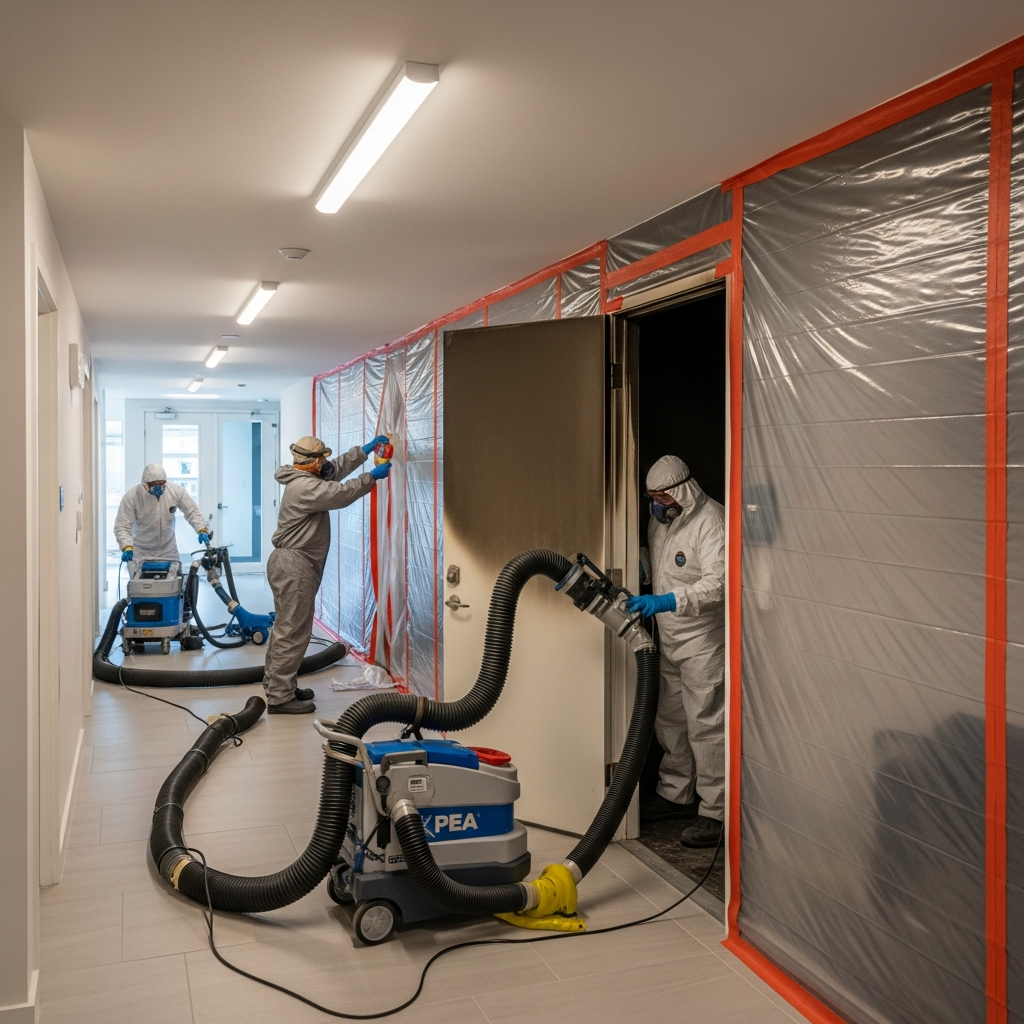
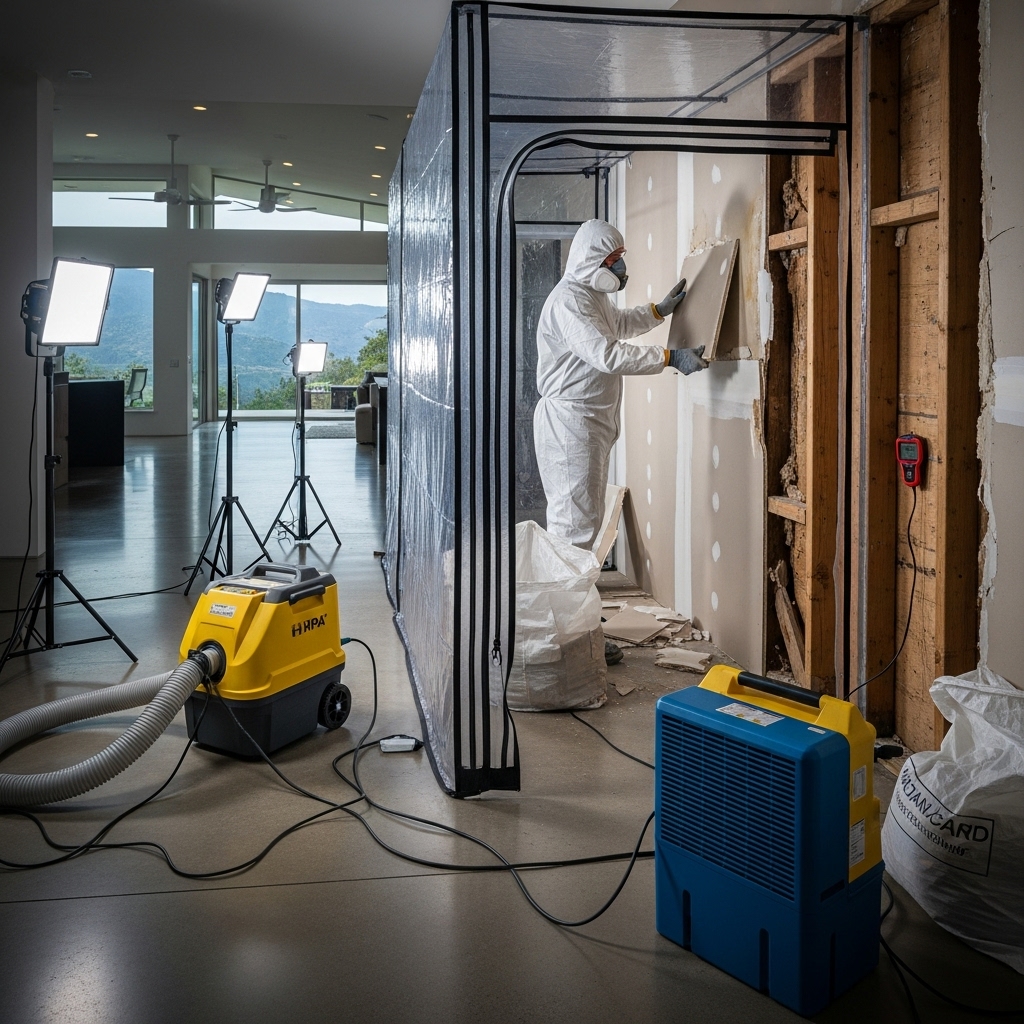
Containment is not just plastic sheeting; it is the structure that defines safety. In Malibu’s often open-plan homes, thoughtful containment maintains architectural flow while creating a controlled environment. Crews establish negative pressure in the work zone so that air always moves from clean to dirty, never the other way around. This directional control, paired with HEPA filtration, captures particulates and prevents cross-contamination. Even in compact spaces, containment can be designed to allow comfortable access for technicians and predictable quiet zones for the household.
Once the zone is set, selective removal begins. The goal is to access impacted materials without disrupting what can remain. Cutting lines are planned to land at natural transitions, preserving finishes for seamless repair. Behind the face of the wall or ceiling, teams evaluate framing, insulation, and cavities to determine what can be cleaned and what must be removed. In coastal homes, corrosion may have weakened fasteners; remediation considers these hidden vulnerabilities as part of the plan.
Cleaning and verification
After removal, thorough cleaning follows—HEPA vacuuming to capture fine particulates, damp wiping of surfaces with appropriate solutions, and careful attention to corners and transitions where dust can settle. When structural wood is sound but stained, surface cleaning and abrasion can remove the impacted layer, and then the material is allowed to dry to target levels. Verification is not a guess; it comes from moisture readings and an absence of visible dust or debris, with independent checks when appropriate to ensure that the space is ready for rebuild.
Drying continues in parallel. Even as remediation is underway, dehumidifiers and air movers manage ambient conditions so that remaining materials do not continue to absorb moisture. Malibu’s humidity can make this balancing act delicate. The difference between effective drying and warping a finish is often a matter of small adjustments rooted in experience—how much heat to introduce, when to adjust airflow, and how to protect sensitive materials like wide-plank oak or plaster.
Understanding sources unique to Malibu
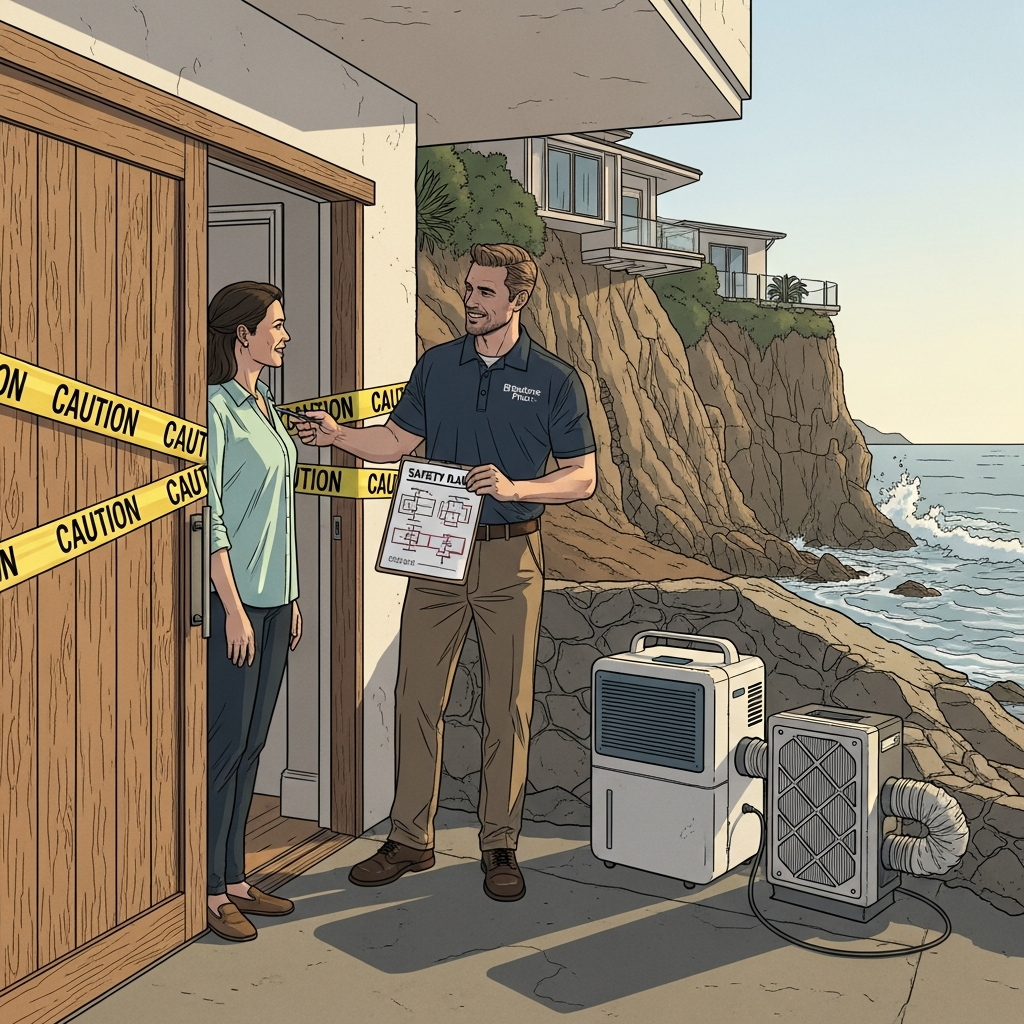
Along the shoreline, wind-driven rain can intrude at door thresholds or through compromised sealants, feeding hidden dampness that later becomes a mold concern. In the canyons, long-running pinhole leaks in copper lines can lurk for months behind showers or below second-floor laundries. Even condensation in poorly ventilated spaces can contribute, particularly during periods when the marine layer lingers. A local team recognizes these patterns quickly and knows where to open for inspection.
Wildfire seasons add another twist. Heat events sometimes trigger internal sprinkler systems or cause water storage to discharge, saturating building materials while smoke introduces fine particulate. The restoration response integrates air quality control with moisture removal and, when necessary, mold remediation for areas that remained damp long enough to support growth.
Respecting architecture and finishes
Malibu homes are personal statements—stone showers with careful veining, custom cabinets, hand-finished plaster, and expansive glazing. Remediation and drying should respect that. Documentation from day one—photos, pattern mapping, sample saving—guides precise repairs. When removal is necessary, it is measured and strategic, preserving surrounding finishes and setting the stage for a rebuild that feels seamless.
Noise and access are considered as well. In hillside neighborhoods where driveways are narrow and neighbors close, crews stage equipment discreetly, protect flooring paths with low-profile mats, and coordinate schedules to keep the household functioning. Thoughtful teams make remediation feel less like an intrusion and more like a practiced routine executed with care.
Communication that keeps you in control
Clear explanations of findings, steps, and milestones turn a complicated process into a manageable sequence. Homeowners appreciate knowing why a particular wall must open or why a drying tent is necessary over a section of flooring. Regular updates with moisture readings and photos show progress and make it easier to coordinate with insurers and designers. The best projects feel collaborative, with the homeowner informed and confident throughout.
Frequently asked questions
How quickly can mold develop after a water incident?
Under the right conditions, spores can begin to grow within a day or two, which is why early stabilization and drying are so important. Rapid response limits the need for extensive removal and shortens the path to a healthy interior.
Do I need testing before remediation?
Testing can be helpful in certain situations, but visible growth combined with moisture evidence often justifies remediation. A reputable team will explain when testing adds clarity and when it may be more efficient to proceed with established protocols.
Will containment make my home feel like a construction site?
Containment is designed to protect, not overwhelm. Thoughtful layouts allow you to move through unaffected areas comfortably, and noise is managed to respect daily routines. The goal is to keep life moving while work proceeds safely.
Can materials be cleaned instead of removed?
Often yes, when the material is structurally sound and the growth is superficial. Structural wood may respond well to HEPA vacuuming and surface abrasion, while soft finishes or porous materials with deeper impact typically require removal.
How do you prevent mold from returning?
The key is eliminating the moisture source and restoring dry conditions. Remediation addresses existing growth, and drying ensures the environment no longer supports it. Any contributing factors—ventilation, sealing, drainage—are identified and addressed to reduce recurrence.
Is it safe to stay in the home during remediation?
Often it is, provided containment and air filtration are correctly set and the work area remains isolated. Your team will discuss safety considerations and make recommendations based on the extent and location of the project.
If moisture or mold has challenged your peace of mind, you do not have to navigate it alone. Choose local professionals who blend scientific rigor with the discretion Malibu living deserves. When you are ready for thoughtful, coordinated water damage restoration that integrates effective mold remediation, reach out and reclaim the comfort of your home with confidence.