When water intrudes, minutes matter. In Malibu, those minutes are often shaped by coastal weather, canyon microclimates, and the real-world logistics of getting a trained team to your door along Pacific Coast Highway. Emergency response is not just about speed; it is about bringing the right equipment, the right safety mindset, and the right plan to stabilize the loss and protect your home’s structure and contents. Having guided homeowners through midnight pipe bursts in Point Dume and storm-driven intrusion along Malibu Road, I have seen how a calm, methodical approach to water damage restoration can transform a chaotic moment into a manageable process within the first few hours.
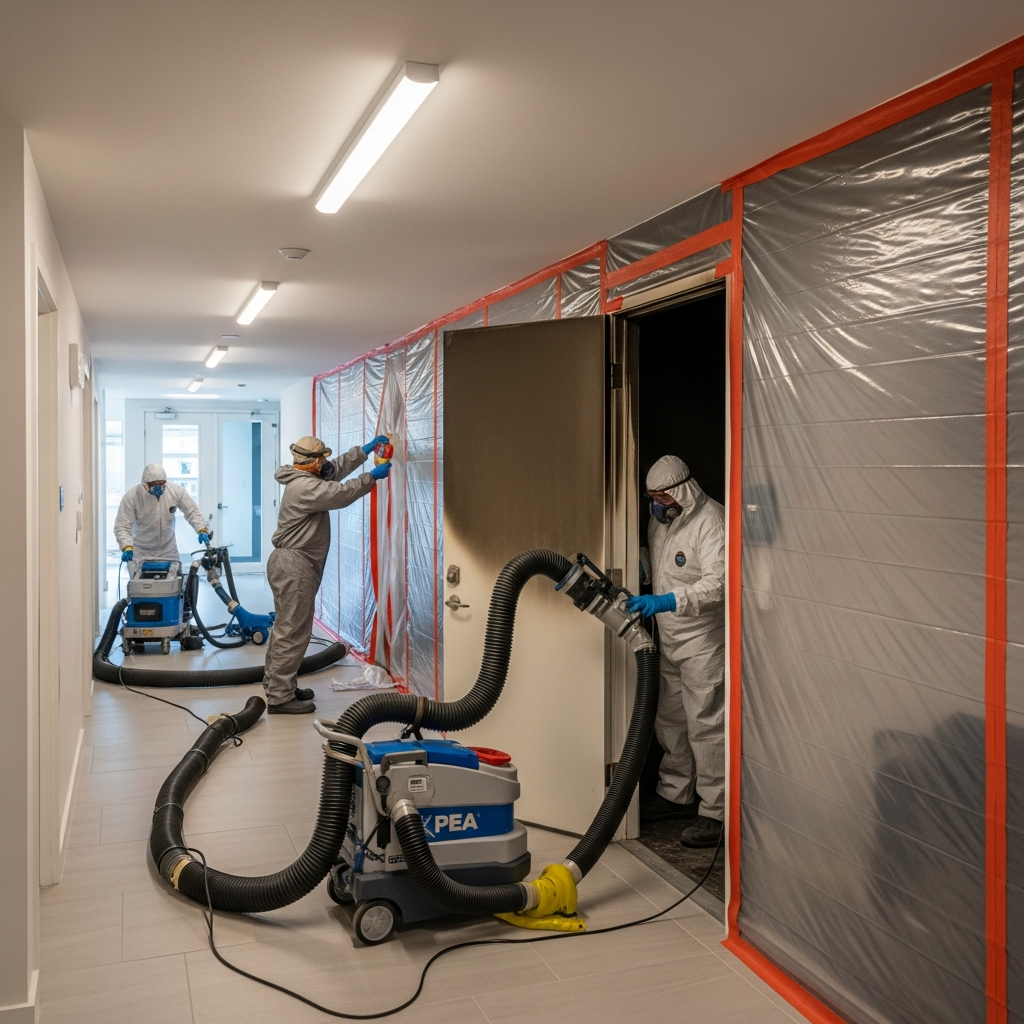
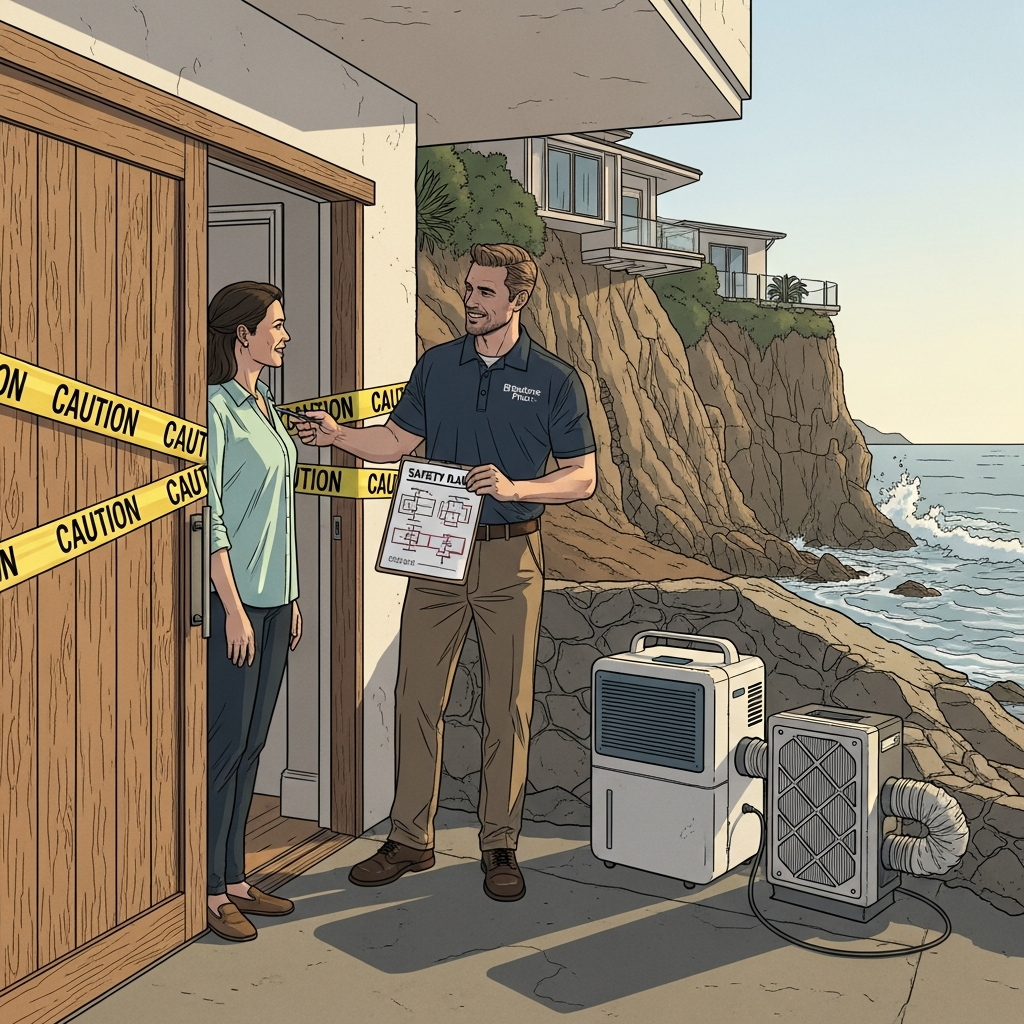
Everything begins with safety. Any time water and electricity cross paths, there is risk. A seasoned emergency team will assess for shock hazards, shut down affected circuits where necessary, and verify that ceilings are not holding dangerous volumes of water overhead. They will also confirm that the water source is controlled, whether that means closing a supply valve, capping a failed line, or mitigating storm entry points until the weather passes. Stabilizing the environment comes next: establishing containment if clean and affected areas must be kept separate, deploying HEPA air filtration in sensitive spaces, and setting up pathways to protect flooring as equipment moves in and out.
The First Hour: Smart Extraction and Clear Priorities
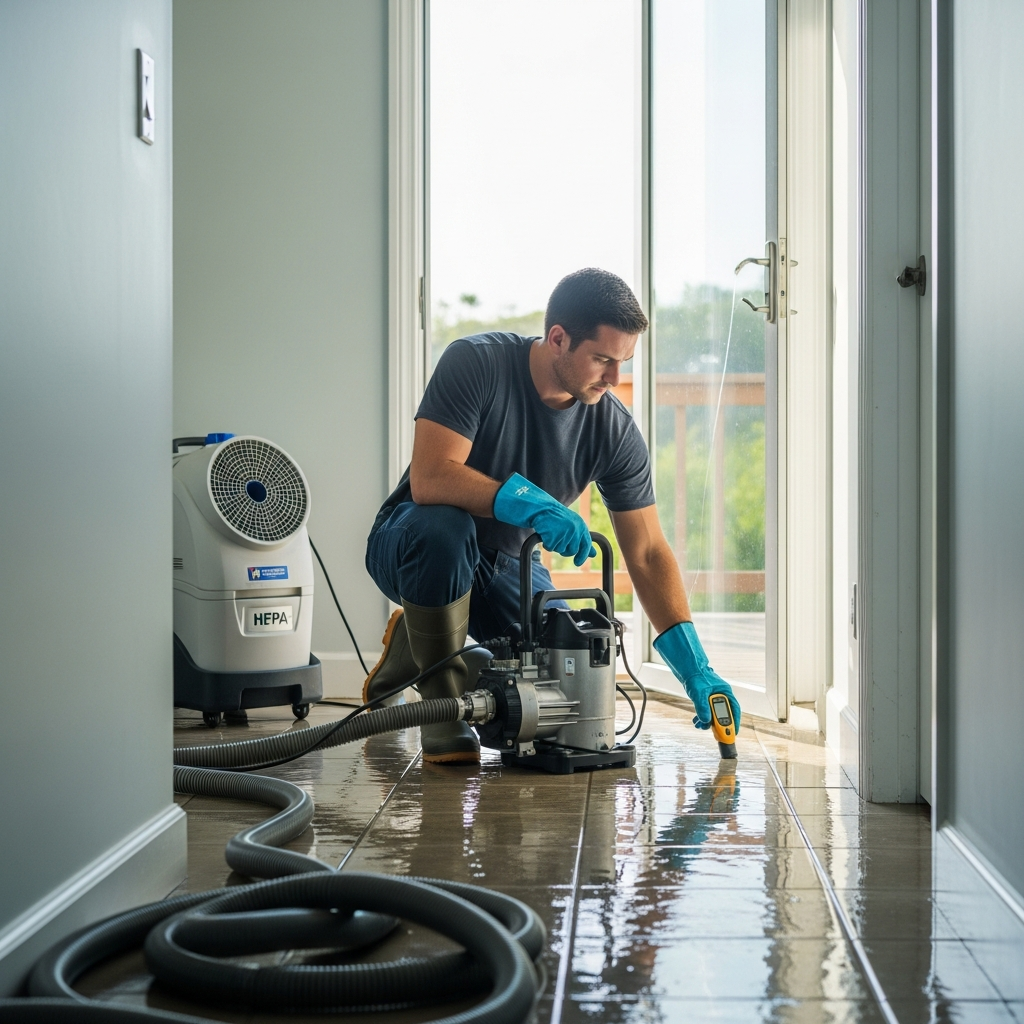
Initial extraction sets the tone. The more liquid water removed quickly, the less drying the structure must do later. Technicians use a combination of submersible pumps, weighted extraction tools for carpets, and specialty wands that navigate tight spaces. In Malibu’s diverse housing stock—from slab-on-grade beach cottages to hillside homes with crawlspaces—access shapes these tactics. Crawlspaces require special care to avoid aerosolizing contaminants, while elevated decks and tight stairwells guide equipment selection and crew size.
Within that first hour, a good team is already mapping moisture. Thermal cameras reveal anomalies that point to hidden wet areas, and moisture meters confirm what is saturated versus merely damp. This matters enormously for finishing materials like plaster, hardwood, and custom cabinetry, where controlled drying can preserve what demolition would otherwise destroy. It also helps prioritize which areas to treat first and where to stage dehumidification for maximum effect.
Understanding Water Categories Without the Jargon
Emergency conditions can originate from different sources. A supply line break may be relatively clean at the outset, while a roof leak after days of rain can carry debris. Flooding from outside is typically considered heavily contaminated, especially if it brings in silt or organic matter. You do not need the industry jargon to grasp the key point: the type of water influences the mix of extraction, cleaning, and removal tactics. A professional team will explain the health implications clearly and set expectations about what can be salvaged and what should be removed for safety.
For homes near the water, salt spray and elevated humidity amplify the challenge. Metals corrode faster, and HVAC systems can spread moisture if run before they are safe. Emergency crews familiar with coastal conditions will protect sensitive systems, advise on when to run or shut down air handlers, and pay special attention to cavities where damp, salty air can linger.
Drying Strategies Tailored to Malibu Homes
Effective structural drying is part science, part craft. The science is in the psychrometrics—the careful balancing of temperature, humidity, and air movement to encourage evaporation without causing damage. The craft is in understanding materials and assemblies: when to remove baseboards and drill weep holes, when to tent hardwood with focused airflow, when to use negative pressure to dry behind plaster, and when to swap a refrigerant dehumidifier for a desiccant unit because the coastal air is too cool or too humid for standard equipment to keep pace.
In practice, this looks like a measured, step-by-step sequence. After extraction, dehumidification and air movement begin. Containment is refined to concentrate drying where it is needed most. Daily checks and moisture readings verify progress, and adjustments follow if certain assemblies lag. In beachside homes with large window walls, for example, temperature can swing with cloud cover, so technicians may tweak equipment placement and settings to keep conditions steady.
Communication When Adrenaline Is High
Emergency work unfolds quickly, and homeowners deserve a simple narrative that answers the obvious questions: What happened, what are we doing right now, what comes next, and how long will it take? A responsive team assigns a single point of contact who explains each stage, coordinates access with gatehouses and neighbors if needed, and keeps you informed about equipment noise, daily visits, and how to navigate your home safely while drying is underway. That calm voice on the other end of the line is not a luxury; it is part of the service.
Insurance often enters the conversation within the first day. Proper documentation in the heat of the moment pays dividends later, so look for a team that photographs conditions thoroughly, notes measurements, and captures the rationale for each decision. You should expect a short, readable update after the first visit that you can forward to your adjuster without deciphering technical codes.
Protecting What Makes Your Home Yours
Contents deserve as much attention as the structure. Malibu residences often include heirloom rugs, custom furniture, surfboards and gear stored in garages, and art that does not tolerate humidity swings. Emergency crews should prioritize moving vulnerable items out of harm’s way, staging them in dry zones, or arranging a documented pack-out if needed. Soft goods can sometimes be dried and sanitized on-site; other times they are best sent for specialty cleaning. The point is to act quickly with a plan that respects the uniqueness of your belongings.
Midway through emergency mitigation, a check-in is valuable. This is the moment to ensure your priorities are still front and center, to confirm progress with updated moisture logs, and to decide whether any new areas of concern have surfaced. It is also an appropriate time to reaffirm that your water damage restoration goals remain aligned with the drying strategy, contents care, and any steps required to transition toward repairs.
From Chaos to Stability: The 24–72 Hour Window
The first three days after a water event often determine the long-term outcome. When drying conditions are established quickly and monitored closely, secondary damage such as microbial growth is far less likely. You should see and feel the environment moving in the right direction: lower humidity, cooler equipment surfaces as moisture levels drop, and shrinking wet areas on thermal images. A seasoned team will remove equipment intentionally once targets are reached, not a day sooner, and will validate dry standards with clear documentation.
In Malibu, access, weather, and even high tides can influence this window. Crews must be adaptable, and the best ones are. If a road closure delays a daily check, they will plan ahead with remote sensors or add personnel to keep the schedule. If fog keeps temperatures low, they will adjust dehumidification strategies to maintain effective vapor pressure differentials. These are the small but crucial decisions that turn a rapid response into a successful outcome.
Planning the Transition to Repairs
Once emergency mitigation is complete, attention turns to making the space whole again. Whether your project requires minor drywall repairs and paint or broader reconstruction, a clean handoff matters. You should receive a concise scope of what was done, what materials were removed, and what conditions are ready for rebuild. If specialty trades are needed—stone restoration, millwork repair, or flooring replacement—coordination begins here, with schedules and site protection plans that keep momentum without compromising quality.
For many homeowners, this is also the right time to consider resilience improvements like leak detection on washing machine supplies, smart shutoff valves on main lines, and improved exterior drainage. A good restoration partner mentions these options as part of a holistic approach rather than a hard sell, focusing on the simple upgrades that deliver the most protection for your lifestyle and property layout.
Frequently Asked Questions
What should I do first when I discover water damage?
Start by ensuring everyone is safe. If water is actively entering, shut off the source if you can do so safely, and avoid using electrical devices in wet areas. Call a qualified emergency restoration team and be prepared to describe what you see and when it started.
How long does emergency drying take?
Most projects stabilize within a few days, but the timeline depends on the water source, the materials involved, and environmental conditions. Daily monitoring drives decisions about when equipment can be reduced or removed.
Can my HVAC run during drying?
It depends. In some cases, the system helps control humidity; in others, it can spread moisture or contaminants. Your restoration team will advise based on the conditions in your home.
Will everything need to be replaced?
Not usually. Many materials can be dried and saved when action is fast and targeted. Items that lose structural integrity or that cannot be sanitized safely are the primary candidates for removal.
How do I keep my family comfortable during emergency work?
Clear communication and sensible planning help. Expect some equipment noise and daily visits. Your team should coordinate access, protect living areas, and offer suggestions for how to use unaffected rooms while work proceeds.
Ready to Stabilize and Restore Your Home?
When minutes matter, choose a partner who moves quickly and thoughtfully, communicates clearly, and respects the character of your Malibu home. If you need immediate help today, reach out for trusted water damage restoration and take the first step toward a safe, steady recovery.