When water finds a way into a Malibu home, the clock starts ticking. From wind-driven rain at the shoreline to a burst line above the canyons, emergency response is a blend of speed, judgment, and respect for the unique character of our coastal community. The first hours matter because moisture migrates quietly behind finishes, and every minute of delay invites secondary damage. That is why homeowners here rely on local pros who understand how humidity swings with the marine layer, how access up winding roads affects logistics, and how to stabilize a property gracefully even in the middle of the night. In urgent moments, calling experienced help for water damage restoration is as much about peace of mind as it is about equipment.
Emergency mitigation begins with control. The obvious steps—shutting off water, tarping a leak point, or setting temporary containment—are only the start. Trained technicians read your home the way a sailor reads the sea, searching for the tells that matter: a slightly cooler patch on thermal imaging that reveals trapped moisture, or a swollen baseboard that hints at water wicking behind drywall. In these first moments, precision beats panic. Small openings at strategic locations can release hidden water and speed dry times, while well-placed air movers create the right flow across damp surfaces without blasting contaminants into clean rooms.
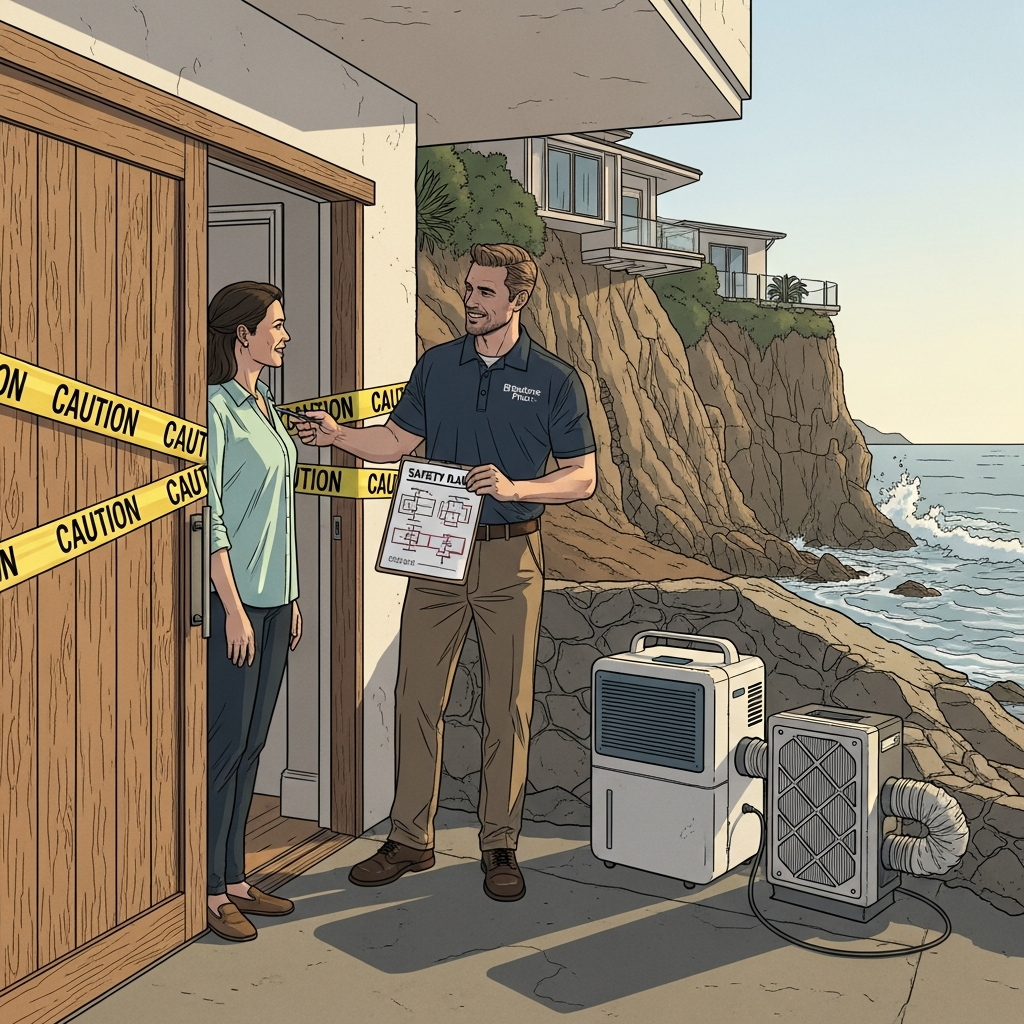
Malibu’s topography shapes emergency work in subtle ways. Along the water, wide glass sliders and minimal frames make views incredible, but they also present pathways for wind-driven rain. Inland, hillside homes with multiple levels can funnel water to unexpected places, like a ceiling below a laundry room or a stair stringer that collects runoff from a roof valley. An emergency team versed in these patterns will anticipate downline risks and stage protection where it counts.
The first 24 hours: stabilize, assess, and communicate
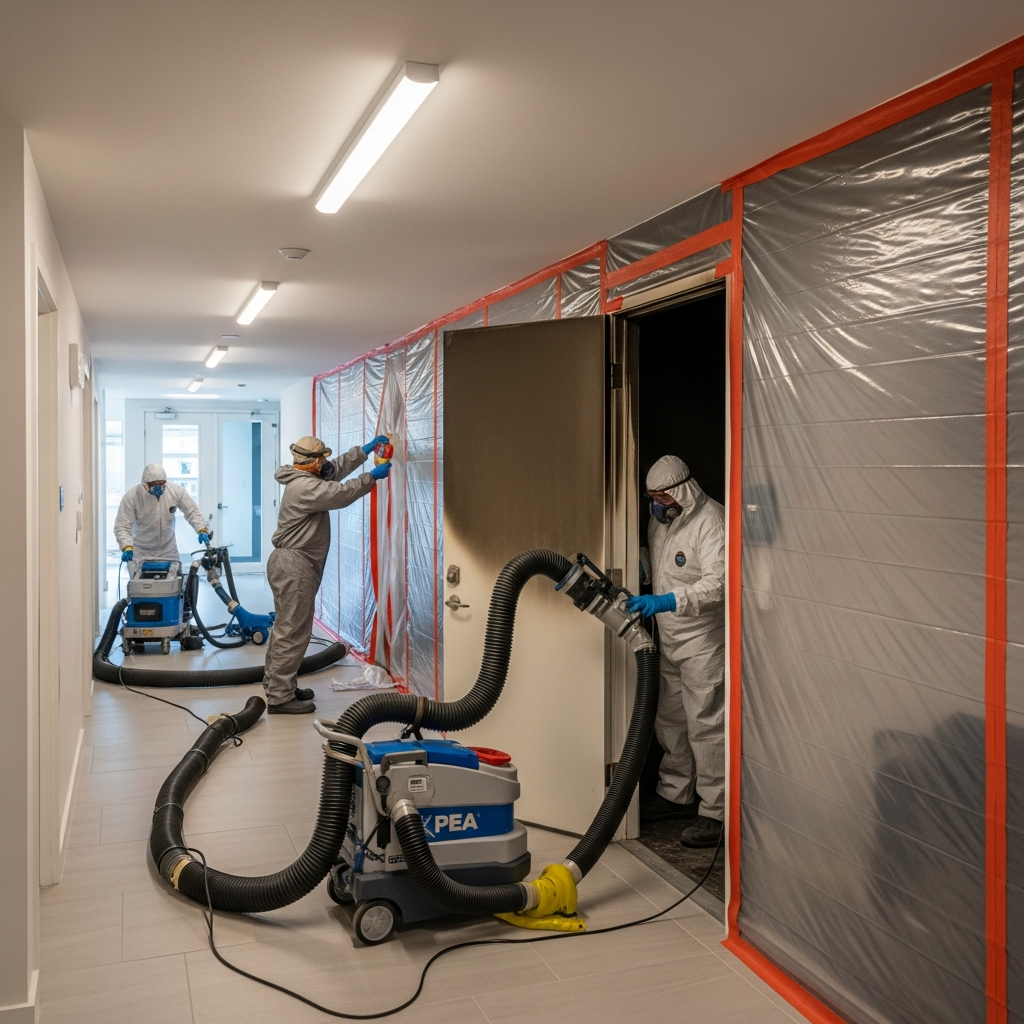
After the source is controlled, the next priority is to stabilize the environment. Dehumidifiers begin lowering vapor pressure, containment goes up to isolate affected zones, and negative air machines may run if there is a risk of aerosolized contaminants. At the same time, careful assessment builds the roadmap: moisture readings establish a baseline, photos document conditions, and a plan of action defines the sequence—what dries in place, what is removed, and where to drill or cut discreetly for access.
Communication turns chaos into order. Even at odd hours, homeowners appreciate knowing what will happen overnight and what to expect at the morning check-in. Good teams summarize findings in plain language, set realistic targets, and explain choices. They will tell you why a plank floor needs tenting in one room but not another, or why keeping HVAC off for a few hours protects the system from drawing moisture into ducts.
Working with the weather, not against it
Malibu’s weather can change what “emergency” looks like. During winter storms, high humidity and cool temperatures slow evaporation. Crews adjust the strategy, sometimes choosing desiccant dehumidification to capture moisture even in cooler air, other times adding supplemental heat in a controlled way to elevate vapor pressure and accelerate drying. During late-summer heat, the challenge is the opposite—preventing over-drying and warping while still chasing moisture hidden in assemblies. Local experience teaches when to open a space to fresh air for a short window and when to keep it sealed to maintain control.
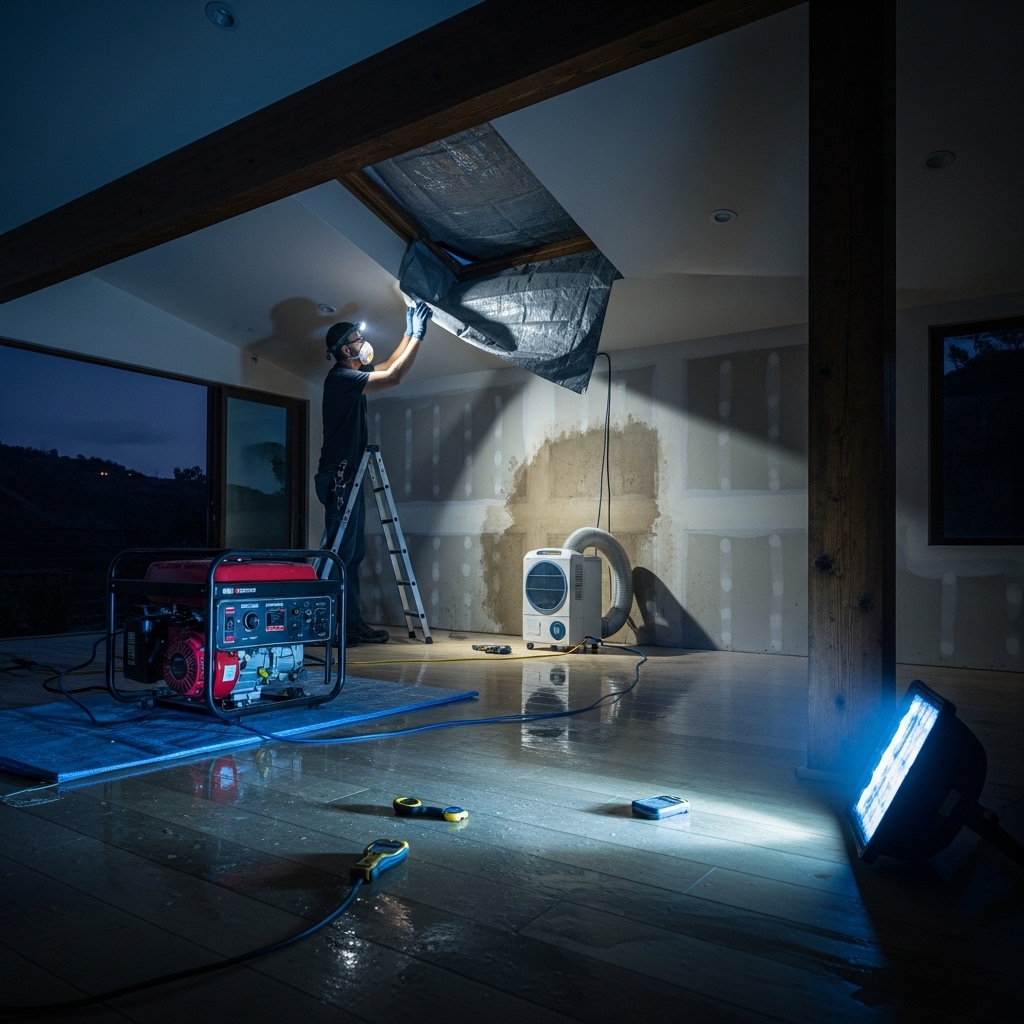
Power and access are practical realities. Storms can bring outages, and canyon properties may sit at the end of narrow lanes. Experienced emergency teams arrive prepared with load management plans, safe cord runs, and, when needed, small generators to keep critical equipment running without overtaxing circuits. They also know the etiquette of working quietly during late hours, protecting neighbors’ rest with careful staging and smart equipment choices.
Why immediate documentation matters
In an emergency, it can feel counterintuitive to pause for photos or take meticulous moisture readings. Yet that documentation is what proves the extent of impact and justifies the steps taken to protect your home. It also becomes a handoff tool, allowing the day crew to continue seamlessly and giving your insurer a clear, factual account. A detailed log—rooms, materials, readings—turns a hectic night into an understandable story that supports decisions later.
Health and safety during urgent response
Not all water is the same. A supply line leak is different from storm intrusion or a drain backup. Emergency responders assess category and adjust protections accordingly. That can mean bumping to higher levels of personal protection, isolating HVAC returns, and switching from pure drying to a combined plan that includes cleaning and disinfection. If there is any indication of prior moisture, the team may add air filtration and set expectations for potential microbial investigation as the space opens up.
From crisis to recovery
The pivot from emergency to steady-state restoration is a milestone. Once the environment is stable and readings show progress, the pace becomes thoughtful rather than urgent. This is often the moment to align schedules, coordinate with your remodeler if repairs will follow, and double-check that valuable finishes are documented for perfect reinstallation. Midway through, it is also wise to revisit goals and confirm that the plan still fits the evolving picture, especially if additional wet areas were discovered behind finishes. Staying connected with a trusted team for ongoing Malibu water damage restoration keeps momentum without sacrificing care.
What makes emergency work in Malibu different?
Our geography and building styles mean access can be tricky and finishes are often custom. The combination demands quick thinking and gentle hands—stabilize fast, then move with surgical precision. Understanding marine layer humidity, canyon winds, and the realities of the PCH helps teams plan effectively.
Should I wait for daylight to call?
No. Overnight stabilization can prevent a small problem from growing. Even if full-scale work waits until morning, a night response can isolate the area, start drying, and stop migration that would complicate the next day’s work.
Can I stay in the home during emergency drying?
Often yes, provided safety and indoor air quality are maintained. Crews can zone off affected areas, manage noise, and schedule checks around your routine. If conditions warrant temporary relocation, your team will explain why and for how long.
What if the leak started days ago?
That is common with slow leaks. The plan shifts from pure drying to a measured approach that may include opening assemblies for inspection and, if needed, remediation. The goal remains the same: restore a clean, dry, and healthy environment.
How do you protect valuable finishes during an emergency?
By combining speed with restraint. Crews stabilize first to stop ongoing damage, then choose access points that avoid unnecessary demolition. Documentation of patterns, cuts, and materials preserves the path to seamless repairs.
Will my insurance company be looped in during the emergency phase?
Yes. A clear summary with photos and readings helps your adjuster understand the urgency and supports decisions. Good teams facilitate that communication so approvals do not slow progress.
When water demands immediate action, choose calm expertise over chaos. Local responders who know Malibu’s rhythms can protect your home the moment you call and guide you through the hours that follow. If you are facing an urgent situation now, reach out for prompt, professional water damage restoration and get your space stabilized with confidence.