Living on the water in Malibu is a dream defined by tones of blue and the rhythm of surf, but the same forces that make it magical can test a home in an instant. Winter storms combine wind, rain, and high surf into a single engine of intrusion. Salt-laden spray rides the air, waves leap seawalls on extreme tides, and wind-driven rain sneaks past weatherstripping to trace new lines inside. In those moments, the right response is both immediate and nuanced, designed for oceanfront realities rather than generic checklists. Over years of working on these shore-side properties, I’ve learned that a calm, practiced approach and timely water damage restoration are what keep a rough day from becoming a long season of repairs.
Oceanfront homes ask different questions of you. You’re managing not just rainwater but the chemistry of salt, the mechanics of sand, and the relentless movement of air. Sliding doors, decks, and thresholds that feel solid on a dry day can be pathways for surge when a set breaks higher than expected. Overhangs help until wind shifts and drives needles of rain upward and inward. And once water is inside, metal fixtures and fasteners care less about how beautiful the room is and more about what chlorides will do over the next few weeks if they’re not removed.
Where and How Water Enters on the Coast
Entry points are both obvious and subtle. Sliders facing the water are the usual suspects, especially older assemblies with tired weatherstripping or clogged weep holes. But we also see intrusion where deck planes meet interior floors, at door thresholds that sit only millimeters above the finished deck, and at parapet caps where wind-driven rain moves horizontally. On particularly harsh days, spray can saturate stucco or plaster, and the wall itself becomes a temporary reservoir. Water also travels from the garage or storage rooms where wet boards or gear are staged after a surf session in a storm; those puddles migrate into living areas if unchecked.
Eaves and rooflines matter. A deep overhang deflects ordinary rain, but a southeast wind can turn the protected side into a target. Skylights and clerestories bring in light and, occasionally, a thin trickle that runs deceptively along framing before it shows up as a stain far from the source. The goal in emergency response is to map the probable paths quickly and act on the ones that matter most, minimizing the time water has to move onward.
Immediate Steps That Protect the Structure
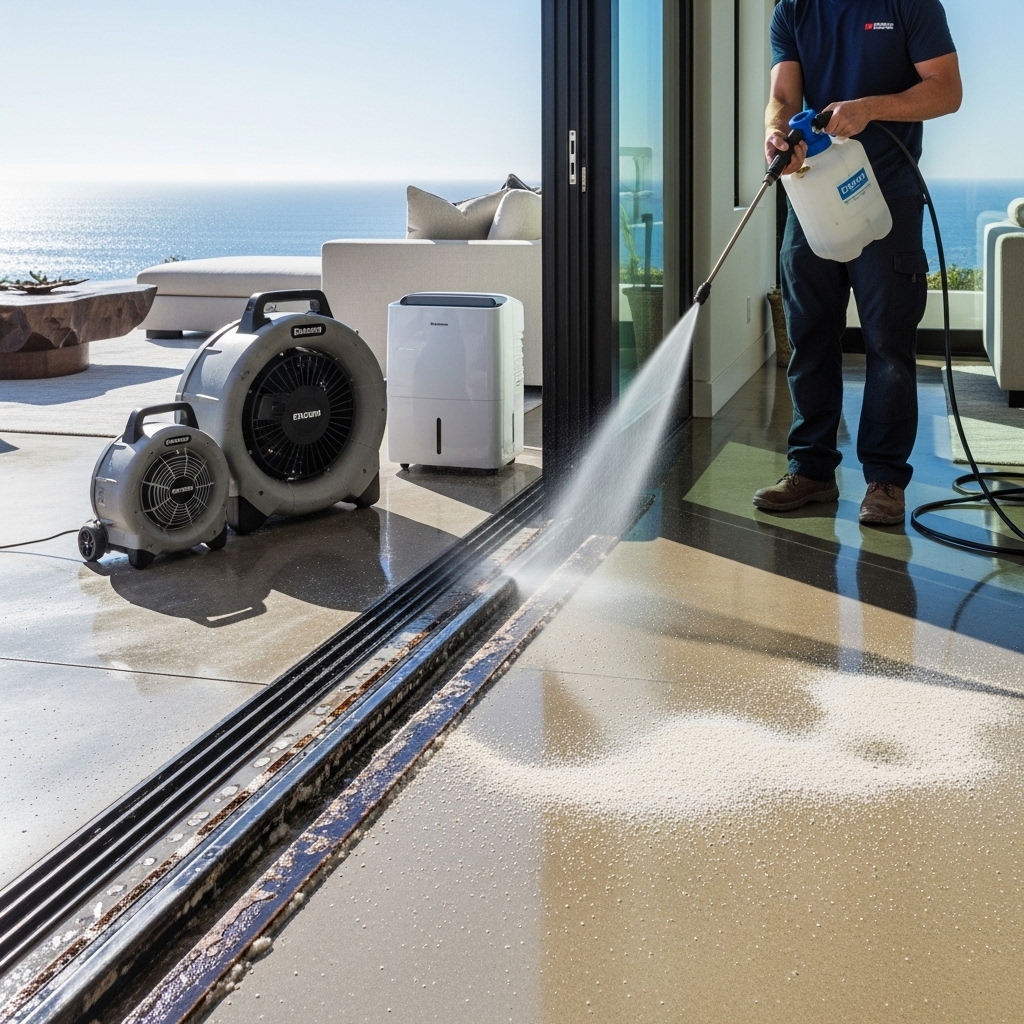
Start with safety and documentation: verify power is safe on affected circuits, photograph visible intrusion points and standing water, and clear paths for crews. Then remove standing water with tools that match the surfaces—squeegees on smooth decks, low-profile pumps in shallow pools, and weighted extractors on rugs. Because saltwater and spray can leave residues that continue to attract moisture, the next step is a thorough rinse and neutralization of affected metals and tracks. Stainless steel in a coastal home is resilient but not invincible; without early care, pitting and staining can show up long after the house looks dry.
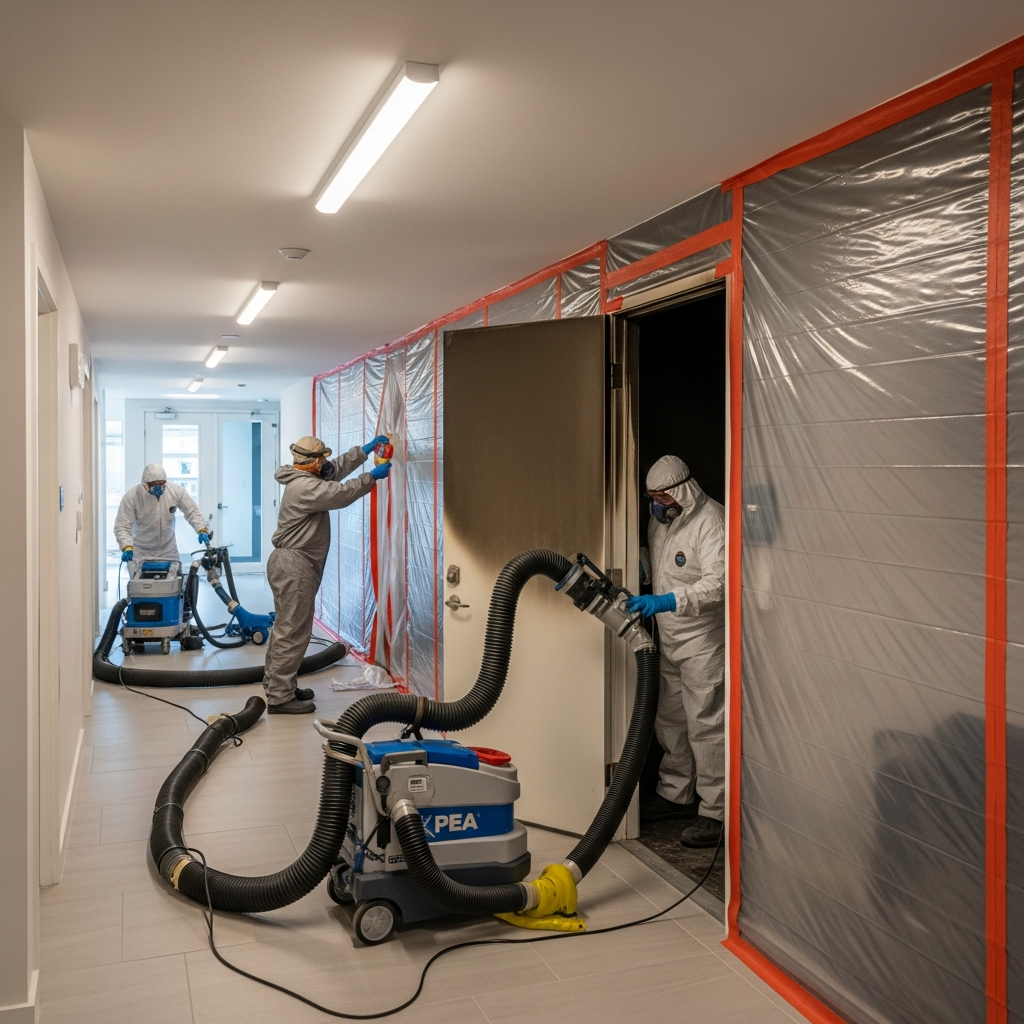
Containment keeps clean areas clean. We often create a controlled zone around the wet rooms with plastic barriers and negative air, especially if we suspect that wall cavities are involved. That approach preserves indoor air quality while allowing aggressive drying inside the work area. In multi-level homes, planning access so crews can move equipment without crossing unaffected areas is as much about thoughtfulness as it is about efficiency.
The Role of Salt and Sand in Coastal Drying
Salt changes the game. It’s hygroscopic, meaning it attracts and holds moisture, and it accelerates corrosion. Sand complicates seals and can act like a wedge in slider tracks. The drying plan incorporates both facts: we rinse residues where appropriate and set dehumidification to maintain conditions where materials let go of moisture without damage. Air movers are angled to promote laminar flow over wet surfaces without blasting salt deeper into assemblies. In some cases, we pull thresholds to access moisture that has tracked beneath, which also lets us clean hidden metals thoroughly before reassembly.
Materials Common to Oceanfront Homes
Large-format tile over mortar beds is a common coastal finish because it holds up to daily life and occasional spray. After an intrusion, though, that mortar can hold water like a sponge. Moisture telegraphs slowly to the surface, so a floor can feel dry while the system below remains saturated. We respond with targeted extraction, attention to grout and perimeters, and sustained dehumidification. Engineered wood floors can behave politely at first and then cup hours later; monitoring catches that trend early so we can adjust airflow or make surgical openings if needed. Plaster walls—beloved for their smoothness—reward a measured drying pace that avoids surface cracking while drawing out moisture from the base coats.
Windows, Doors, and the Little Things That Matter
After a storm, we often find small clues: a faint salt crust on a hinge, sand in the corner of a track, a subtle stiffening in a pivot door. Early attention keeps these from turning into sticky sliders or rust blooms down the line. Cleaning and lubricating with the right products is part of emergency work on the coast. It’s not cosmetic; it’s preventive maintenance woven into restoration.
Hidden Voids in Shore-Side Construction
Oceanfront architecture loves cantilevers, built-ins, and negative-edge details. These create voids—behind the media wall, under the raised platform, within a floating stair—that can trap moisture. Thermal imaging and non-invasive meters help locate those pockets. Strategic openings, often hidden behind removable base details or in utility areas, allow us to move air precisely. When a space is tight, we deploy low-profile air movers and, in some cases, small ducting that feeds dry air into cavities without tearing apart finishes.
Case Narratives From the Tide Line
One late-season storm brought an unusual combination of swell direction and onshore wind. A home near Broad Beach took water under a brand-new multi-panel slider system. The intrusion was fast but shallow, and the floors were engineered oak over a sound-rated underlayment. We extracted immediately, pulled the base along the ocean wall, and used wall-cavity drying with negative pressure to avoid pushing salt deeper. The tracks were disassembled, rinsed, and reassembled after neutralization. Monitoring showed the underlayment releasing moisture over several days, and cupping never progressed beyond a minor edge. Because we treated salt as a first-class problem, hardware remained pristine.
In another case, a hillside property above the water experienced wind-driven rain that bypassed a parapet cap and ran inside a plaster wall. It showed up first as a subtle shadow near the baseboard in a room far from the ocean. The instinct to paint over the stain would have been strong, but investigation revealed damp insulation and a small reservoir at the base. We opened a discreet section, dried the cavity under containment, and corrected the exterior detail afterward. That invisible save prevented odor and mold and preserved a delicate plaster finish.
Power, Access, and Working With the Elements
Storms don’t respect schedules. We work with generators when needed, manage cord runs in tight spaces, and plan around tide cycles so that exterior work on decks or understructures happens safely. Salt spray can make outdoor surfaces slick; we secure walkways and protect flooring during equipment moves. All of this logistics work is part of doing things properly on the coast. It’s why oceanfront restoration feels different—because it is.
Monitoring and Adjusting as Materials Respond
Drying is dynamic. As materials give up moisture, readings change, and so does the strategy. Engineered wood that looked stable on day one might telegraph a trend on day two that suggests focused airflow at the perimeters. Plaster responding too quickly may call for a slight reduction in airspeed to avoid surface stress. We’re always balancing time, material integrity, and the chemistry left behind by ocean water. That balance is where experience shows.
Communication That Keeps You in Control
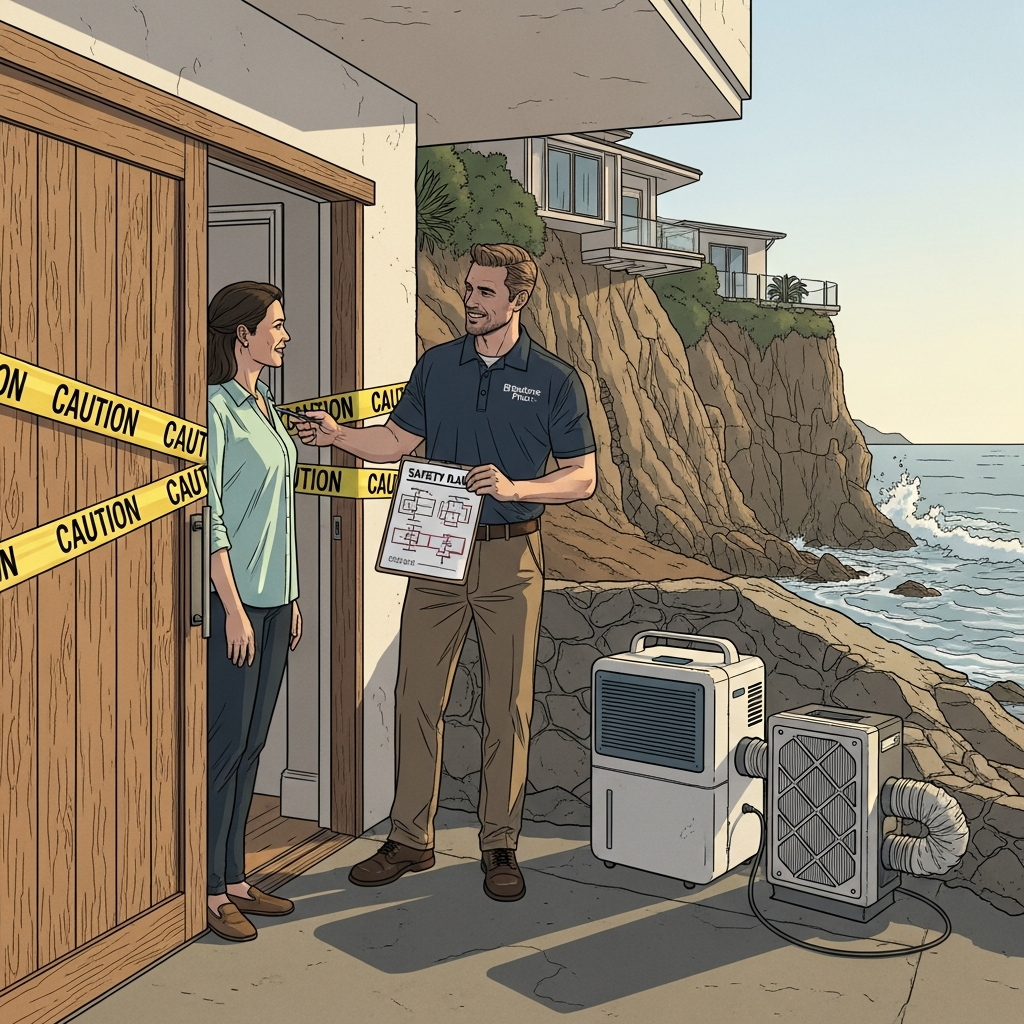
Oceanfront homeowners appreciate straight answers and visible progress. We provide daily updates and photo logs that show readings, equipment placements, and adjustments. If insurance is involved, that record supports approvals and helps everyone understand why certain steps—like track disassembly or threshold removal—are necessary. Clear communication turns an emergency into a series of understandable decisions rather than a blur.
Midcourse Check: Confirming We’re on Track
Midway through the emergency phase, we pause to confirm that drying goals remain realistic. This is where we recalibrate equipment and revisit spaces that can become secondary problems, like garages with wet gear or storage rooms holding damp rugs. It’s also a good point to discuss minor resilience upgrades: weep hole maintenance, slider tune-ups, and threshold adjustments. Keeping the entire water damage restoration process coherent prevents drift and speeds recovery.
Resilience on the Water’s Edge
When the immediate crisis has passed, you can turn to preparation. On the oceanfront, resilience looks like perfectly functioning weep systems, clean slider tracks, new weatherstripping before it fails, and exterior sealants maintained to spec. It also means minding deck slopes, ensuring that any planters don’t hold water against thresholds, and having a plan for staging wet items outside living areas after a storm session. These are not grand gestures—they’re the quiet routines that keep homes dry more often than not.
What “Restored” Feels Like
There’s a particular satisfaction when an oceanfront home breathes easily again. The air loses its heavy edge, metal surfaces gleam without spots, and doors slide with that smooth, quiet confidence you expect. Restoration is about that feeling, not just the numbers on a meter. Numbers guide us, but the goal is a house that lives right—materials at equilibrium, systems working, and the view framed by glass that seals the weather on the outside where it belongs.
Frequently Asked Questions
Is saltwater intrusion different from freshwater leaks?
Yes. Saltwater requires additional steps to remove residues that attract moisture and can corrode metal. Rinsing, neutralization, and vigilant drying are built into oceanfront protocols in a way they aren’t for routine freshwater events.
Can I save engineered wood floors after a surge incident?
Often, if extraction and drying begin promptly and cupping is mild. Monitoring is essential, and targeted airflow at perimeters helps. If trapped moisture in underlayments persists, selective openings may be necessary to prevent long-term issues.
What should I do immediately after I notice water?
Ensure safety, document the scene, and start controlled extraction. Keep traffic off wet floors, avoid operating sliders through sandy tracks, and call experienced help. Early action limits migration and protects finishes and hardware.
Will my metal fixtures rust even if I don’t see damage?
They can. Invisible residues may initiate corrosion later. That’s why cleaning and neutralizing hardware and tracks is part of the emergency response, even when surfaces look intact.
How long does drying take on the coast?
It depends on materials and the extent of intrusion. Dense assemblies like mortar beds release moisture slowly, while drywall can respond more quickly. Most projects stabilize in several days, with ongoing monitoring until readings return to baseline.
Do I need to replace weatherstripping and seals regularly?
Yes. The coastal environment is tough on seals. Periodic inspection and replacement prevent small gaps from becoming avenues for water during storms. It’s a modest effort with a big payoff in resilience.
Final Notes and Next Steps
When the ocean tests your home, a steady hand and a clear plan make recovery feel straightforward. From careful extraction to salt-aware cleaning and measured drying, every step matters. If you want that expertise on your side, reach out for trusted water damage restoration tailored to Malibu’s oceanfront homes. With timely action, your home will return to the easy, breezy rhythm that drew you to the water in the first place.