When water disrupts an office in Malibu, the ripple effects extend beyond wet carpets and damaged drywall. Teams lose workdays, client meetings get rescheduled, and the steady rhythm that keeps a business moving can stall. From modern suites near the Civic Center to boutique offices in Malibu Country Mart and spaces tucked along PCH, commercial properties in our area combine high expectations with unique practical constraints. The key to a successful recovery is a plan that blends rapid mitigation with business continuity, respects tenant improvements and brand aesthetics, and communicates clearly with stakeholders. Early mobilization and the right local partner for water damage restoration restore momentum while protecting health and safety.
Commercial buildings behave differently than homes when water appears. Larger footprints and complex systems introduce variables like shared walls, plenum spaces above ceilings, and mechanical rooms that serve multiple suites. Sprinkler discharges, roof leaks during winter storms, or failed supply lines to break rooms can all wet materials quickly across a broad area. The first job is to make the environment safe by addressing electrical concerns, slip hazards, and any contaminants. Once stabilized, the strategy focuses on extracting water, establishing containment to isolate affected zones, and keeping unaffected portions of the office operational where possible.
Business continuity and communication
Every hour counts in a commercial setting. A well-run response starts with a briefing that aligns property managers, tenants, and the restoration team. Who needs access and when, where can equipment stage without blocking egress, and which areas are critical to resume operations first. This triage perspective ensures that urgent spaces like reception, conference rooms, or core work areas receive immediate attention. Night and weekend work windows are often used to minimize disruption, with crews documenting progress so stakeholders arrive each morning to clear updates and measured improvements.
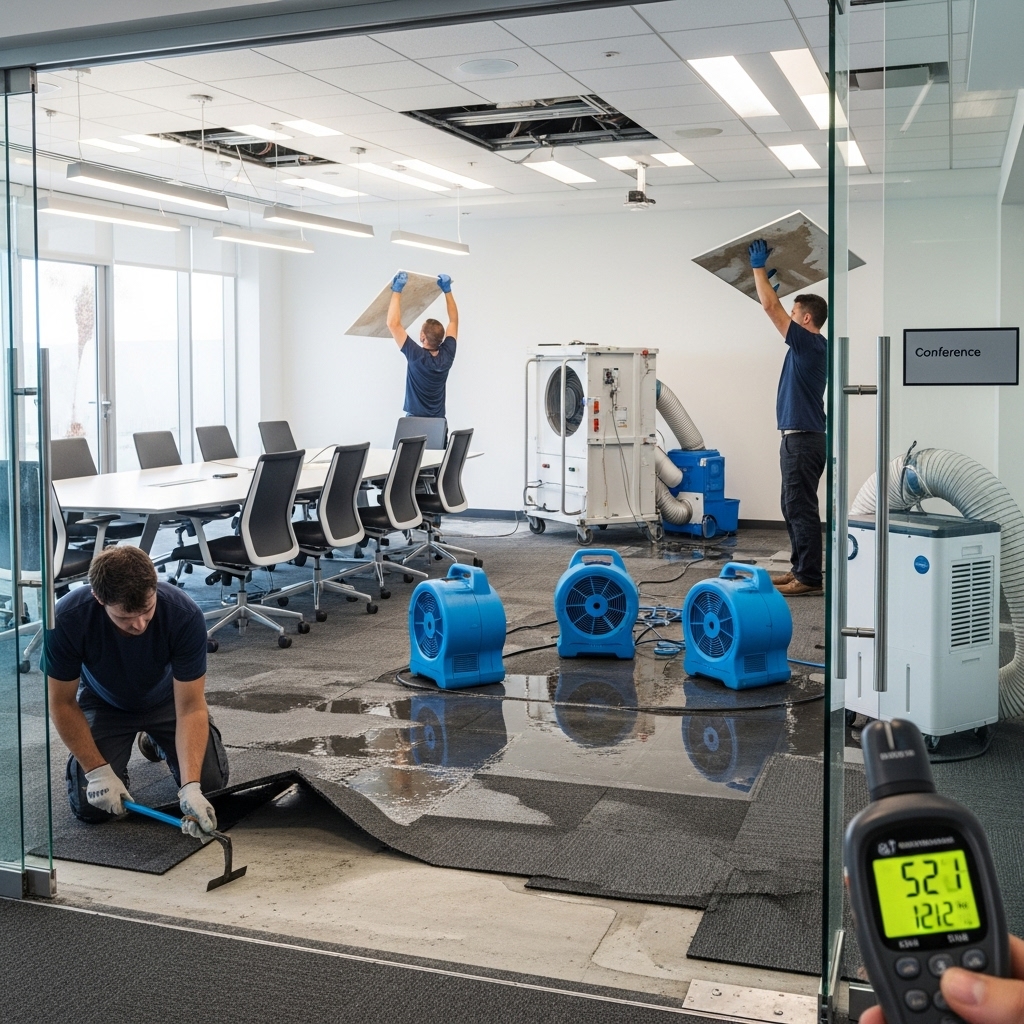
Communication is as important as dehumidification. Daily moisture readings, photos, and notes become short status reports that property managers can forward to ownership and insurers. These updates maintain transparency, support decision-making, and reduce friction. In multi-tenant buildings, coordination avoids conflicts about noise, air movement, and access to restrooms or corridors. The goal is to remove surprises, so that everyone focuses on getting back to work rather than navigating uncertainty.
Materials and systems in Malibu offices
Commercial interiors commonly feature carpet tiles, LVT, acoustic ceiling tiles, modular glass systems, and custom millwork for reception and conference rooms. Each requires a tailored approach. Carpet tiles can often be lifted, dried, and reinstalled if the water source was clean. Ceiling tiles saturated by a roof leak are removed quickly to prevent sagging and to inspect the plenum for hidden moisture. Glass partitions mean air pathways are open; containment helps prevent crossflow of humid air into unaffected zones. In tech-forward offices, server closets and AV rooms require special attention, with environmental controls and quick communication to IT teams to protect equipment.
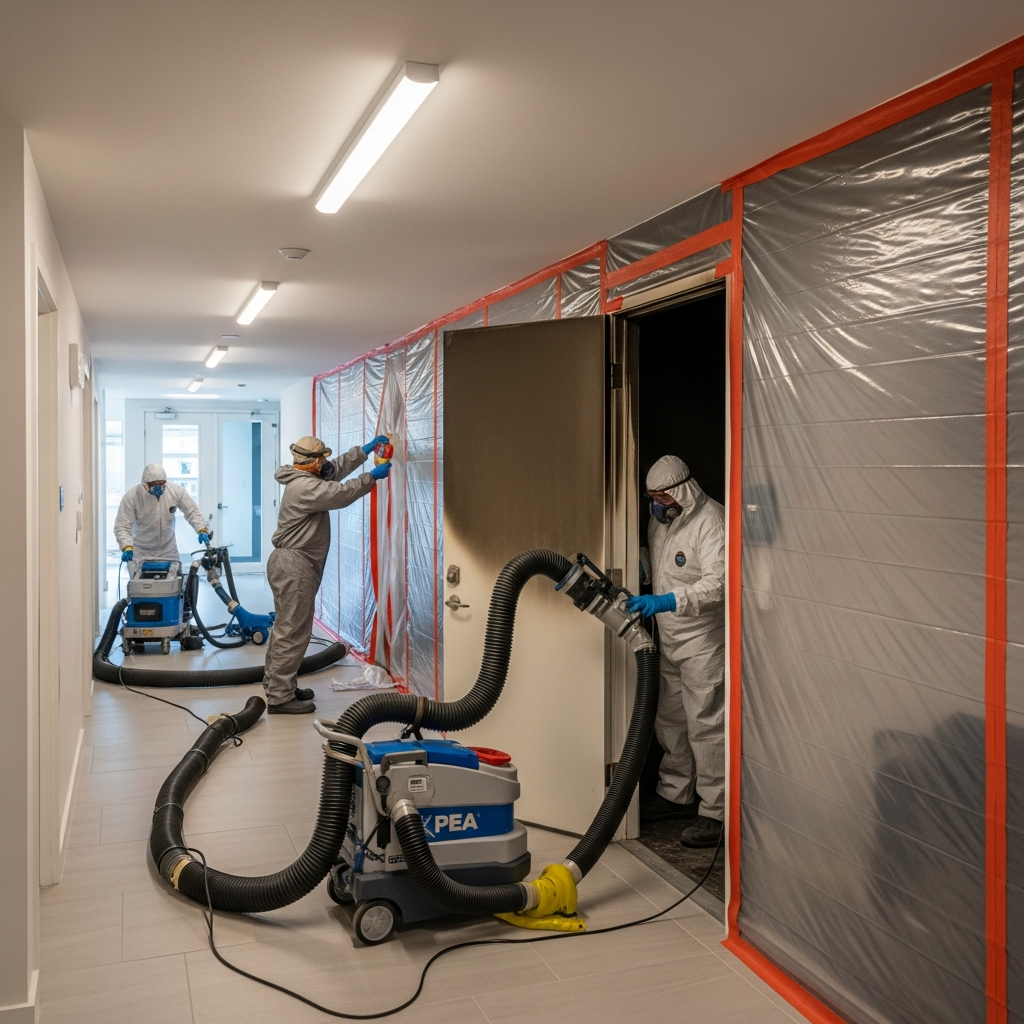
Bathrooms and break rooms deserve early focus, since supply lines, dishwashers, and ice makers often sit at the center of commercial water events. Once sources are addressed and standing water is extracted, drying proceeds with an eye on odor control and indoor air quality. HEPA filtration and negative pressure may be used where needed, especially if demolition is required and dust could affect occupied areas. Clean job sites and organized staging keep employees confident that their workspace is being cared for thoughtfully.
Regulatory and safety considerations
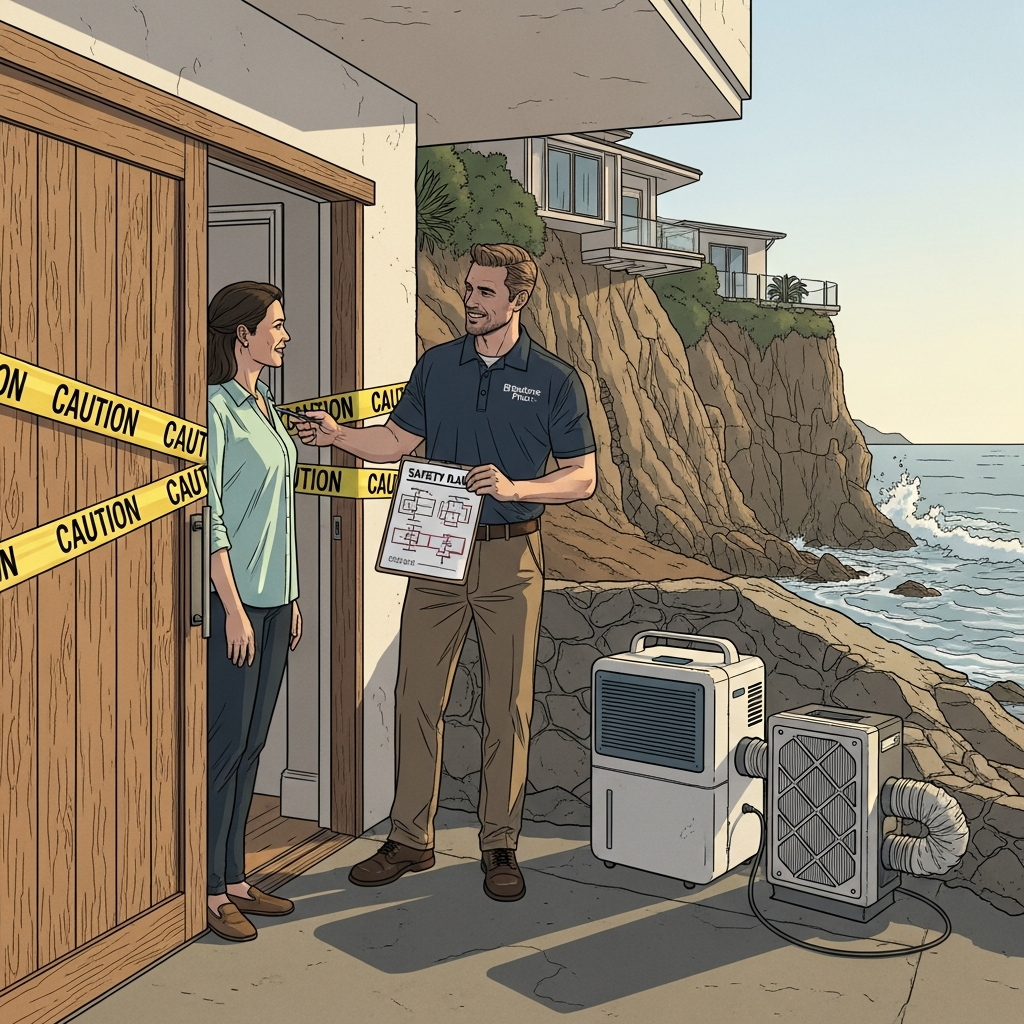
Commercial work in Malibu must meet safety and regulatory standards. Proper hazard communication, protection of egress paths, and respect for posted hours are fundamental. If older building materials are disturbed during necessary removals, testing protocols for certain materials may apply before demolition proceeds. The right partner knows how to navigate these steps efficiently so that safety and compliance never become bottlenecks. Coordinating with building engineers for mechanical systems and with electricians for temporary power also helps sustain drying performance without interrupting other tenants.
At the midpoint of a commercial project, the conversation often shifts from immediate stabilization to how best to sequence repairs so the business can ramp up. Phased rebuild is common, opening core areas first and moving outward. Where upgrades are already planned, owners sometimes use the opportunity to make improvements that dovetail with repairs. Whether it is switching to more moisture-tolerant flooring in entry zones or refining millwork details that saw incidental damage, small changes can enhance durability while keeping the brand look intact. For teams seeking steady guidance rooted in local experience, a contractor fluent in Malibu’s commercial landscape and in water damage restoration will keep the process smooth.
Insurance documentation and stakeholder reports
Thorough documentation helps everyone. Clear photographs, measured moisture maps, and itemized logs of materials removed give insurers confidence in scope. For management teams, concise daily summaries enable quick updates to executives and tenants. When rebuild begins, the handoff to finish trades is supported by clean edges, accurate measurements, and selections that maintain the office’s professional feel. Paint, wallcovering, and floor transitions are handled with the same care as the front-of-house finish work your clients see every day.
Preparing for the next season
Prevention is part of the conversation in commercial spaces as well. After an event, review maintenance cycles for roof systems, window seals, and plumbing. Consider leak detection in vulnerable areas like break rooms and IT closets. Walk the space with a restoration professional who can point out drainage or envelope details worth improving. Small changes add up, and they protect productivity by reducing the likelihood of future interruptions.
Frequently Asked Questions for Malibu Offices
How fast can we reopen part of our office after water damage?
It depends on the area affected and the source of water, but with targeted containment and after-hours work, it is often possible to reopen critical zones quickly while drying continues in adjacent areas. The key is separating spaces and maintaining safe egress.
What should property managers prioritize during the first day?
Safety, source control, and a shared plan. Confirm electrical safety, stop the water, and align with tenants on access and priorities. Early extraction and documentation set the tone for efficient recovery.
Will carpet tiles and ceiling tiles have to be replaced?
Not always. Carpet tiles from clean water sources can sometimes be dried and reinstalled. Ceiling tiles that are stained or saturated are typically removed, both for safety and to inspect for hidden moisture above.
How do you protect indoor air quality during drying and demolition?
Containment, filtration, and housekeeping. HEPA filtration and negative pressure control airflow, while clean work habits prevent dust from migrating. Daily monitoring ensures that conditions remain safe for occupants.
Can we coordinate restoration around client meetings and events?
Yes. Night and weekend windows allow work to progress without interrupting your schedule. Clear communication keeps everyone informed so that critical business moments proceed smoothly.
If water has interrupted your operations, do not let momentum slip away. Partner with a local team that can stabilize your space, keep employees safe, and coordinate a plan that respects your schedule and your brand. Timely, professional water damage restoration will help your office reopen with confidence and get your business moving again.