Ask anyone who has lived through a windy October along the Malibu coast, and they will tell you that smoke can arrive without warning. One day the ocean air is crisp; the next, a high, amber haze settles over the canyons and the smell of a distant burn rides every gust through the sycamores. In that moment, the question is not only about flames at the ridge line; it is about what the smoke is doing to your home hour by hour. That is why prompt, professional smoke damage restoration is critical in Malibu, because our microclimate, building styles, and daily habits give smoke countless ways to enter, settle, and linger unless it is addressed deliberately.
Malibu sits at the meeting point of ocean moisture and mountain dryness. Salt air lays a film on glass and hardware; Santa Ana winds wick moisture out of wood and move air through cracks you did not know existed. Smoke compounds cling to that film, infiltrate the dried fibers, and etch metal more quickly than you might expect. Even homes that escape direct flame exposure can collect a fine, oily soot inside ducts, behind crown molding, and along the leeward sides of beams. In hillside neighborhoods like Malibu Canyon or widely spaced estates up Latigo and Encinal, the pressure changes from afternoon winds can pull smoke deep into roof vents and attic spaces. If you wait and hope the smell fades, those residues keep reacting with surfaces and quietly degrade your finishes and air quality.
The Health Imperative
Ultrafine smoke particles stay airborne and penetrate deep into lungs. Children, older adults, and anyone with respiratory sensitivities feel it first: a scratch at the back of the throat or a weight behind the eyes that does not quite go away. In a town where open-air living is part of the lifestyle—folding doors, outdoor showers, afternoon naps with windows cracked for the ocean sound—those particles can circulate longer and settle in fabric and carpet where they can be re-entrained with a kid’s running steps or a dog’s shake. Restoration is critical because it introduces containment and filtration to stop that cycle, removes residue at the source, and resets indoor air so a breeze through the house feels fresh again rather than like a reminder of the last red-flag day.
Material Vulnerabilities Unique to Malibu Homes
Many Malibu residences marry coastal materials with contemporary design: steel railings, expansive glazing, natural stone, and artisanal plaster. Soot acidity can etch glass panes, leaving a faint fog visible in morning light. Oily smoke can bond with salt to create stubborn films on stainless appliances and bronze hardware. Stone surfaces can darken along grout lines where residue collects. Restoration is not just about aesthetics; it is about preventing permanent damage that you might not notice until the season changes and sunlight angles differently across a room. A careful, material-aware approach uses dry removal first to lift loose soot, then matched chemistry to neutralize acidity and dissolve residue without driving it deeper into porous substrates.
Electronics add another layer of vulnerability. Home theaters, whole-house audio, automated shades, and security systems are more than conveniences; they are integral to the way Malibu homes live daily. Smoke particles are conductive and corrosive. They can bridge microcircuits, encouraging slow failure that shows up months later as a flicker, a glitch, or a system that mysteriously will not boot. Critical restoration isolates and cleans electronics, manages humidity to reduce corrosion risk, and sets a safe sequence for powering devices back on when the air is clear.
HVAC Systems and the Invisible Pathways of Smoke
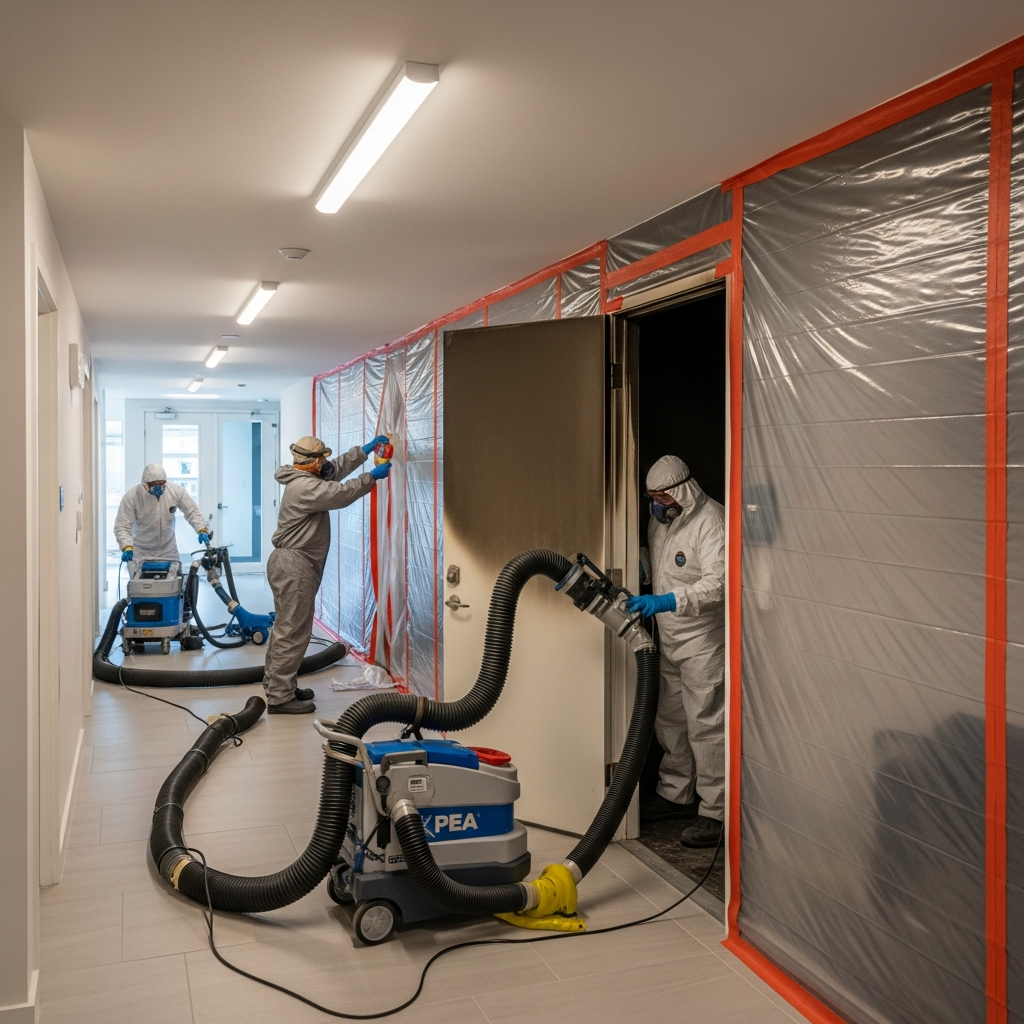
Forced-air systems are highways for contaminants. Even in beach houses that lean on cross-ventilation by design, seasonal heating and cooling cycles pull air through filters and ductwork that can accumulate residue. Once a layer forms inside ducts, every cycle can put a little back into the rooms you have just cleaned. Restoration, done properly, addresses HVAC early: shutting systems down during cleaning to prevent spread, replacing or upgrading filters, and cleaning ducts and coils as needed. In canyon homes, bath and kitchen exhausts often vent into soffit lines that can trap soot-laden air; those pathways require inspection and, sometimes, sealing improvements to prevent recirculation the next time winds turn.
Why Timing Matters More Here
Metals near the ocean already work harder against corrosion. Add acidic smoke residue and the clock speeds up. We have seen seaside railings and interior fixtures pick up a subtle tarnish after only a few days, and window glass etched in telltale arcs where sea spray once dried beneath a film of soot. Starting restoration quickly interrupts this chemistry. It also reduces the labor required, because fresh residues lift more readily and fewer surfaces need refinishing. In practical terms, the sooner you call, the less intrusion you will experience and the more of your original finishes you will retain.
Storage areas and secondary structures deserve attention too. Surf gear sheds, guesthouses, garages, and wine rooms can act as reservoirs. Without targeted cleanup, they slowly re-odorize main living spaces whenever doors open or the HVAC draws air from attached areas. For estates with long drives or gates off PCH, smart planning reduces trips and speeds containment so these outbuildings are cleaned alongside the primary residence, rather than becoming the source of a lingering problem.
Clear Documentation and Long-Term Resilience
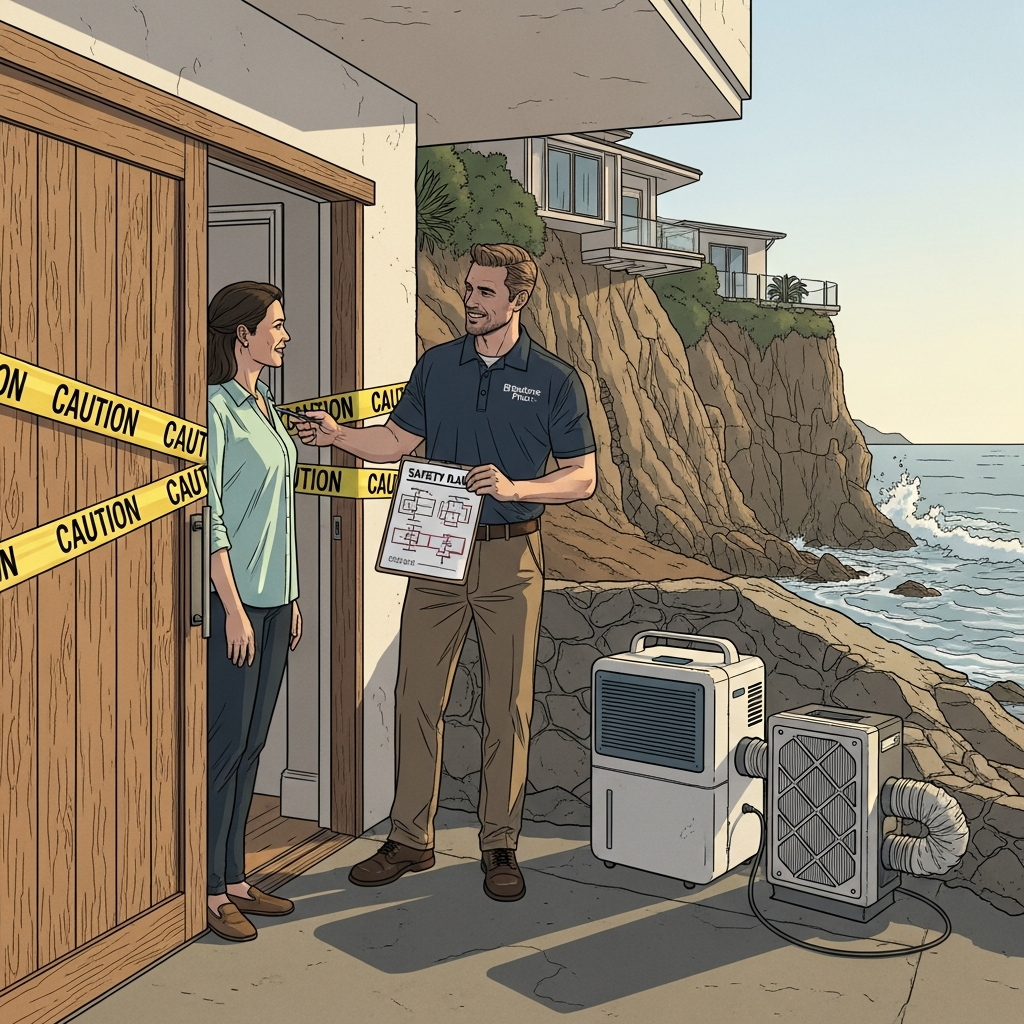
Because Malibu homes often involve bespoke design and multiple stakeholders—from architects and designers to managers and caretakers—documentation is not a formality; it is a protection. Detailed notes, photos, and post-restoration readings establish a clear chain of what was found, what was treated, and how the indoor environment improved. That record helps with future work and gives confidence if you plan to remodel, refinance, or sell. It also feeds into resilience planning. During restoration we often identify small improvements that make a meaningful difference: ember-resistant vents, better attic sealing, refined filtration, and practices for keeping doors and sliders closed when winds shift suddenly.
Mid-project is usually when homeowners see why restoration is so critical. Once odor drops and windows clear, attention turns to the subtle places where smoke hides: the cavity above kitchen cabinets, the webbing underneath outdoor furniture, the felt at the bottom of door sweeps, or the insulation around recessed can lights. Addressing these spots prevents the classic frustration of a home that seems clean until a sunny afternoon warms a wall and releases a faint smell again. Specialized smoke damage restoration methods target those reservoirs to break the cycle for good.
Community, Access, and Respect for the Setting
Working in Malibu means caring for the environment we all share. Safe disposal of contaminated materials, control of wash water, and careful parking and staging are part of doing the job right. This is especially important in neighborhoods where narrow roads, wildlife corridors, and sensitive landscaping are the norm. Critical restoration takes these into account, planning routes and schedules that minimize impact on neighbors who may be dealing with the same wind and smoke conditions.
Frequently Asked Questions
My home did not burn, only the air was smoky. Do I still need professional restoration?
Yes. Smoke travels astonishing distances and deposits residue inside homes that were never threatened by flames. If you smell it indoors or see a fine film on surfaces, that is evidence of deposition. Professional restoration removes residues that ordinary cleaning can spread or set in place.
Can I just ventilate and wait for the smell to fade?
Ventilation helps, but odor indicates ongoing off-gassing from residues that remain. Waiting allows acids to etch glass and metal and gives particles time to settle deeper into porous materials. Timely restoration stops that process and prevents long-term damage.
What should I do first if smoke moves into my house?
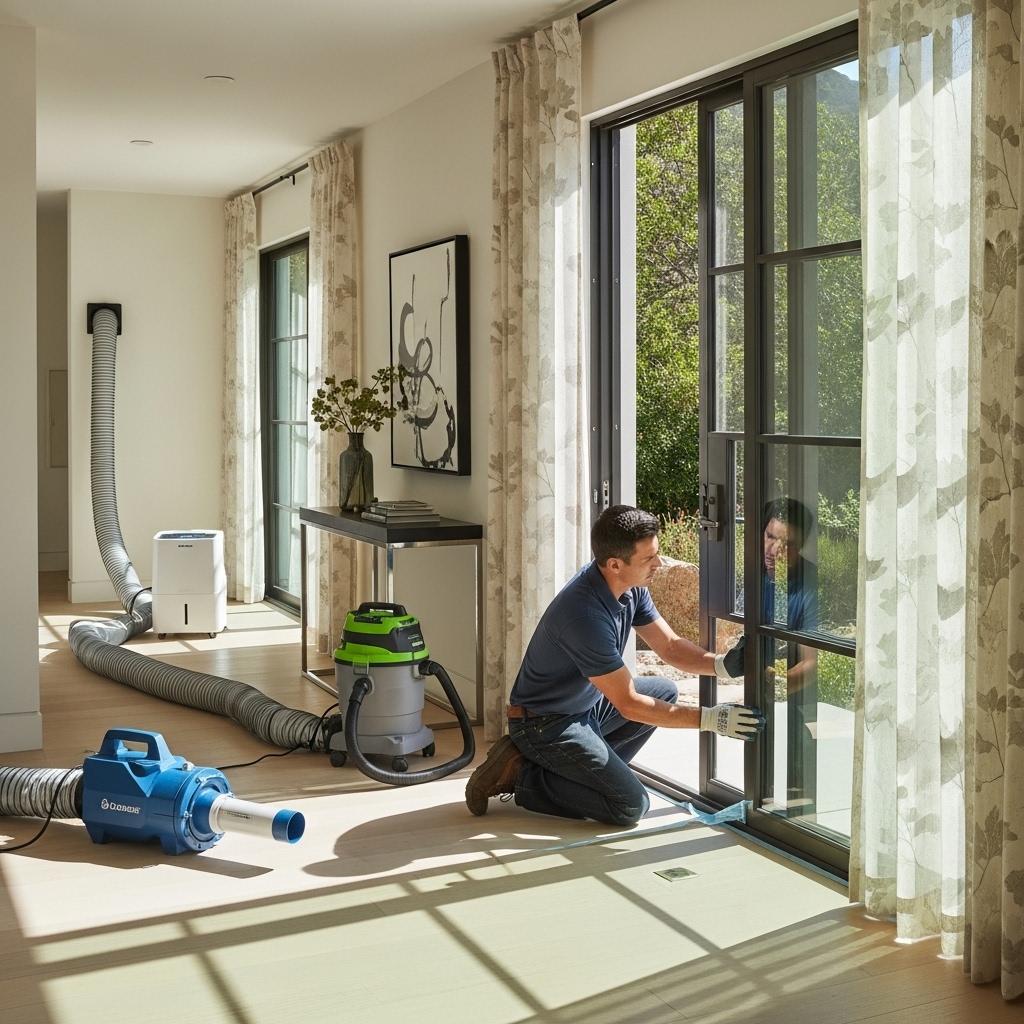
If it is safe, close windows and doors on the smokeward side, set HVAC to recirculate or turn it off, and avoid heavy foot traffic that kicks up particles. Then schedule an inspection so containment and filtration can begin. Early steps reduce cross-contamination and make the overall project faster.
Will my art and specialty finishes be protected?
With the right team, yes. Art is isolated and handled using museum-informed protocols, and specialty finishes are cleaned with matched chemistry. The key is material identification before any product touches the surface, which prevents damage and preserves original texture and sheen.
How long does the odor last if I do nothing?
It varies, but in many cases months. Odor fades and returns with temperature and humidity changes because hidden reservoirs release it when conditions shift. Proper restoration removes or seals those reservoirs, breaking the cycle.
If the winds have changed and your home no longer feels like the retreat it should be, connect with a local team that understands these hills, the coast, and the way smoke moves through both. Start a conversation focused on smoke damage restoration and reclaim the comfort and clarity you expect from your Malibu home.