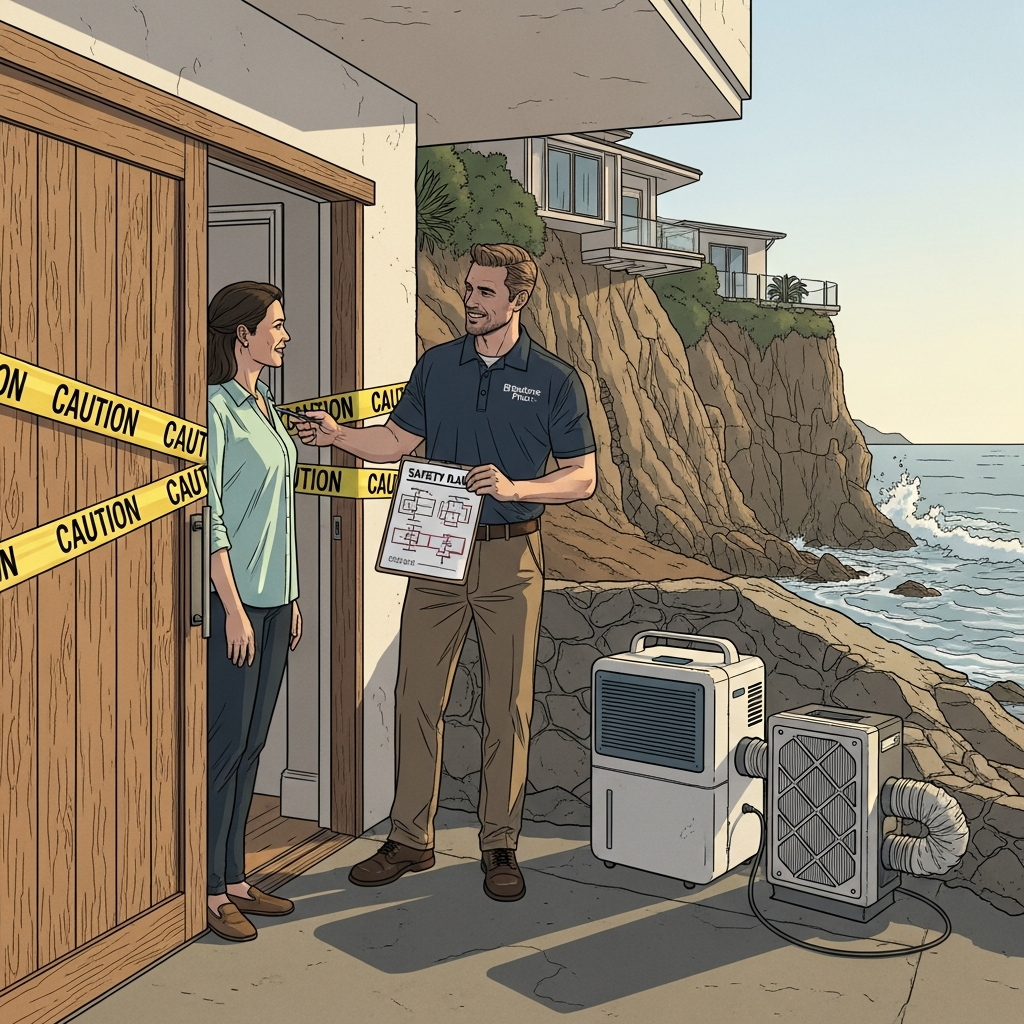
Wildfires do not respect boundaries. In Malibu, they sweep down canyons, ride the ridgelines, and drift in dense, shifting smoke that can affect homes miles from active flames. When the winds change at 3 a.m., soot that seemed to pass by earlier can find its way into vents and cupolas, settling on mantels and inside closed cabinets. Anyone who has lived here through a Santa Ana event knows the surreal combination of blue sky over the ocean and ash spiraling like snow in the backyard. After such a day, the question becomes not just how to clean, but how to recover fully and safely with professional fire damage restoration tailored to post-wildfire conditions.
Smoke from a wildfire is a complex mixture. It carries particulates from vegetation, building materials, vehicles, and household contents that burned along its path. This diversity makes post-wildfire cleanup more challenging than an isolated kitchen fire, because the soot can be finer, more acidic, and more stubborn. In Malibu’s coastal climate, salt in the air can team up with that soot to accelerate corrosion on metals and electronics, making prompt stabilization and a thoughtful plan essential.
The anatomy of wildfire smoke intrusion
Wildfire smoke finds entry points you would never guess existed. It moves through gaps around recessed lights, attic vents, cable penetrations, and even along the microscopic pathways in porous materials. Pressure differences between indoor and outdoor air—especially as winds rise and fall—drive this movement. The result can be a home that looks superficially clean but smells of smoke and reveals a fine gray film when you wipe a finger across a bookshelf.
Understanding this anatomy shapes the response. Pros start by mapping airflow: where the smoke likely entered, how it traveled, and where it settled. They check attics, crawlspaces, and mechanical rooms, not just living spaces. They inspect insulation, which can trap odor, and HVAC components that may have cycled during the event. This map becomes the blueprint for a cleaning strategy that goes beyond visible surfaces.
Stabilization after the fire front passes
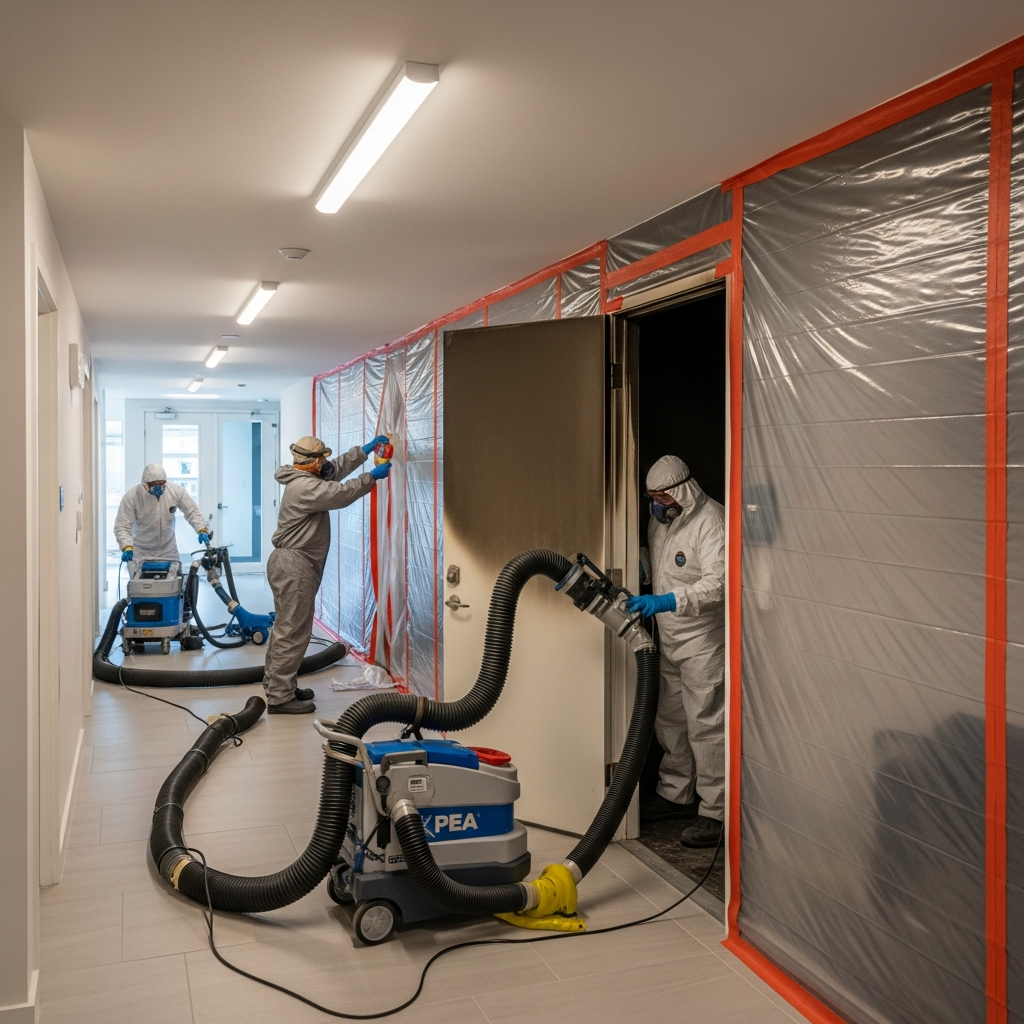
When the immediate danger recedes, the first priority is to stabilize the property. That may mean closing off openings, setting containment to separate clean areas from affected ones, and establishing negative air pressure so soot is captured and not spread. If firefighters used water on or near the structure, drying begins immediately to prevent secondary damage. In Malibu, where nights can bring moisture even after hot days, staying ahead of condensation matters, especially in homes with expansive glass and metal finishes.
Stabilization also includes triaging contents. Electronics, jewelry, and polished metal fixtures are addressed quickly because acidic soot can etch finishes and accelerate corrosion. Delicate textiles and art are evaluated for off-site care in a controlled environment. These early moves protect value and reduce the risk of odor becoming permanently embedded.
Cleaning for post-wildfire conditions
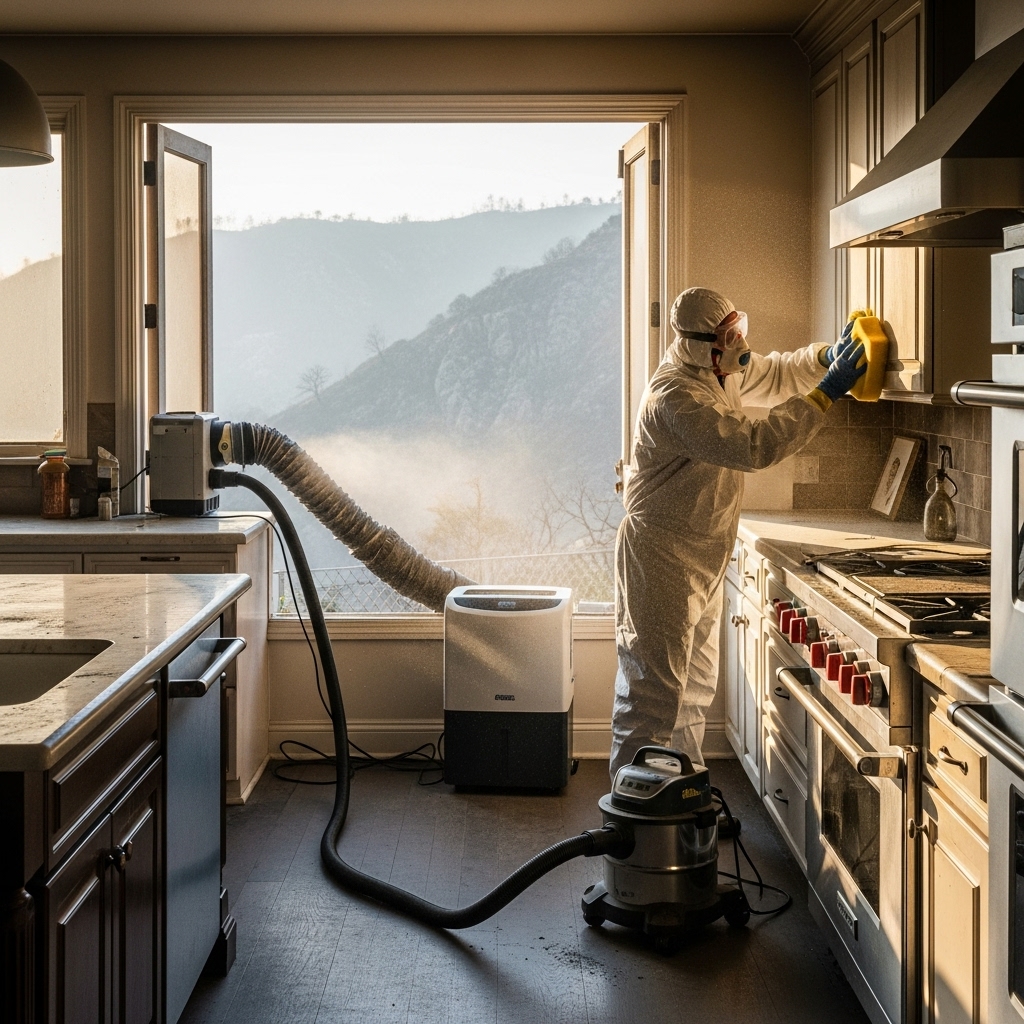
Cleaning after wildfire smoke is a discipline of containment, capture, and confirmation. Technicians use HEPA-filtered vacuums to remove fine particulates without redistributing them. Dry cleaning sponges lift soot from painted walls and ceilings before any wet methods are used. On stone, wood, and composite surfaces, the chemistry is chosen to neutralize acidity and preserve finishes. It is a slow, methodical process that values results over speed.
Special attention goes to air pathways. HVAC return and supply grilles, ductwork, and air handlers are evaluated and, when indicated, cleaned under negative pressure so dislodged soot doesn’t reenter living spaces. Filters are replaced, sometimes multiple times as the system purges. In homes with mini-splits or energy recovery ventilators, technicians coordinate with mechanical specialists to ensure that the cleaning method matches the equipment’s design and manufacturer guidelines.
Odor control: more than masking
Odor is a signpost pointing to residue. Effective odor control starts with source removal and detailed cleaning. Only then do professionals consider technologies like hydroxyl generators, ozone (when the space is unoccupied and appropriate), or thermal fogging. The choice depends on the materials involved and occupant sensitivities. In Malibu, where windows often open to sea breezes, controlled ventilation can assist the process, but it is not a substitute for thorough cleaning. The objective is a neutral interior that smells like your home, not a scented product.
Verification matters. Teams allow time for cleaned areas to equilibrate, then reevaluate. If an odor returns after a warm afternoon, it suggests a reservoir of residue that needs attention—perhaps in insulation, behind baseboards, or within cabinets. Pros address these systematically until the odor is gone for good.
Exterior cleaning and defensible space
Post-wildfire restoration is not just an indoor exercise. Soot can coat exterior stucco, siding, and stone, and ash accumulates in gutters and on roof surfaces. Safe cleaning restores curb appeal and prevents contaminants from being tracked back inside. Gentle, targeted methods are preferred to protect finishes, and gutter cleaning reduces fire risk when the next dry season arrives. Many homeowners take the opportunity to recheck defensible space around structures, trimming vegetation and clearing debris to reduce future vulnerability.
Decks, railings, and outdoor kitchens deserve attention. These are places where families gather, and smoke residue can mar both appearance and air quality. Restoration teams clean these spaces with the same care given to interior finishes, ensuring that a weekend meal outdoors does not come with a reminder of the fire.
Contents: safeguarding the story of the home
Belongings hold memory, and post-wildfire work treats them with respect. Technicians inventory items, photograph condition, and sort contents for on-site cleaning or transport to a contents facility. Textiles may be laundered in specialized systems designed to remove smoke particulates, while books and documents might be treated with careful vacuuming and odor removal techniques. Communication with the homeowner is continuous, because sentiment, not just material value, guides decisions.
For Malibu households, surfboards, instruments, and specialty gear are common. These items often require custom handling. Experienced teams bring in or consult with specialists as needed, ensuring that the outcome is both clean and functional when life returns to normal rhythms.
Coastal considerations
Coastal living adds both charm and complexity. Salt air speeds corrosion when combined with acidic soot. Restoration teams prioritize sensitive items and metal finishes accordingly, neutralizing residues and applying protective measures where appropriate. They also know that ocean breezes can be a friend or a foe; ventilation is helpful, but only after containment and cleaning prevent recontamination. Expert sequencing makes the difference between a quick fix and a durable solution.
Electronics—from home theater systems to smart home controls—are increasingly central to Malibu homes. Smoke exposure can impair performance subtly at first, then more dramatically as corrosion progresses. Early evaluation by electronics professionals can prevent unpleasant surprises at move-in and preserve warranties. It’s one more reason why a coordinated, expert-led response pays off.
Working with neighbors and the wider community
Wildfires are communal events; streets fill with ash together and clear together. Coordinated restoration reduces friction among neighbors who are navigating the same challenges. Crews that manage access and parking with courtesy, control dust, and keep lines of communication open contribute to a smoother experience for everyone on the block. In neighborhoods with shared systems or private roads, early coordination prevents bottlenecks that can delay progress.
Local knowledge also extends to paperwork. From photo documentation that aligns with insurance needs to an understanding of Malibu’s permitting landscape for repairs, experienced teams help homeowners avoid administrative delays. They know when third-party testing will reassure all parties and when clear, consistent documentation is enough.
Health and safety throughout
Safety is the throughline of competent wildfire recovery. Personal protective equipment, containment barriers, and negative air machines are standard, not optional. Teams monitor indoor air quality, particularly when vulnerable occupants—children, older adults, those with respiratory conditions—are involved. Decisions about whether to remain in the home during parts of the process are made with health, comfort, and logistics in mind, not just convenience.
Pets matter, too. Restoration schedules can accommodate pet routines, and containment can be arranged to keep animals safe and stress levels low. These accommodations are part of a humane approach that recognizes the whole household.
Planning for resilience
Once cleaning is complete and odors are neutral, many homeowners take the opportunity to make the home more resilient. Upgrades might include ember-resistant venting, improved weatherstripping, and thoughtful landscaping that increases defensible space. While these measures are often implemented during rebuild, a restoration team that understands Malibu’s wildfire patterns can provide practical suggestions and coordinate timing so that improvements do not interfere with the final stages of cleaning and verification.
Resilience also includes habits—regular filter changes, seasonal HVAC checks, and a plan for closing up the home during smoke events. These small changes compound over time to protect indoor air quality and peace of mind.
The rhythm of recovery
Post-wildfire recovery in Malibu follows a rhythm: stabilize, assess, clean, verify, and restore everyday life. When managed by experienced hands, this rhythm feels steady, not rushed. Homeowners regain a sense of control as each phase completes, and the house begins to look and feel like itself again. The ocean breeze that once carried smoke now brings only the familiar scent of salt and sun-warmed wood.
Midway through most projects, it’s useful to pause for a structured review. By this point, stabilization and initial cleaning are complete, HVAC work is underway, and contents are sorted. This is the time to confirm that priorities remain aligned, to adjust sequencing if needed, and to make sure the team is addressing any lingering concerns. It’s also an ideal moment to ensure the second half of your fire damage restoration plan—deep odor verification, finish cleaning, and move-back preparation—is perfectly tuned to your home.
FAQ: Wildfire smoke and fire restoration in Malibu
Is smoke damage always visible? No. Fine soot can hide in attics, behind trim, and within HVAC systems. A thorough assessment and methodical cleaning plan are essential to address what the eye cannot see.
How soon should HVAC systems be addressed? Early. Systems can move soot throughout the home. Proper cleaning under negative pressure and filter changes protect air quality and prevent recontamination.
Can outdoor spaces be safely used right away? They should be cleaned first. Soot on decks, furniture, and kitchens can transfer indoors and affect air quality. A targeted exterior cleaning brings outdoor living back quickly and safely.
What about items with sentimental value? Communication guides decisions. Many items can be cleaned successfully with specialized methods. Documenting condition and discussing priorities ensures attention goes where it matters most.
Will the smoke smell return during hot weather? If odor returns, it suggests a remaining source. Professionals track it down—insulation, hidden cavities, or contents—and remove it so the result is stable in all seasons.
Can I stay in my home during restoration? Sometimes, depending on the extent of damage and the ability to isolate clean living zones. Health and comfort are the guiding factors.
When the canyons quiet and the last hotspots are out, the path home starts with steady help. Reach out to a local team that understands Malibu’s wildfire realities and can guide comprehensive fire damage restoration from assessment to move-back, so your home welcomes you with clear air, clean surfaces, and the peace that comes from a job done right.