Home in Malibu means ocean light on the floors in the morning, canyon breezes in the afternoon, and gatherings that move from the kitchen to the deck as the sun drops behind Point Dume. When a fire disrupts that rhythm—whether a kitchen flare-up, an electrical short, or smoke carried in from a hillside burn—the loss is personal. Restoration isn’t only a technical exercise; it’s an act of stewardship for the spaces where families grow and memories are made. The goal is not to erase what happened but to return the home to a state of health, comfort, and confidence, with improvements that make tomorrow a little safer than yesterday.
Having worked in neighborhoods from Malibu Park to the canyons above Las Flores, I’ve seen how every home tells a different story. Some are mid-century classics with original hardwood and plaster; others are modern builds with wide glass and warm stucco, cantilevered over views that take your breath away. Each material and detail responds uniquely to heat, smoke, and water. Quality fire damage restoration for residences is rooted in respect for those differences and in a process that blends building science with the everyday realities of family life.
First Steps: Safety, Calm, and Clarity
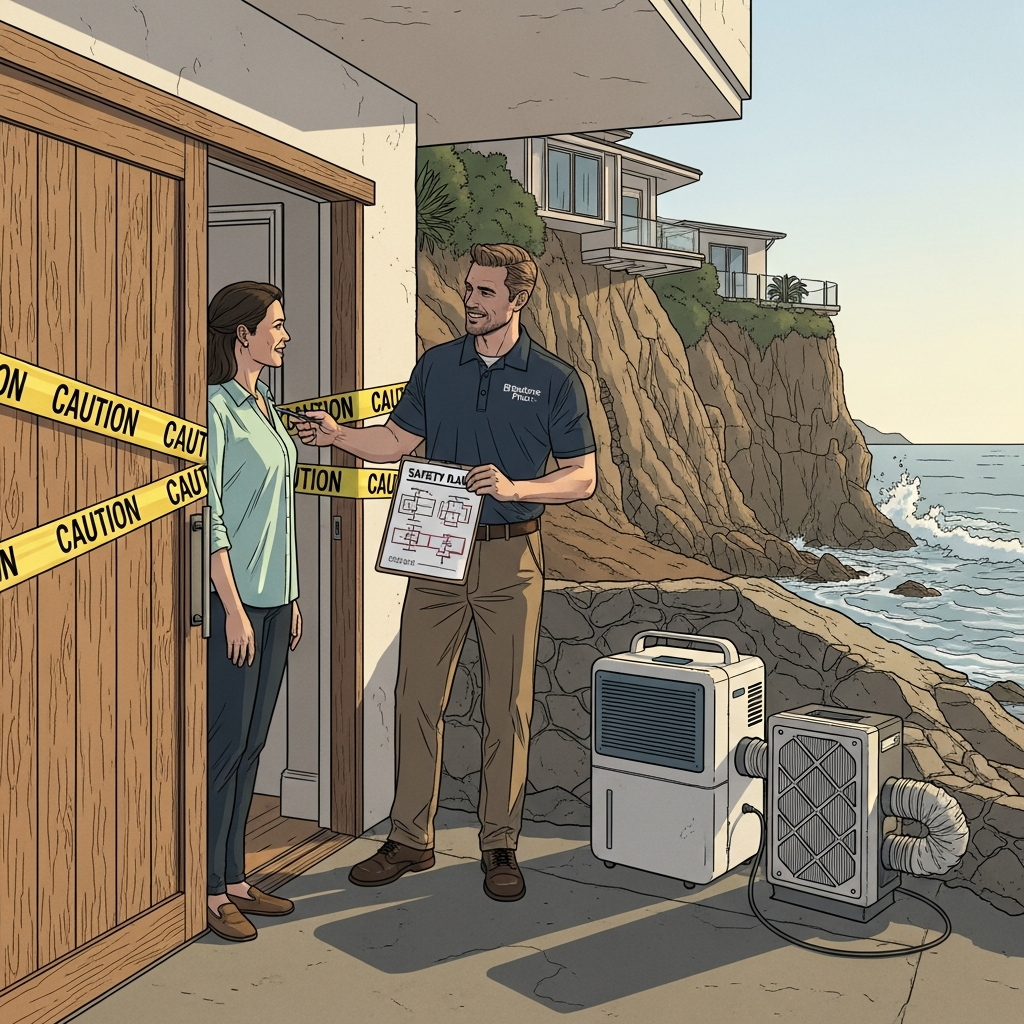
The first hours focus on safety and stabilization. Utilities are checked, hazards are identified, and open exposures are covered to keep out moisture and wildlife. In homes with children or pets, the plan balances urgency with care for routines—creating safe zones, organizing temporary storage for essentials, and communicating clearly so everyone knows what to expect. Early documentation and a calm walkthrough build trust and set the tone for the days ahead.
Understanding the Pattern of Damage
Fire leaves visible marks, but smoke and heat create subtler patterns. Warm air and pressure push contaminants into upper cabinets, closets, and the undersides of shelves. Soot can settle on horizontal trim and inside drawers, while odors collect in fabrics and insulation. In split-level and open-plan homes, pathways can be unpredictable. A thorough assessment traces those pathways, guiding a targeted plan that saves time, reduces disruption, and protects finishes that matter to you.
Cleaning That Protects What You Love
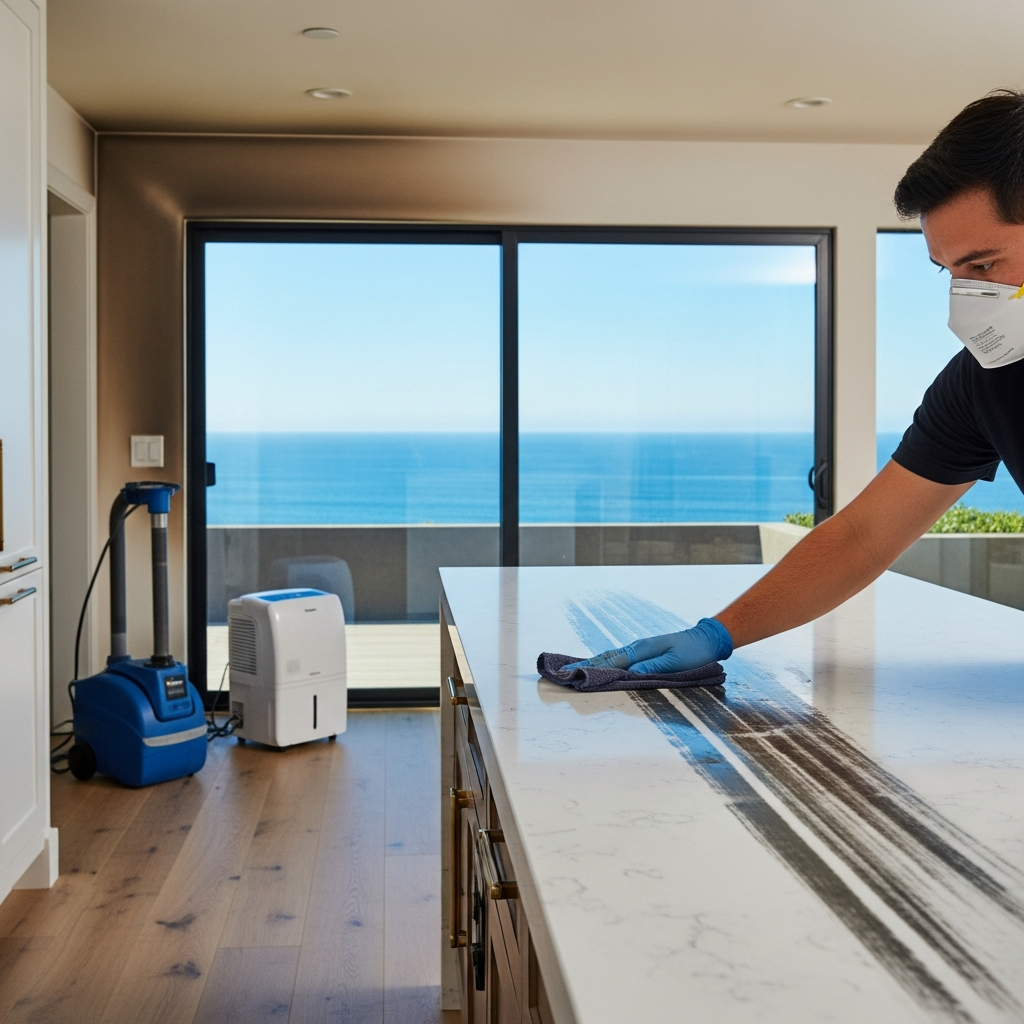
Residential cleaning respects both materials and daily life. Dry removal captures the bulk of soot without smearing it into paint or wood grain. Wet cleaning follows when appropriate, using chemistry matched to the residue and the surface. Kitchens, the heart of many Malibu homes, need special attention so cabinets, counters, and appliances are cleaned and deodorized without harming finishes. Bathrooms, with their mix of stone, tile, and glass, get careful treatment that restores clarity and shine while preventing etching or film build-up.
Air Quality: Breathing Easy Again
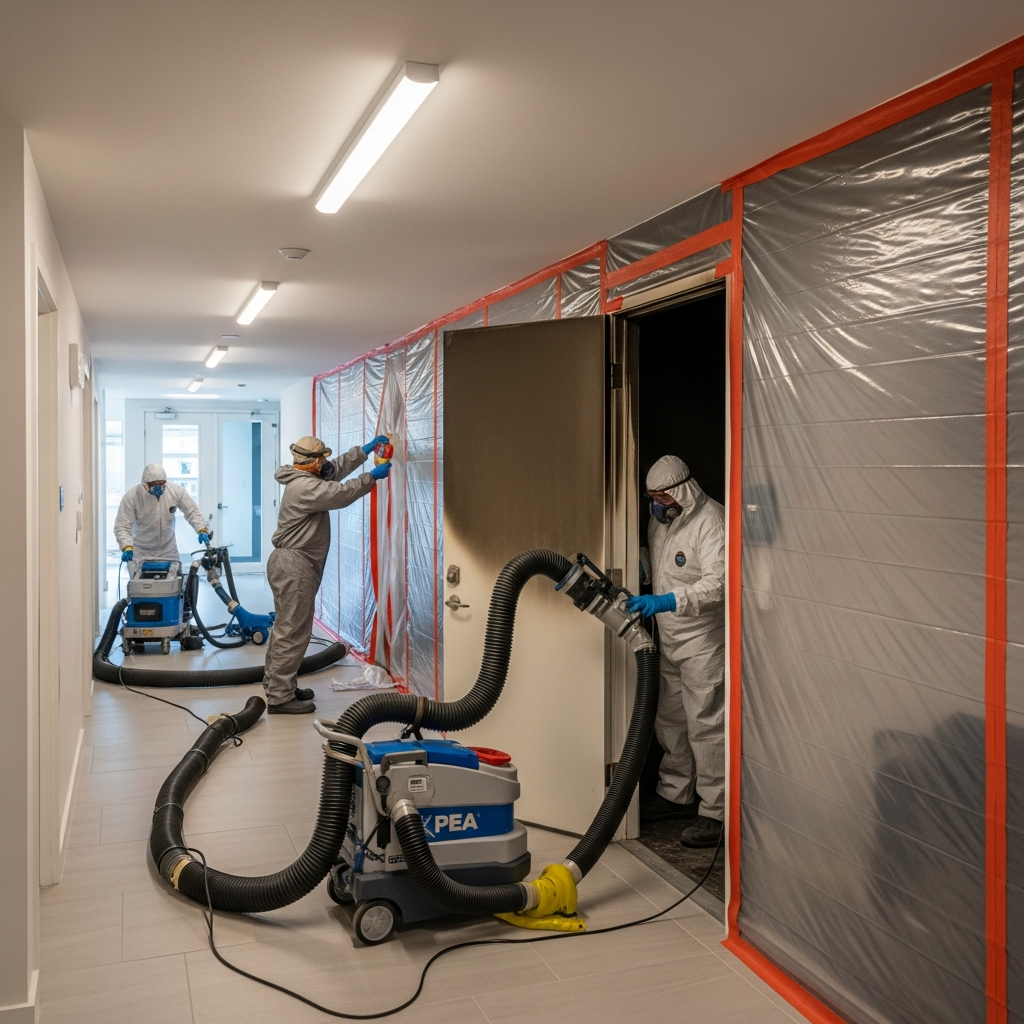
Healthy air is non-negotiable. Containment reduces the movement of particulates, and filtration removes what’s already airborne. Once source removal is complete, odor neutralization addresses what the nose still detects but the eye can’t see. In family settings, these steps matter not only for comfort but for confidence—the feeling that it’s truly safe to move back into bedrooms, open the pantry, and slide into a favorite chair without that faint, unwelcome hint of smoke.
Contents: From Keepsakes to Daily Necessities
What makes a house a home is often what’s inside it. Clothing, bedding, books, toys, and heirlooms all respond differently to heat and soot. Early triage stabilizes sensitive items, then a methodical inventory sets the stage for cleaning and storage. Children’s items and frequently used textiles are prioritized so daily life can resume sooner, even as structural work continues. The goal is to preserve what matters, replace what can’t be saved with sensitivity, and keep the process organized so you’re never left wondering where an item has gone.
Bedrooms, Living Spaces, and Peace of Mind
Living rooms, dens, and bedrooms require a gentle touch that balances thoroughness with respect for fabrics, upholstery, and wood finishes. Thorough vacuuming, careful wiping, and staged deodorization mean that when furniture returns to place, it feels genuinely fresh. For many homeowners, the emotional turning point comes when the primary bedroom and kids’ rooms are ready again. That first night of good sleep in a clean space is a milestone worth planning toward from day one.
HVAC and Hidden Spaces
A home’s lungs—the HVAC system—must be assessed and addressed if affected. Ducts, returns, and mechanical closets can hold onto particulates and odors long after the visible work is complete. Attic spaces and crawl areas deserve attention too, especially in homes where coastal humidity can interact with residues and accelerate corrosion. Verification before and after cleaning gives confidence that the system will circulate clean air instead of revisiting the past.
Mid-Project Momentum
Midway through a project, the scope shifts from stabilization to detail. This is a crucial time to revisit goals, confirm priorities, and make choices about finishes that support both aesthetics and durability. Stone may need resealing, wood may benefit from gentle refinishing, and painted surfaces may call for stain-blocking primers before a final coat. A steady pace, grounded in verification, keeps the project from wandering and brings move-in day closer with every task.
Family-Centered Scheduling
Restoration work can be disruptive, but thoughtful scheduling softens the impact. Noisy tasks can be batched; access can be planned around school or work hours; and temporary living zones can be maintained so daily life retains a sense of normalcy. It’s not just about repairing materials; it’s about caring for the people who live among them.
Design Opportunities in the Rebuild
Reconstruction is an opportunity to refine the home you love. Maybe that means better cabinet venting, more resilient decking, or a slightly different layout that improves storage and flow. Malibu style prizes natural light, indoor-outdoor living, and materials that look relaxed yet refined. Thoughtful upgrades—especially ember-resistant vents and smart material choices—can enhance safety without compromising the feel of your space.
Documentation and Advocacy
Clear documentation—photos, testing where appropriate, and detailed scopes—keeps everyone aligned. Homeowners deserve transparency and advocacy throughout the process. When questions arise about what to clean, restore, or replace, those decisions should rest on evidence and your priorities, not guesswork. A collaborative approach ensures the result feels right the day you move back in and years later.
FAQ: Residential Fire Damage Restoration in Malibu
Q: Our kitchen fire was small. Do we still need a full assessment?
A: Yes. Even contained fires can produce invisible residues and odors that travel into cabinets, HVAC returns, and adjacent rooms. A focused assessment prevents lingering issues and ensures cleanup targets the real extent of impact.
Q: How do you protect kids’ rooms and belongings during cleanup?
A: We prioritize spaces families need most, creating clean zones early and staging work to minimize disruption. Belongings are inventoried, cleaned, and stored methodically so bedrooms return to calm as soon as practical.
Q: Will my home smell like smoke after the work is done?
A: Proper restoration removes the source of odors and neutralizes remaining compounds. The goal is a neutral, healthy interior that feels genuinely fresh, not perfumed.
Q: Can wood floors and furniture be saved?
A: Often, yes. The approach depends on heat exposure, residue type, and finish. Gentle cleaning, careful drying, and selective refinishing can bring many pieces back beautifully. Each item and surface is evaluated individually.
Q: What about the HVAC system?
A: If affected, the HVAC is cleaned and verified so it won’t redistribute particulates or odors. This step is crucial for long-term comfort and indoor air quality.
Q: How long will restoration take?
A: Timelines depend on the extent of damage, access, and material availability. From the outset, we set milestones and communicate progress so you can plan with confidence.
Q: Can we make the home safer during rebuild?
A: Absolutely. Upgrades such as ember-resistant vents, safer storage for outdoor furnishings, and thoughtful landscape choices enhance resilience without changing the character you love.
In the end, home is about comfort, connection, and the ease you feel when you close the door behind you. If a fire has interrupted that sense of sanctuary, let’s chart a clear path back. We’ll walk the rooms together, prioritize what matters most, and restore each space with care. From first inspection to the final polish, our approach is grounded in craftsmanship, communication, and respect for the life you live here by the water. When you’re ready to begin, we’re ready to help with comprehensive fire damage restoration that brings your Malibu home back to health—quietly, thoroughly, and with your family at the center of every decision.