In Malibu, the line between calm ocean mornings and wind-driven wildfire afternoons can be painfully thin. When smoke stains the stucco, when embers slip into attic voids, and when sprinklers and hose lines drench prized hardwoods, homeowners quickly learn that the path from char to comfort relies on more than enthusiasm and elbow grease. It depends on properly licensed professionals who understand local terrain, local rules, and the science of reversing fire’s cascade of damage. That is why, before any hammer swings or any HEPA filter hums, it pays to know exactly what “licensed” means and how to find a partner you can trust. If you need a quick primer or a second opinion right now, many Malibu homeowners start by exploring fire damage restoration resources tailored to Southern California properties.
Licensing might sound like paperwork, but in the context of post-fire recovery, it is really about safety, accountability, and competence. After major brush events, it’s common to see a caravan of out-of-town operators. Some are excellent; others are merely opportunistic. Malibu’s hills, canyons, stucco-and-glass homes, and salt-laden coastal air impose conditions that reward experience and punish shortcuts. A licensed company engages those realities with planning and proof. They bring verifiable trade qualifications, active insurance, documented training, and a clear, code-compliant workflow designed to protect your health, your neighbors, and your long-term investment.
What “licensed” really means in California
In California, licensure runs through the Contractors State License Board (CSLB). Fire restoration typically involves multiple trades—carpentry, roofing, drywall, electrical, plumbing, and specialized cleaning—so a firm may hold a general B license with specialty subs, or it may combine classifications under one roof. The essential point is that the license is current, in good standing, and backed by required bonds. Licensed firms also carry workers’ compensation when they have employees, a critical protection for both worker safety and homeowner liability. On top of state requirements, reputable Malibu operators maintain city business licenses and keep abreast of county-level protocols, especially those that affect debris handling, air quality, and temporary site protections along sensitive canyon roads.
Licensure intersects with environmental compliance as well. Post-fire demolition and cleaning can agitate legacy hazards such as lead paint or asbestos in joint compound, floor tile, or thermal insulation. In Southern California, professionals follow both state and South Coast AQMD requirements for survey, handling, and disposal. This is not red tape; it’s a safety net. When you hire a licensed restorer who respects these standards, you reduce airborne risk, prevent cross-contamination, and accelerate clearance for re-occupancy, all while avoiding fines or delays that come from non-compliant work.
Certifications that signal competence
Beyond the state license, third-party certifications reveal a company’s depth. The Institute of Inspection, Cleaning and Restoration Certification (IICRC) is the industry’s grammar, teaching the vocabulary of fire residues, moisture migration, and material salvageability. Look for designations such as FSRT (Fire and Smoke Restoration Technician), WRT (Water Damage Restoration Technician), OCT (Odor Control Technician), and AMRT (Applied Microbial Remediation Technician). These credentials mean a team can triage what to clean, what to encapsulate, and what to remove, applying chemistry and physics rather than guesswork. EPA’s Renovation, Repair and Painting (RRP) certification and proper asbestos training round out the profile, ensuring that crews can make real-time decisions without creating downstream hazards for pets, children, or elderly residents.
Equipment literacy matters too. Thermal imaging to chase hidden moisture from firefighting, air filtration devices sized to the cubic volume of Malibu’s often high-ceilinged rooms, hydroxyl and activated carbon strategies for odor control, and abrasive cleaning methods calibrated for stone, glass, and stucco—all of these require training and an ethical framework. Licensed companies invest in that foundation and retrain regularly, because every wildfire season supplies new case studies and fresh science.
Insurance, documentation, and jobsite discipline
Any legitimate Malibu restoration company should provide certificates of insurance on request, including general liability and workers’ compensation, naming you and, if necessary, your lender as additional insured. But insurance is only half the story. The other half is documentation discipline: photographs before touch, during stabilization, and after cleaning; moisture logs that demonstrate drying progress; chain-of-custody for contents that leave your home; and clear scope narratives aligned with code requirements. This paper trail is essential in Malibu, where properties often include custom finishes, bespoke cabinetry, and imported materials whose salvage potential must be evaluated meticulously.
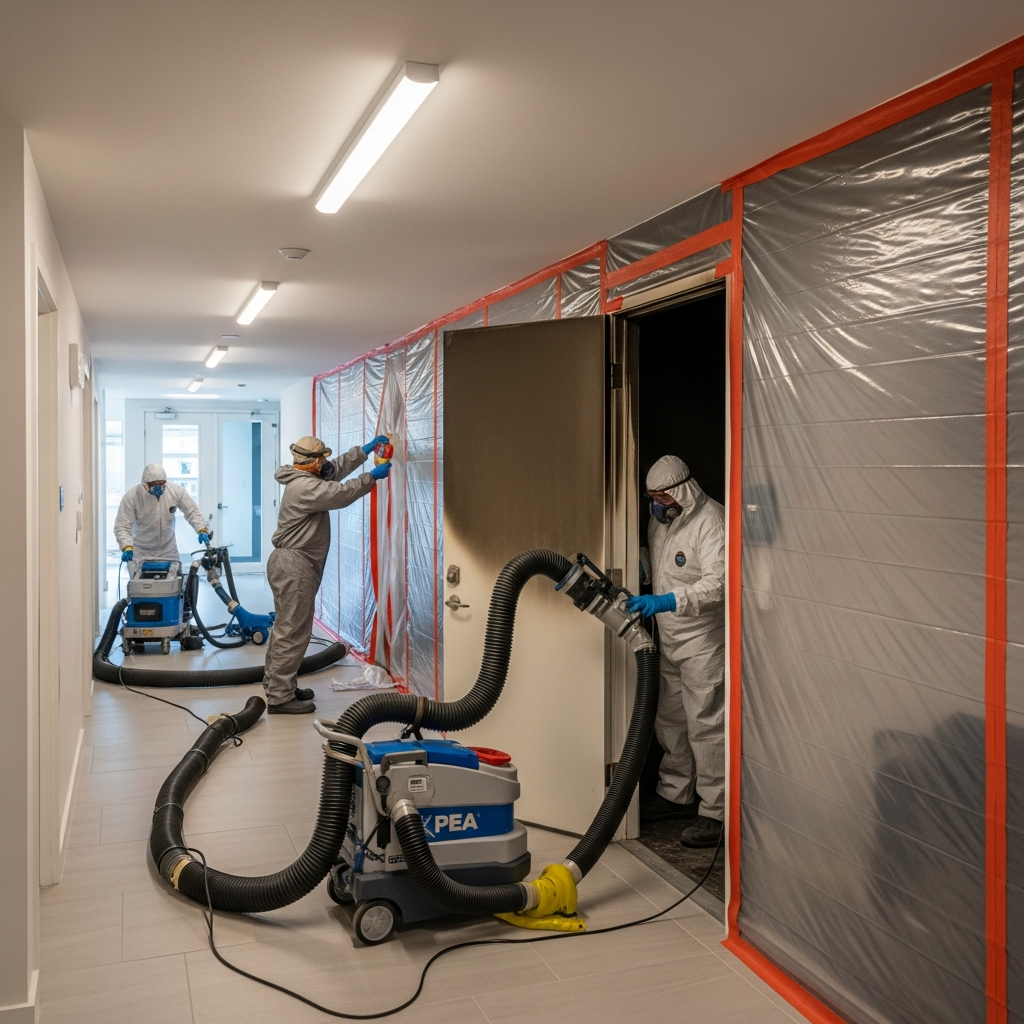
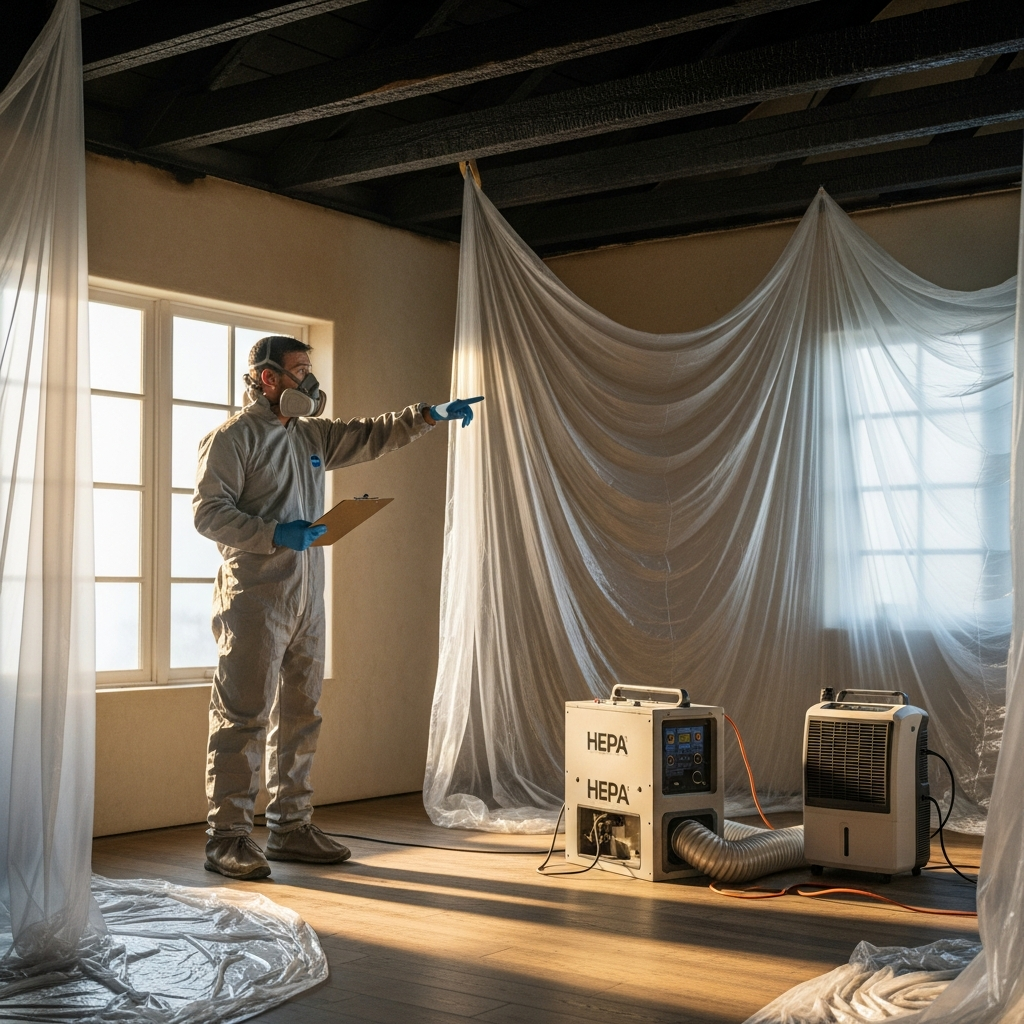
Jobsite discipline extends to containment and airflow. With canyons acting as wind tunnels, negative-pressure barriers prevent soot from riding interior currents into rooms you thought were untouched. HEPA filters scrub air; tacky mats capture soiling at thresholds; and crew members move with a plan—clean-to-dirty, top-to-bottom—so you don’t get re-soiling that doubles labor and timeline. Licensed firms teach these habits and enforce them, which is often the line between a recovery that feels steady and one that feels perpetually behind.
Malibu’s unique terrain and building styles
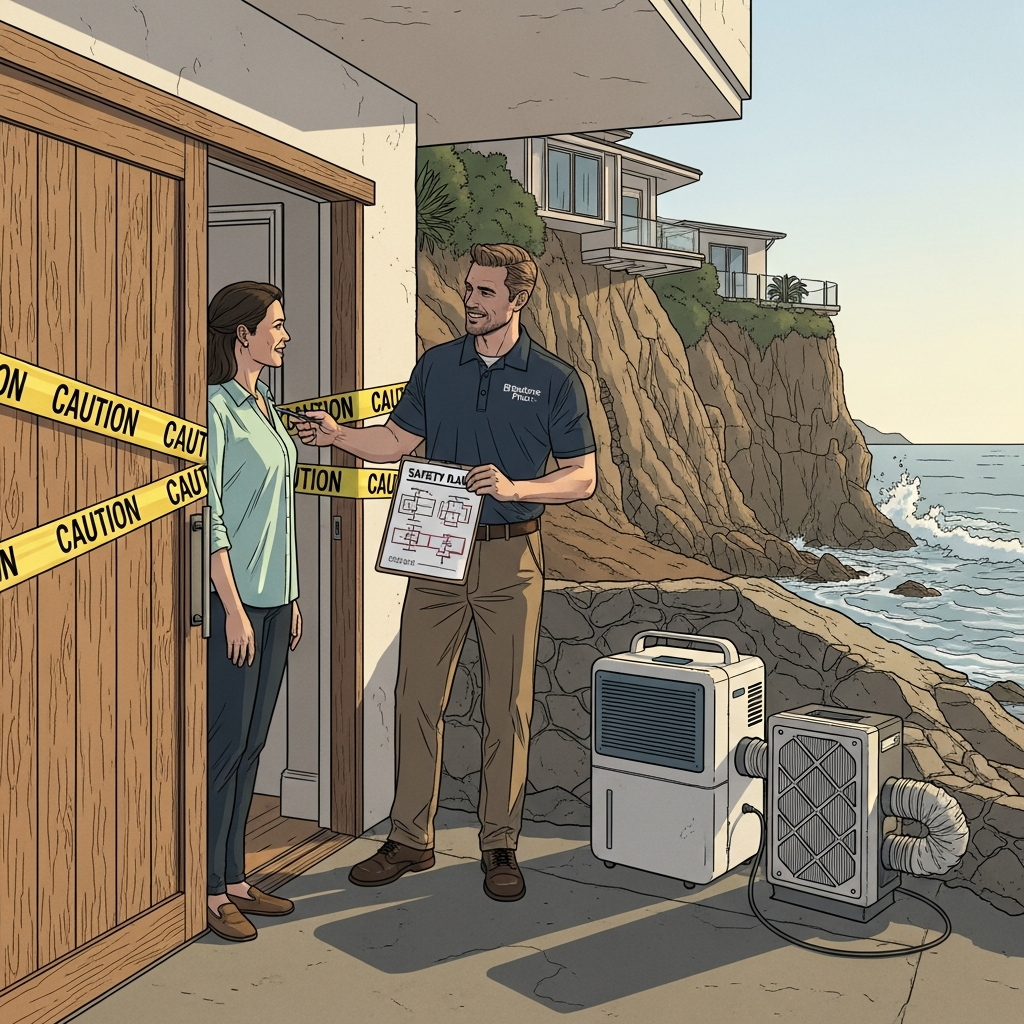
From Big Rock to Point Dume, Malibu homes blend cliffside views with rugged topography. Access is not trivial: Pacific Coast Highway can constrict in an instant, and cul-de-sacs perched on ridgelines may challenge roll-off bins and boom lifts. The microclimate—salt fogs in the morning, Santa Ana gusts in the afternoon—pushes smoke particles into hairline cracks, attic vents, and open soffits. Licensed restoration teams consider this in their planning. They know when to bring in crane service for safe roof access, how to coordinate with waste haulers to prevent debris backups, and where to stage equipment so neighbors and emergency vehicles can pass safely. They also understand the impact of salt air on post-fire corrosion, especially on stainless appliances, window hardware, and electronics.
Modern Malibu architecture adds another wrinkle: expansive glazing, open steel, reclaimed wood beams, and high-performance insulation. Each interacts with smoke differently. Tempered glass can etch rapidly from acidic residues; steel rails flash-rust; reclaimed woods may trap odor compounds deep in their pores. Licensed teams tailor cleaning and sealing methods to preserve the design intent while expediting habitability. They test small areas before committing, track pH during cleaning, and bring in conservators for valuable surfaces and artwork when needed.
The workflow licensed companies follow
While every project is unique, a disciplined arc repeats. First comes safety: assessing structural integrity, mitigating slip hazards from firefighting water, and shutting down compromised electrical circuits. Next, stabilization: boarding broken windows, tarping roofs, and installing containment to isolate affected zones. Then, water extraction and strategic drying reduce secondary damage like swelling, warping, and microbial growth. Once the environment is stable, detailed soot removal begins—dry sponging delicate paints, alkaline rinses for acidic residues, and abrasive techniques for masonry. Odor neutralization follows, using source removal first and advanced treatments later, not the other way around. In the mid-project stage, when owners are evaluating progress and next steps, it’s common to revisit resources on fire damage restoration to align expectations and ensure the plan stays grounded in best practices.
Contents handling runs in parallel. Salvageable items move through inventory, pack-out, and cleaning in a controlled offsite environment, while non-salvageable items are documented for replacement. Licensed firms are transparent about the threshold for salvage, factoring in material, sentimental value, and risk of odor reemergence. Finally, once cleaning and deodorization are complete, reconstruction restores finishes, fixtures, and function, coordinating permits and inspections along the way.
Working with insurers and the realities of scope
Licensed restoration companies speak the language of carriers and independent adjusters, which reduces friction and protects your interests. They build scopes that justify each line with material data and site evidence. In Malibu, this often includes discussions about code upgrades, defensible space, and the interplay between structural repairs and energy requirements. When disagreements arise, a licensed restorer can facilitate re-inspections and third-party evaluations, leaning on test results and standards rather than emotion. That objectivity is calming for homeowners who are navigating a whirlwind of decisions while trying to keep life moving for family, pets, and work.
Debris management is another insurer-adjacent issue. Licensed teams align with municipal guidelines for ash and fire waste removal, sorting and handling materials to minimize landfill burden and maximize safety. They know when to use covered bins, how to schedule pickups to avoid wind events, and how to prevent driveway damage during heavy equipment use. These logistics sound small until they stop a project; licensed pros make them invisible.
How to select your licensed partner
Start with verification. A simple CSLB lookup confirms license class, bond, and status. Ask for current certificates of insurance. Request references from Malibu or nearby coastal canyons—Topanga, Pacific Palisades, or Agoura—so you can assess how the firm performed under conditions similar to yours. During walkthroughs, notice whether the team talks in specifics: containment locations, air changes per hour for filtration, likely salvage candidates, and immediate safety priorities. A licensed company won’t rush you; it will guide you. It will also outline communication cadence—daily updates, photo shares, and milestone reviews—so you know what’s next and why.
Above all, pay attention to fit. Restoration is as much a relationship as it is a technical exercise. Malibu projects can span weeks or months, intersecting with design choices and long-lead items. You want a licensed company that respects your preferences, documents changes carefully, and brings you options instead of ultimatums. That chemistry is not a soft factor; it’s the lubrication that keeps complex work from seizing up when schedules bend or surprises appear behind walls.
Red flags and how to avoid them
Beware of anyone who dismisses the need for environmental surveys, waves off containment, or suggests “painting over” soot as a cure-all. Be cautious around promises that everything can be “restored like new” without testing or that deodorization machines can replace thorough source removal. If a company hesitates to provide license numbers, insurance certificates, or references, move on. Malibu has too many qualified, licensed providers to gamble on opacity. Finally, be wary of crews that show up without PPE, track soot through clean rooms, or neglect to protect HVAC returns. Those behaviors are not small oversights; they are bright indicators of outcomes you do not want.
Frequently asked questions
How do I verify a company’s license and credibility?
Use the California CSLB website to confirm license classification, bond, and status, and ask the company for certificates of insurance. In Malibu, also request local references and project photos. A credible firm welcomes verification and will offer a clear scope, timetable, and communication plan before work begins.
Why is containment so important in Malibu homes?
Open floor plans, canyons that channel wind, and high ceilings allow soot and odor molecules to migrate. Proper containment combined with negative air and HEPA filtration isolates affected zones, prevents re-soiling, and speeds cleaning, which means fewer surprises later in the project.
What certifications should technicians have?
Look for IICRC credentials such as FSRT, WRT, OCT, and AMRT. These demonstrate training in smoke behavior, moisture dynamics, odor removal, and microbial prevention. EPA RRP and asbestos training are also important when older materials are present or when selective demolition is required.
Can all smoke odors be eliminated?
True odor resolution starts with removing the source and contaminated dust, then addressing porous materials and interstitial spaces. Hydroxyl or ozone treatments assist, but they do not replace cleaning. With disciplined methodology, most Malibu homes can return to pre-smoke comfort, but it takes testing and patience.
How long does restoration usually take?
Timelines depend on safety issues, extent of smoke and moisture, material lead times, and inspection schedules. Malibu access and weather can affect logistics. A licensed company will present phases—stabilization, cleaning, deodorization, and rebuild—with updates as conditions evolve.
What happens to my belongings?
Salvageable contents are inventoried, carefully packed, and moved to a controlled facility for cleaning and deodorization. Non-salvageable items are documented for replacement. A licensed provider will coordinate access so you can retrieve essentials and will communicate clearly about items that cannot be saved.
Is it safe to stay in the home during cleaning?
That depends on the scope. For light smoke events with strong containment, staying may be feasible. For heavier damage, temporary relocation is often recommended to protect health and to allow teams to work efficiently. A licensed firm will help you weigh comfort, safety, and schedule.
If you are staring at soot-streaked walls, tasting smoke in the morning air, or weighing next steps after a sleepless night, you are not alone—and you do not have to navigate the recovery alone. Connect with a local, licensed team that knows Malibu’s geography, codes, and construction styles, and let them build a plan that restores your home and your confidence. When you are ready to start, explore trusted options for fire damage restoration and schedule a site walk so you can turn uncertainty into a clear path forward.