Wildfire season in Malibu has a rhythm locals can feel in their bones. The air dries, the Santa Anas build, and the canyons carry heat and ember showers toward homes that look out over an ocean turned copper by smoke. In this window, when alerts chirp on our phones and traffic patterns shift with evacuation routes, fire damage restoration takes on a specific urgency. It is more than repair; it is an essential piece of community recovery that must move quickly, safely, and in sync with changing conditions, all while protecting families, pets, and the fragile landscape we share.
Operating in an Active Season
Restoration during wildfire season is different because the event rarely ends when the flames subside at one address. Smoke plumes can return with shifting winds, road closures change by the hour, and utility outages interrupt even simple tasks. Teams working in Malibu must plan for access restrictions, stage equipment where it can be deployed quickly, and maintain contingencies for power and communication. The objective is to stabilize properties rapidly while staying nimble enough to adjust as the larger fire incident evolves around us.
Safety First: Air, Water, and Structural Risks
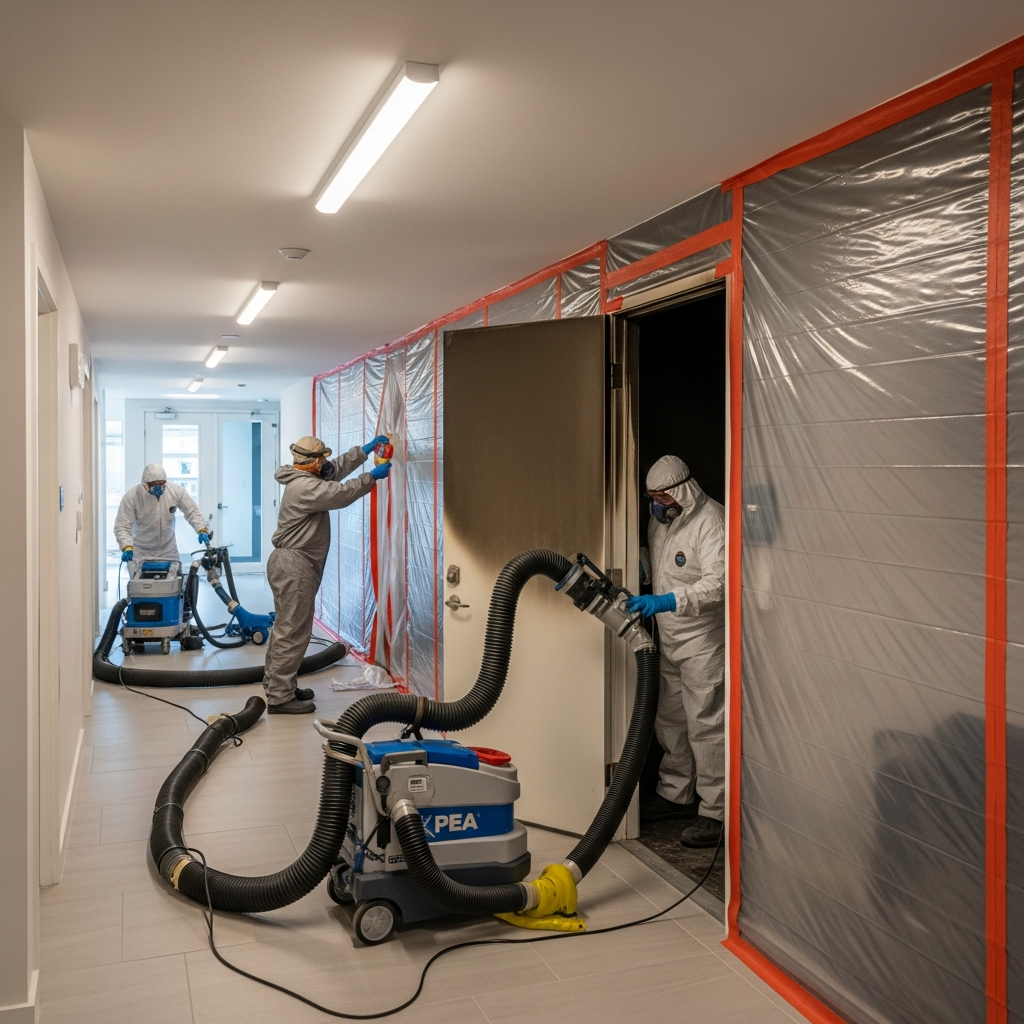
Post-fire environments carry airborne particulates, intermittent heat, and damp materials from suppression. Indoor air quality management starts immediately with HEPA filtration and containment barriers to prevent cross-contamination from affected to unaffected rooms. Moisture mapping helps identify wet insulation or drywall so mold does not gain a foothold. Structural assessments confirm that beams, roof decking, and connections have not been compromised by heat. In Malibu, where many homes use open beam ceilings and large expanses of glass, inspections account for thermal stress and smoke pathways unique to local architecture.
Navigating Evacuation Zones and Access Control
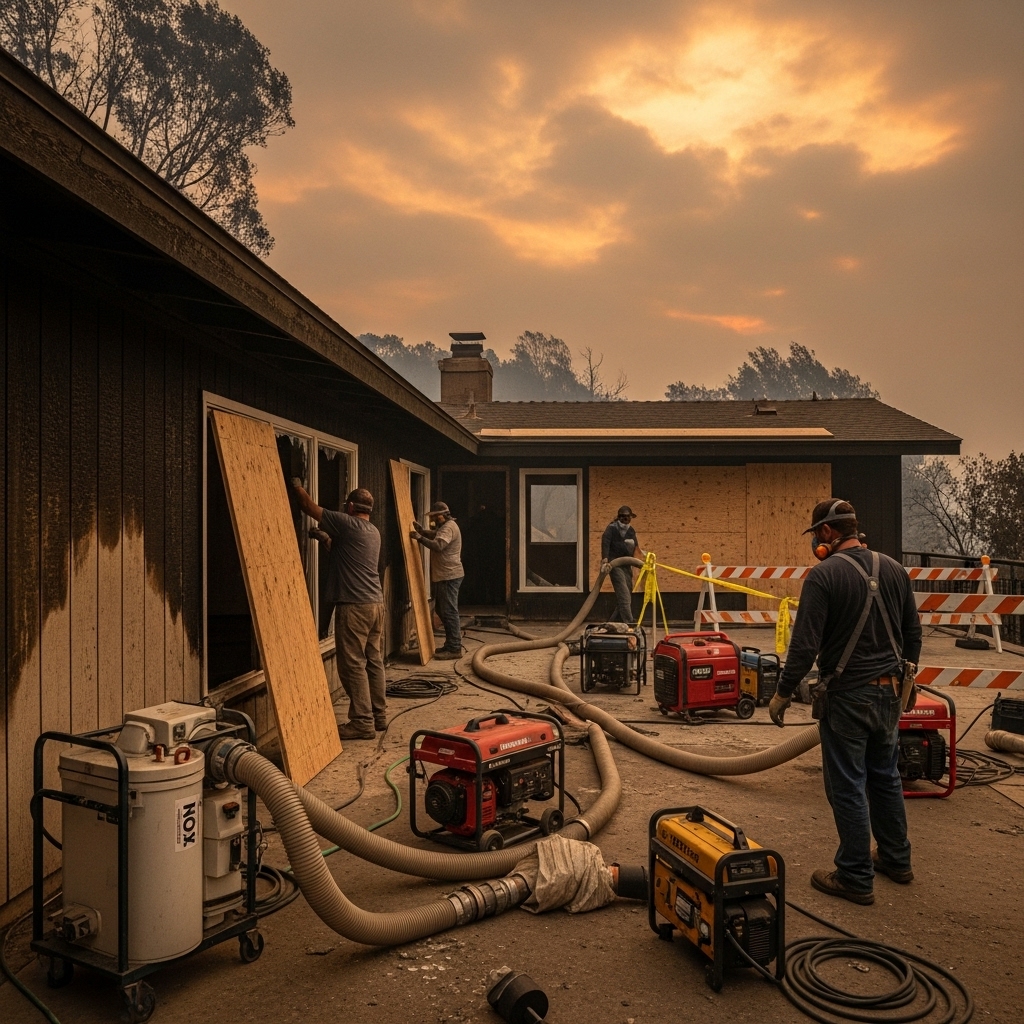
During wildfire season, restoration teams work closely with authorities to respect evacuation orders, checkpoints, and safety perimeters. When re-entry is allowed, crews arrive prepared to secure openings with board-ups and tarps, manage debris, and begin documentation without delay. Narrow canyon roads, steep driveways, and limited staging areas are common; knowing these constraints ahead of time saves hours and reduces risk, especially when smoke conditions can worsen unexpectedly and visibility drops.
Documentation that Keeps Projects Moving
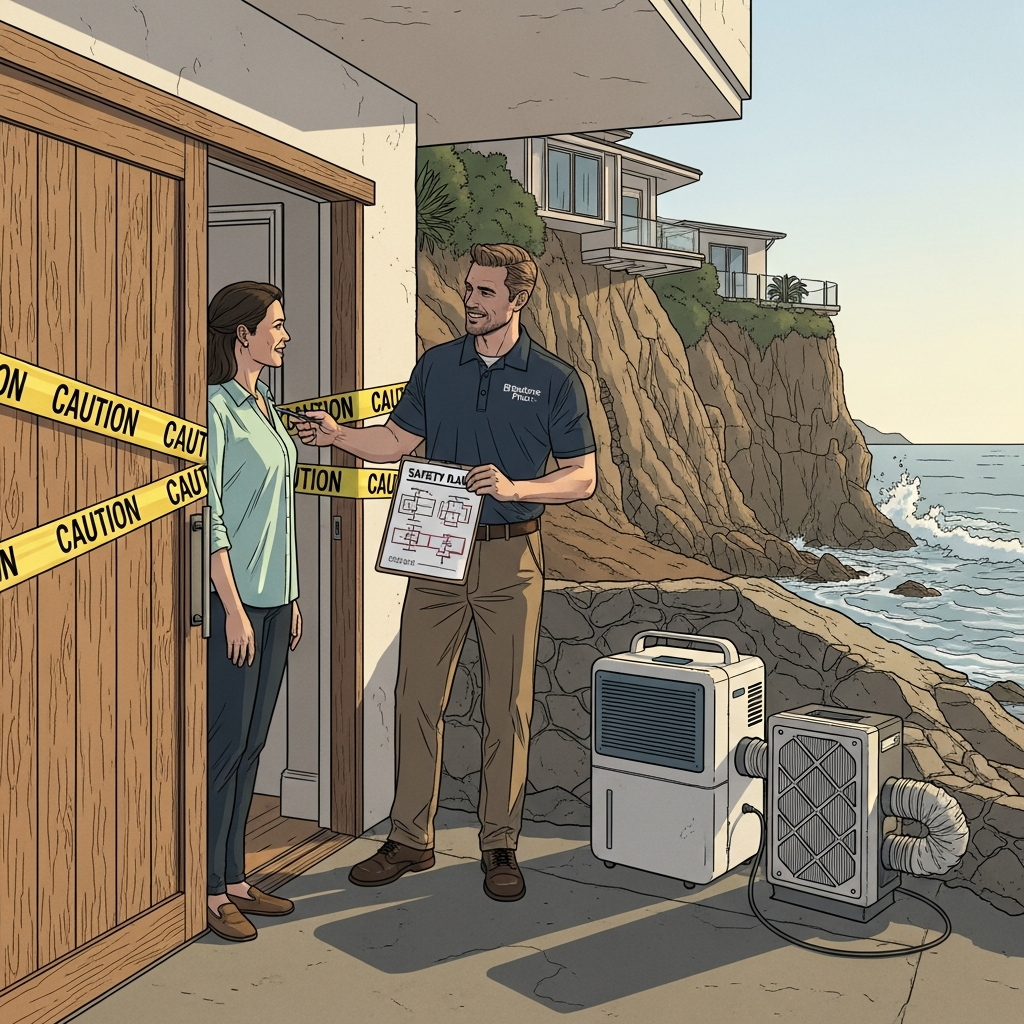
Clear documentation has outsized importance when multiple fires are active. Adjusters may be handling a heavy caseload, and building departments may be processing a surge of permits. Photographs, moisture and air quality readings, itemized inventories, and detailed scopes help decisions happen faster, ensuring materials are ordered, approvals granted, and work can progress despite the seasonal rush. For Malibu homeowners, this level of organization reduces uncertainty and keeps everyone on the same page.
Cleaning Ash and Soot in Coastal Conditions
Wind-driven ash behaves differently along the coast. It drifts into attic vents, wicks into porous stone, and settles as a fine layer on glass and stainless steel. In the presence of marine humidity, acidic residues can etch and corrode quickly. Effective restoration neutralizes these residues and selects cleaning agents and techniques that protect finishes. Meticulous HEPA vacuuming, dry sponging, and targeted wet cleaning work together to remove contaminants without spreading them through your home or onto the grounds.
Odor Control That Stands Up to Shifting Weather
Anyone who has lived through Malibu’s smoky weeks knows odors can intensify with heat and humidity changes. Restoration plans account for this by attacking odor at the source—removing contaminated materials, cleaning structural cavities, and treating the air with proven technologies. Proper sequencing matters: clean first, dry thoroughly, then neutralize. Post-treatment, crews reassess as weather changes to confirm the odor remains neutralized, ensuring the results hold even when winds pick up again.
Stabilizing Structures and Preventing Secondary Damage
Secondary damage is common when weather impacts an already compromised home. Temporary roof coverings, window and door board-ups, and moisture control protect the interior while long-term decisions are made. Malibu’s microclimates can deliver morning fog and afternoon heat in the same day, so stabilization must anticipate both. Protecting materials during this period preserves options, reduces the scope of demolition, and sets the stage for a smoother rebuild.
Working With Utilities and Temporary Services
Power, water, and gas interruptions are a fact of wildfire season. Restoration teams bring generators, temporary lighting, and portable climate control to maintain safe working conditions and keep air filtration running. Coordination with utilities ensures reconnection happens safely and in the right sequence. This readiness shortens the time from access to meaningful progress, especially on properties up canyons where service restoration may lag behind coastal corridors.
Communication That Reduces Stress
In high-stress periods, communication becomes its own form of care. Homeowners need timely updates, clear explanations, and realistic expectations. Daily check-ins, photo updates, and straightforward scheduling help families make decisions and plan their days. When your phone is a constant stream of alerts, knowing your restoration team is steady and responsive is one of the most valuable supports you can have.
Local Expertise and Seasoned Logistics
Experience in Malibu means understanding the terrain and the season’s cadence. Crews plan around tide cycles to avoid coastal road congestion, build in extra travel time for checkpoints, and select materials with availability in mind. Subtle choices, like how to stage debris to prevent it from migrating downhill during offshore winds, show up later as fewer complications and better finishes. These logistics are invisible when done well, but they save days over the course of a project.
Mid-Season Reassessments and Quality Control
As the broader incident changes, your property’s needs can change too. Odors that seemed resolved might return when heat rises, or previously dry areas may show moisture as fog cycles increase. Mid-season reassessments check assumptions, recalibrate equipment, and confirm progress. If you are midway through a project and want a second opinion or a confidence check, it is wise to consult specialists in Malibu fire damage restoration who can validate that the plan and pace match the season’s realities.
Responsible Debris Handling and Environmental Care
Debris management during wildfire season protects not only your property but the broader environment. Sorting materials, avoiding runoff, and handling ash according to public health guidelines keeps contaminants out of waterways and beaches. Restoration done with environmental care respects the place we love and helps communities reopen trails, parks, and shoreline with fewer concerns after the smoke clears.
Insurance Collaboration in a Busy Cycle
Insurers, like contractors, see an influx of work during wildfire season. Clear scopes, prompt estimates, and transparent change orders foster quick approvals. If code upgrades are required, particularly those related to ember-resistant features, having documentation ready prevents delays. Malibu homeowners benefit when restoration and insurance teams operate as collaborators rather than adversaries, and that collaboration is built on organized, thorough reporting.
Protecting What Matters Most
Beyond structures and finishes, there are heirlooms, instruments, artwork, and family archives that define home. Contents teams prioritize these items, providing controlled cleaning, deodorization, and secure storage when necessary. In a season already defined by uncertainty, knowing your most valued belongings are handled with care offers measurable relief and a sense of continuity.
Returning Home with Confidence
The goal is not just to finish work; it is to restore your sense of safety. Final walkthroughs, air quality checks, and clear handoff documents help you re-enter with confidence. You will know what was addressed, what was improved for resilience, and how to care for new materials. In Malibu, where we all keep one eye on the horizon during fire season, that confidence is part of living well in a beautiful, dynamic place.
FAQ: What should I do first if my home is affected during wildfire season?
Confirm your family’s safety and follow official guidance for evacuation and re-entry. When authorities say it is safe, contact a restoration team to secure the property, start air filtration, and document conditions for insurance. Avoid running HVAC until filters and ducts are assessed, and limit movement in affected rooms to reduce the spread of soot.
FAQ: Can restoration start while nearby fires are still active?
Yes, when authorities permit access and it is safe for crews. Work may focus on stabilization, air quality control, and selective cleaning until conditions allow for full-scale repairs. Teams remain flexible and adjust as the broader incident evolves.
FAQ: How does Malibu’s climate affect restoration during fire season?
Dry, windy weather accelerates soot migration, while marine layers can introduce moisture that interacts with residues. Plans must account for both, combining containment and filtration with thorough drying and residue neutralization to prevent secondary damage.
FAQ: Will my insurance cover wildfire-related restoration?
Coverage depends on your policy and the specifics of the event. Restoration teams provide detailed documentation to support claims, including photos, readings, and inventories. Work with your adjuster to understand deductibles, limits, and any code upgrade coverage that may apply.
FAQ: How long before my home is livable again?
Stabilization can happen quickly, sometimes within a day of re-entry, while comprehensive restoration takes longer depending on damage and access. A clear plan with milestones helps you track progress and determine when parts of the home may be safely reoccupied.
FAQ: What steps help prevent future smoke impacts?
Consider ember-resistant vent screens, ensure weatherstripping is in good condition, and maintain defensible space. Upgraded HVAC filtration and routine duct inspections can also reduce smoke intrusion during future events.
If you need steady hands and clear guidance in the middle of wildfire season, choose a team that knows Malibu and respects the season’s realities. When you are ready to begin, reach out to trusted specialists for fire damage restoration in Malibu so you can return home with confidence, breathe easier, and start rebuilding the rhythm of your life.