Conversations about the cost of fire damage restoration in Malibu often begin with a simple, pressing question: what should I expect? The truth is that every property and every fire tells a different story, and a number on a page rarely captures the nuance behind it. When smoke moves through a hillside home or a canyon breeze carries embers across a deck, the result is a blend of visible damage and invisible residues that require careful planning and disciplined execution. The most helpful place to start is with a clear framework for how professionals evaluate scope, document conditions, and craft a plan. If you need perspective right away, look to a local team experienced in fire damage restoration in Malibu to outline the steps from initial assessment through final sign-off.
Expectations are easiest to manage when you understand the variables at play. Malibu’s microclimates, material palettes, and architectural styles multiply the considerations for restoration professionals. Open floor plans can allow smoke to pressurize large spaces, while intricate millwork and natural stone create surfaces that demand delicate cleaning techniques. Beyond the obvious blackened areas, you may be dealing with fine soot in closed drawers, behind baseboards, and along attic pathways where negative pressure drew smoke upward. Bringing these hidden layers into the light is central to building an accurate plan of action.
How Scope Is Determined
Scope starts with mapping the journey smoke and heat took through the structure. Professionals walk the property methodically, often beginning at the loss origin and moving outward to unaffected or lightly affected spaces. They test residues to understand whether they are dry, oily, or protein-based, because each type dictates a different removal strategy. They note the materials present—from high-end plaster and reclaimed wood to engineered flooring and composite decking—so that products and methods align with the home’s finishes. They also look for secondary impacts, like water used for fire suppression, that can drive early drying priorities before deeper cleaning begins.
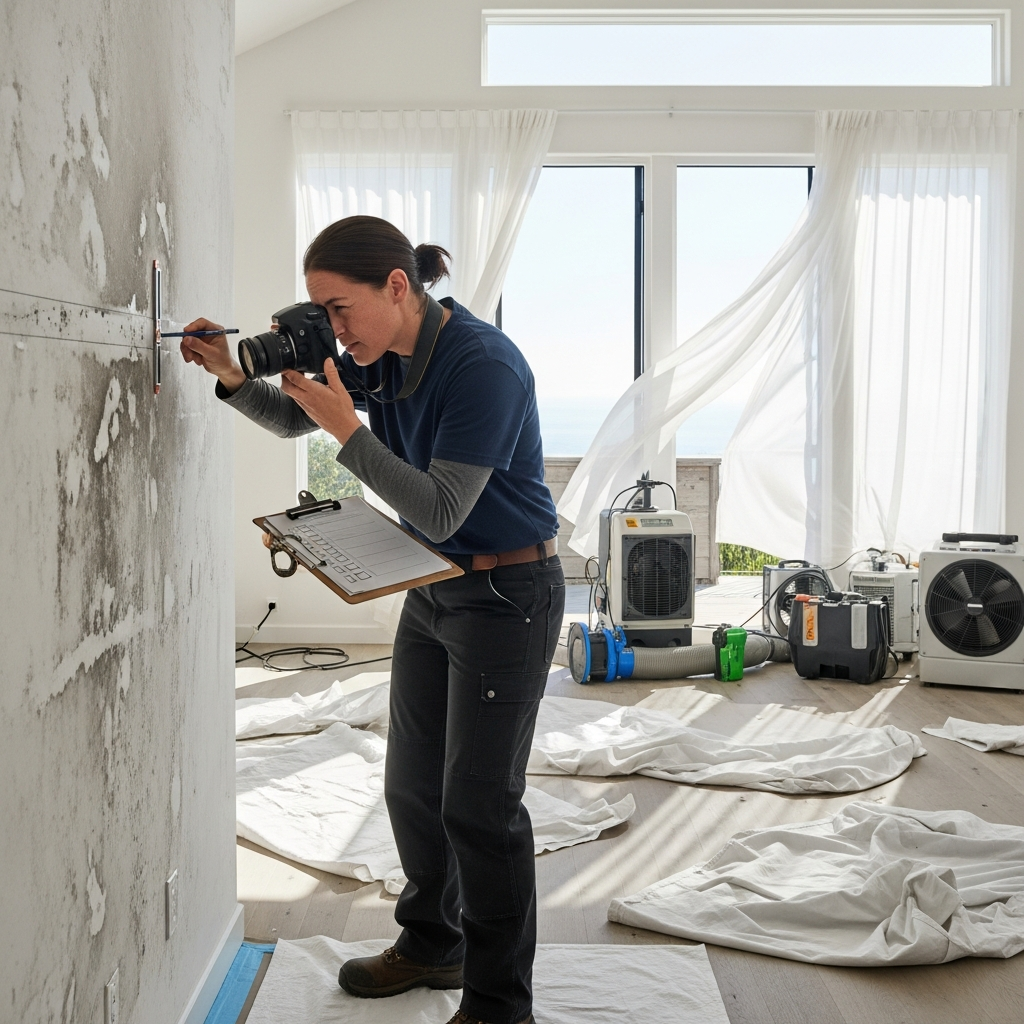
Documentation supports every step. Photographs, moisture readings, and room-by-room notes create a shared reference point for you, the adjuster, and the restoration team. In Malibu, where many owners travel, this documentation is even more valuable, enabling decisions without constant on-site visits. Consistent communication around the scope helps you see how the plan protects what you value most, from family heirlooms to architectural details.
What To Expect During Stabilization and Cleaning
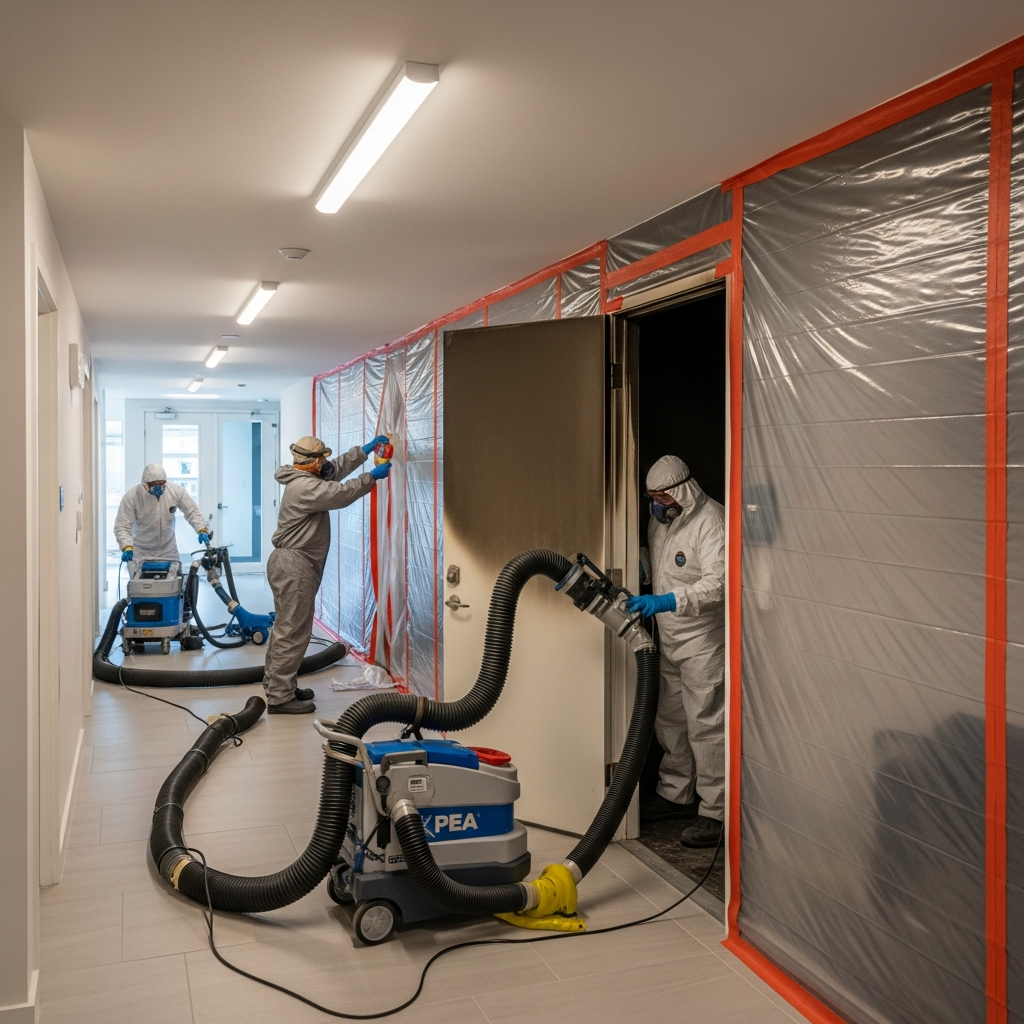
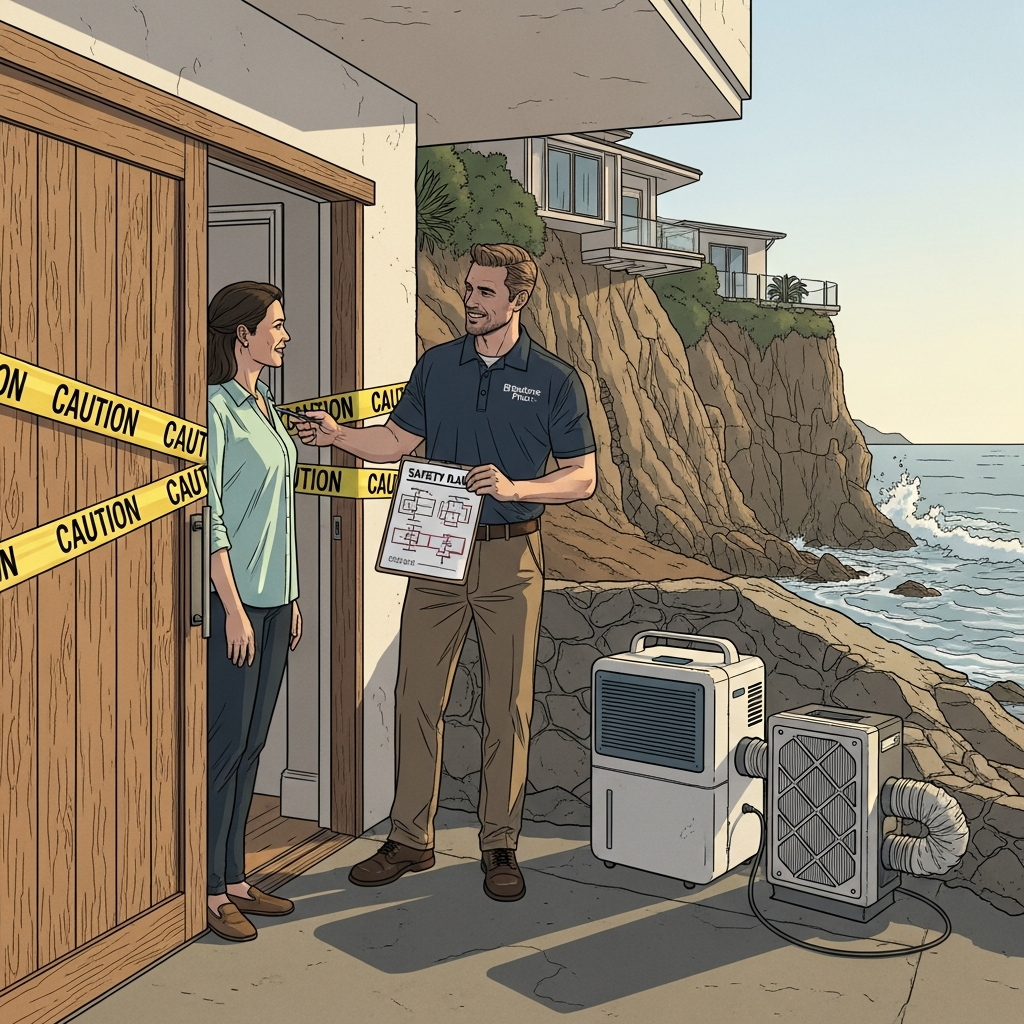
Stabilization is about safety and containment. Expect professionals to secure doors and windows, tarp compromised roofs, and establish negative air with HEPA filtration. If water is present, drying equipment runs early and often to discourage secondary issues. Containment barriers create clean corridors for moving through the house without spreading soot to previously unaffected rooms.
Cleaning follows a structured sequence to avoid pushing residues deeper. Dry methods like HEPA vacuuming and chemical sponges usually come first, followed by wet cleaning where chemistry is appropriate and safe for the surface. Textiles and soft goods often head off-site for specialized odor treatment before they are laundered. Stone, tile, wood, and metal receive tailored care, with test patches conducted in inconspicuous spots to prove methods before scaling up. In complex Malibu homes, this process can unfold in phases to fit around household routines or parallel construction activities.
Factors That Influence the Overall Effort
Several elements shape the scope and timeline of restoration. The type and amount of soot matter greatly, as does whether structural members sustained heat damage. The home’s layout can accelerate or slow cleaning; vaulted ceilings and skylights can collect soot that requires special access and safety planning. Electronics and mechanical systems exposed to smoke may need evaluation by specialists, particularly in coastal areas where salt in the air can accelerate corrosion once soot deposits are present. Even landscaping can affect indoor progress, as nearby vegetation can trap odor that re-enters open doors during work hours.
A local restoration team will also consider seasonal conditions. Malibu’s cool evenings and warm, breezy afternoons can change how odors present over the course of a day. Strategic timing for sealing, deodorization, and ventilation helps ensure long-term success. Thoughtful scheduling, including quiet hours or phasing around your family’s needs, keeps the project on track without unnecessary disruption.
Working With Professionals You Can Trust
The most reassuring part of this journey is having experts who explain each step. A strong team offers clear rationales for recommendations, shows you before-and-after test areas, and calibrates expectations as new information emerges. That might include adjusting deodorization methods, expanding cleaning to an adjacent room based on air movement, or sequencing pack-out activities to protect valuables. Mid-project clarity matters as much as day-one plans, which is why many Malibu homeowners benefit from engaging seasoned restoration professionals who have solved similar challenges in coastal and canyon environments.
Communication is not a luxury—it is an essential tool. Regular updates create a sense of progress even when work is happening behind containment. You should expect clear documentation of what was completed, what is next, and where decisions are needed. This transparency gives you confidence and keeps the project aligned with your goals for the space.
Contents, Keepsakes, and Special Items
Belongings often hold the stories of a home as surely as its structure does. During restoration, each item receives attention based on material, condition, and sentimental value. Cleanable contents are treated carefully and returned to service as quickly as possible. Items requiring off-site care are inventoried and transported to controlled environments where odor removal and delicate cleaning can proceed without the dust and airflow of a construction site. Artwork, musical instruments, and heirloom textiles typically receive individualized care plans and may involve consultations with conservators or specialized partners.
Pack-back is its own stage, organized and documented to ensure items return to the right rooms and positions. Many homeowners find that this is the moment when the property begins to feel like home again, even before final touch-ups are complete. Good teams invite walkthroughs and punch list creation so that small details are captured and resolved before completion.
What You Can Do to Support Progress
Your involvement can accelerate the work. Share your priorities early: which rooms matter most, where you would like clean zones established, and how crew hours fit with your routines. Provide lists of items that are urgent for daily life so they receive priority cleaning. If fragrances are a concern, discuss product options in advance. Keep a simple journal of questions and decisions; it becomes a helpful reference as the project evolves.
It also helps to think ahead about seasonality. If the project runs into cooler evenings or a damp marine layer, planning for ventilation and temperature control supports deodorization. Aligning schedules for inspections and sign-offs minimizes delays. The goal is a smooth, predictable progression from first visit to final handshake.
Frequently Asked Questions
What determines the overall scope of restoration?
Scope is driven by how smoke traveled, the types of soot present, material sensitivity, and any heat or water impacts. A thorough assessment reveals hidden contamination and ensures the plan addresses both visible and invisible damage without over- or under-cleaning.
How long does a typical restoration project take?
Timelines vary widely based on extent of damage, size of the property, and the sequence of cleaning, deodorization, and any build-back. Your team should provide milestones and adjust them as new findings emerge, keeping you informed of progress along the way.
Will my HVAC and electronics need special care?
Yes. Ductwork, air handlers, and electronics can harbor fine particulates that lead to lingering odors or premature failure if left untreated. Professionals isolate, inspect, and clean these systems and may coordinate with specialists when corrosion risk is higher near the coast.
Can I remain in the home during restoration?
Many projects can be phased to allow occupancy of clean zones, depending on safety, air quality, and the level of disruption you can comfortably manage. Your restoration partner should outline options and help you weigh convenience against efficiency.
How do I know odors are truly gone?
Lasting deodorization depends on source removal, not just masking. Successful projects include verification after cleaning and sealing, with follow-up checks to confirm that temperature or humidity changes do not reactivate odors.
What is the best first step after an incident?
Once authorities clear the site, contact a qualified local team to stabilize the property, begin documentation, and set up containment and filtration. Early action prevents secondary damage and sets a clear pace for the rest of the work.
Restoring a Malibu home after a fire is as much about guidance as it is about technical skill. When you work with a team that understands our coastline, communicates clearly, and respects the architecture and materials that define your space, the path forward becomes manageable and reassuring. If you are ready to speak with specialists and map out next steps that fit your goals, reach out now to talk to a Malibu fire damage restoration team and begin moving from uncertainty toward a well-planned return to comfort.