When fire strikes in Malibu, water is never far behind. Between firefighting efforts, sprinkler activations, and coastal humidity, the aftermath becomes a complex dance of two forces working against your home at once. Smoke clings to ceilings and settles into fabrics, while clean or sooty water migrates across floors, into substructures, and behind walls. I have stood in living rooms that look lightly dusted with ash only to find soaked insulation in the attic and hidden moisture in cabinet toe-kicks. True restoration in Malibu must treat fire and water not as separate chapters, but as a single story with interwoven threads—because the choices you make on day one shape the outcome for weeks and years to come.
This dual challenge is exactly where local experience matters. The marine layer that softens our sunsets can also slow drying if not managed carefully. Canyon winds that fan flames can push smoke through every tiny gap. Materials—from hand-troweled plaster and stucco to exotic hardwoods and engineered flooring—respond differently to heat, water, and cleaning agents. That is why homeowners benefit from partnering with professionals seasoned in fire damage restoration in Malibu, where the plan is tailored to our climate, our architecture, and the way smoke and water actually move through these spaces.
Fire’s Signature: Soot, Odor, and Heat
Fire leaves behind a spectrum of residues. Protein-based smoke from kitchens tends to be invisible yet pungent and sticky. Synthetic materials produce oily, smear-prone soot. Natural wood smoke, especially from brush and chaparral, can settle as a fine, pervasive film. Each type demands its own approach. Begin with dry, controlled removal to avoid driving contaminants deeper into surfaces. Then introduce carefully matched detergents that lift without damaging finishes. In Malibu’s salt-influenced air, we also guard metals that can corrode rapidly after exposure. Protecting fixtures, appliances, and electronics at this stage prevents costly secondary loss and preserves the character of the home.
Odor is a science of pathways and reservoirs. Warm smoke rides convection currents and tucks into attics, wall cavities, open-beam ceilings, and closet shelving. That is why homes may smell clean one hour and smoky the next, depending on temperature and air movement. Deodorization must follow those pathways back to their sources. Hydroxyl treatments, thermal fogging when appropriate, and precise sealing strategies target the places where odor molecules hide so the house returns to a genuine neutral—not an artificial perfume that fades and reveals the problem again.
Water’s Signature: Intrusion, Wicking, and Time
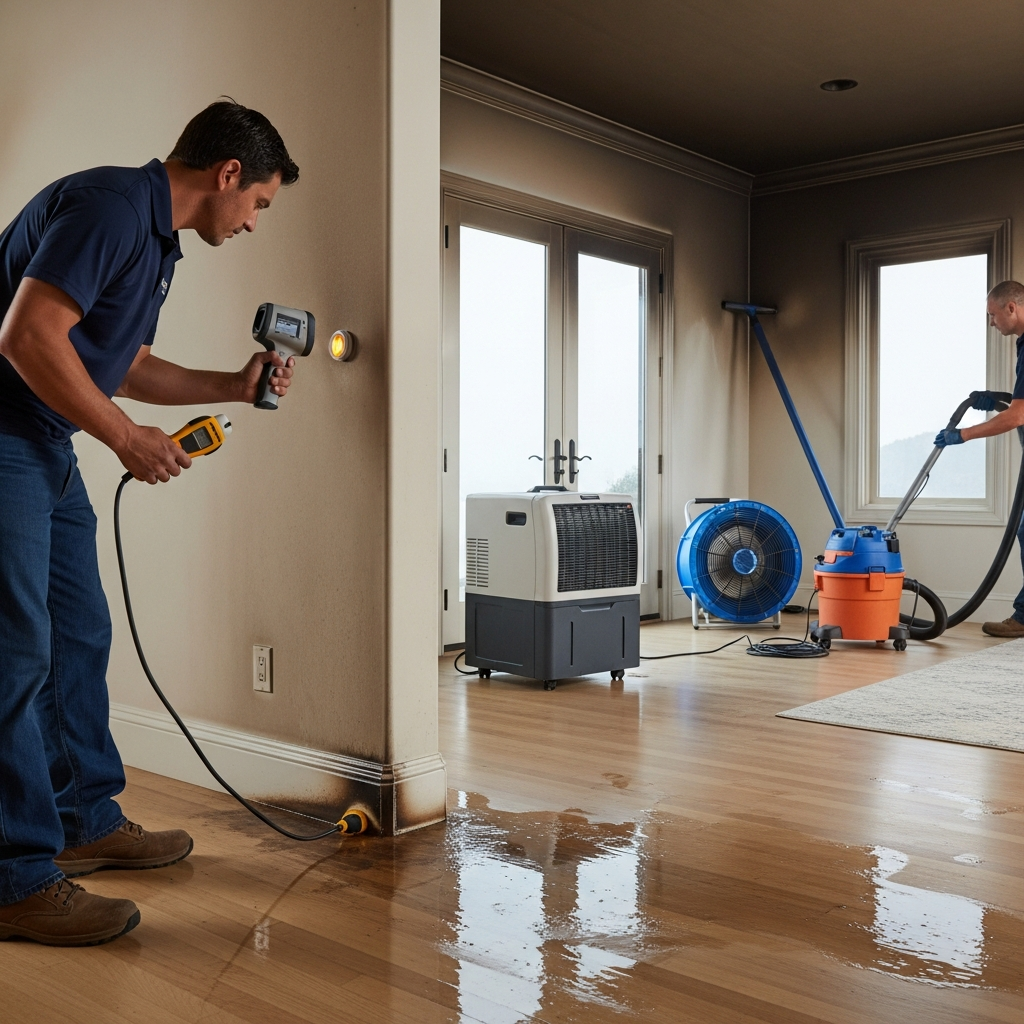
Water does not sit still. It wicks up drywall, migrates beneath baseplates, and collects in low spots under flooring. The problem compounds if soot is mixed in, creating a staining slurry that can lock into porous materials. The first order of business is extraction, then a measured drying plan based on moisture mapping. Malibu’s coastal conditions can make outside air deceptively cool and damp, so we often rely on a combination of controlled ventilation, dehumidification, and targeted heat to move moisture efficiently without creating new issues like cupping wood or surface checking.
Monitoring is non-negotiable. Moisture meters and thermal imaging reveal hidden pockets in insulation, subfloors, and cabinet cavities. In some cases, strategic removal of baseboards and small access openings allows focused airflow where it matters, shortening timelines dramatically. If drying is rushed or uneven, materials can warp or trap moisture that later breeds mold. Done well, structural drying preserves more of the home’s original fabric and reduces the need for disruptive reconstruction.
Sequencing: The Art of Doing the Right Task at the Right Time
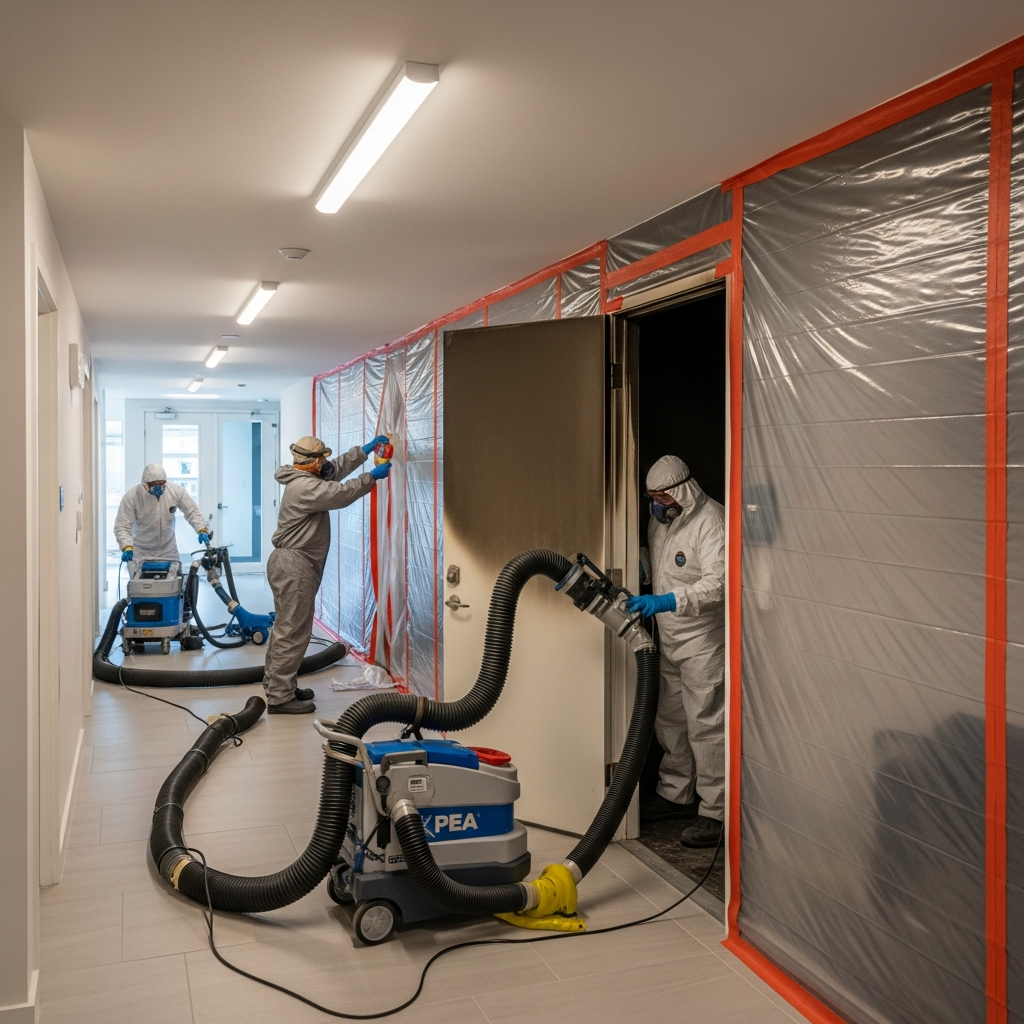
With fire and water combined, timing becomes everything. We are always asking: what must be protected immediately; what should be cleaned now; what should wait until drying stabilizes? Dry soot removal generally precedes wet cleaning. Water extraction and containment begin on day one. HVAC systems are shut down and evaluated early to prevent recirculation of contaminants. Deodorization can start in tandem with cleaning, but sealing and painting wait until materials are dry and hard data shows moisture levels are stable. This choreography keeps energy focused and avoids undoing progress through recontamination or trapped moisture.
Contents are treated with the same logic. We stabilize sensitive items and decide quickly which pieces should be cleaned on-site versus moved to a secure environment for deeper work. Rugs, upholstery, and textiles respond best when soot is lifted early and drying begins before odors have a chance to embed fully. Heirlooms and art receive protective handling and, when necessary, conservator guidance to ensure both cleanliness and integrity.
Malibu’s Climate and Construction: Opportunities and Pitfalls
Malibu’s climate is seductive but tricky for restoration. Cool mornings can mask humidity that slows drying, while afternoon winds can push fine ash back toward freshly cleaned areas if airflow is not controlled. Open-plan living with expansive glass creates both access and complexity. Clerestories and high beams collect residues that must be addressed before finishing lower areas, or you risk dust-down that undoes a day’s work. On the materials front, natural stone and exotic woods require pH-balanced cleaners and precise drying curves. Engineered floors may delaminate if mishandled; solid planks can cup if dried too quickly or unevenly. Experience with local builds—from beachfront homes on pilings to hillside properties with complex framing—shapes smarter decisions from the outset.
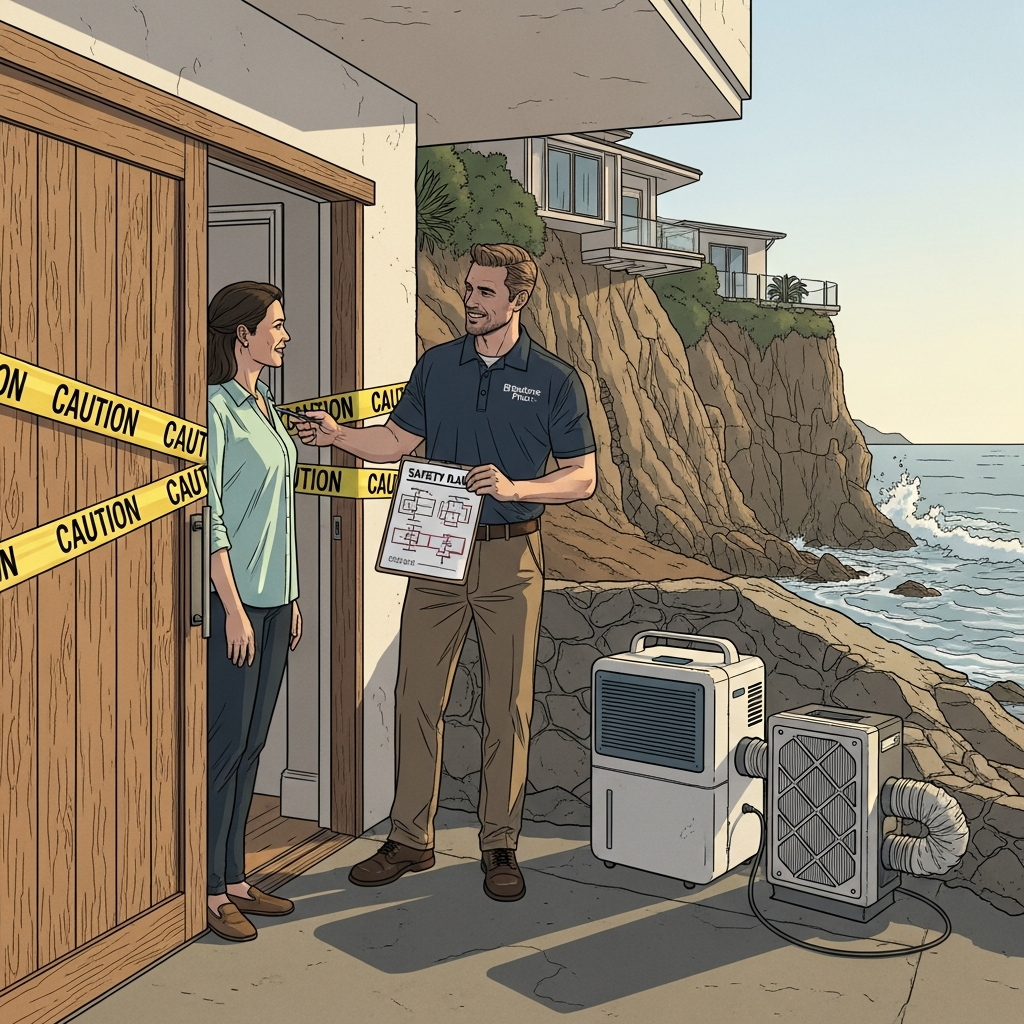
We also consider power and logistics. After larger events, roads and utilities can be inconsistent. Planning for generator support, safe fuel storage, and equipment staging keeps the project moving. Communication with neighbors and HOAs streamlines access and reduces friction. In Malibu, a well-managed job runs as a considerate guest in the neighborhood while quietly achieving daily wins inside the home.
Deodorization: A Layered Strategy
Lasting odor control emerges from a sequence. First, remove source materials and residues; second, clean and neutralize surfaces; third, address hidden cavities; fourth, consider selective sealing; and finally, verify through lived-in conditions. Hydroxyl technology is invaluable because it works continuously and safely around many materials, making it ideal while families manage life’s non-negotiables. Thermal fogging, when matched correctly to the smoke profile and materials, reaches voids airflow cannot. Where insulation is a stubborn reservoir, strategic replacement delivers immediate relief. Each method is documented so that we can measure progress and know precisely when the structure is ready for finishing touches.
Fragrance is not the goal; absence is. By the time the project concludes, opening a closet or starting the HVAC should not stir up a ghost of yesterday’s smoke. Instead, the air should feel as clean and steady as a quiet morning on the beach before the coastline wakes up.
Mid-Project Confidence: What You Should Notice
At the midpoint, homeowners should feel a tangible shift. The home holds a neutral scent even with windows closed. Surfaces no longer show smeary films, and touchpoints—switch plates, handrails, appliance handles—feel crisp and clean. Moisture readings trend down consistently, and dehumidifiers are set to maintain conditions rather than chase stubborn pockets. If any space backslides, the team should investigate immediately. Often the culprit is a hidden cavity or a section of insulation that needs attention. This is the right time for a candid progress review, aligning on the finish sequence so that momentum builds toward move-back day.
Clarity and communication are part of the craft. In Malibu, where schedules juggle school runs, surf sessions, and commutes along PCH, homeowners deserve predictable updates. A good plan translates complex technical work into simple weekly goals that keep stress low and results high.
Insurance: Turning Documentation into Acceleration
Claims move faster when evidence is detailed and organized. Before-and-after photos, moisture logs, and product datasheets for cleaning methods and sealers provide context for every decision. High-end finishes benefit from manufacturer guidance on cleaning tolerances, which helps protect both materials and coverage. The intent is not to overwhelm the adjuster with jargon, but to illuminate the path so approvals are straightforward. That discipline pays off in reliable timelines and, ultimately, peace of mind.
Rebuilding with Care, If Needed
Not every fire-and-water project requires reconstruction, but when it does, sequencing remains crucial. Demolition targets only what cannot be saved, containment protects finished zones, and trades are coordinated so work does not stack up on top of itself. Painting follows sealing and thorough cleaning, flooring repairs wait for stable moisture readings, and move-back happens when both structure and contents are ready to rejoin in harmony. The finished home should not feel patched; it should feel whole.
Maintaining Gains After Restoration
Once life returns to normal, staying proactive keeps the home fresh. Scheduled HVAC filter changes and duct inspections prevent dust burdens. Humidity management—especially during marine layers—preserves finishes and air quality. Simple practices like storing seasonal textiles in breathable containers and wiping down high-touch surfaces with appropriate products help protect that newly restored clarity. With each small habit, you reaffirm the clean baseline achieved through careful restoration.
Frequently Asked Questions
Why is water damage such a big issue after a fire?
Water used to extinguish flames can soak framing, insulation, and finishes, creating a risk of staining, warping, and microbial growth. Addressing water early stabilizes the structure, prevents secondary damage, and makes smoke cleanup more effective.
How do you dry a home in Malibu’s coastal climate?
By balancing dehumidification, targeted heat, and controlled ventilation. Moisture mapping guides equipment placement, and conditions are monitored daily to ensure steady progress without over-drying sensitive materials like hardwoods and natural stone.
Can my hardwood floors be saved?
Often, yes—if response is prompt and drying is controlled. Cupping may reduce over time with the right approach, and selective refinishing can restore appearance. The key is measured progress supported by moisture data, not guesswork.
What about odors that come back when the HVAC runs?
That typically indicates residues in ductwork or air handlers, or reservoirs in nearby cavities. Proper HVAC cleaning and, when needed, targeted deodorization or sealing solve the problem so the system can run without stirring smells.
Is it safe to live at home during restoration?
Phased work can make occupancy possible, but depends on the extent of damage, areas involved, and your comfort level. Some families prefer to relocate briefly during intensive phases like media blasting or insulation replacement.
Will my insurance cover both fire and water restoration?
Policies vary, but documentation that links water mitigation to the fire event generally supports coverage. Detailed records of conditions and actions taken help keep the claim moving efficiently.
When smoke, heat, and water collide, you deserve a plan that brings order to complexity and restores not just your house, but your peace of mind. Move forward with confidence by choosing specialists in fire damage restoration in Malibu, and feel your home transition from aftermath to renewal with each careful, coordinated step.