Every successful fire recovery in Malibu begins with a thorough inspection. It’s the blueprint for everything that follows, from stabilizing the structure to restoring finishes and contents. Over the years, working between Encino and Malibu has taught us that the best inspections do more than catalog obvious damage—they anticipate how smoke and moisture behave in homes shaped by ocean air, hillside winds, and a blend of materials that range from steel and glass to reclaimed wood. When you start with a careful, locally informed inspection, guided by experienced fire damage restoration professionals, you shorten the path back to normal and lower the risk of costly surprises.
Inspection is both science and storytelling. The science is in the instruments and readings; the storytelling is in interpreting patterns so the plan fits your home’s layout and history. In Malibu, that narrative usually includes strong sun, marine layer moisture, and seasonal winds that drive smoke uphill and into hard-to-reach spaces. An Encino team seasoned in these conditions knows where to look and how to document what they find in ways that expedite approvals and keep work flowing.
Safety First: Securing the Scene
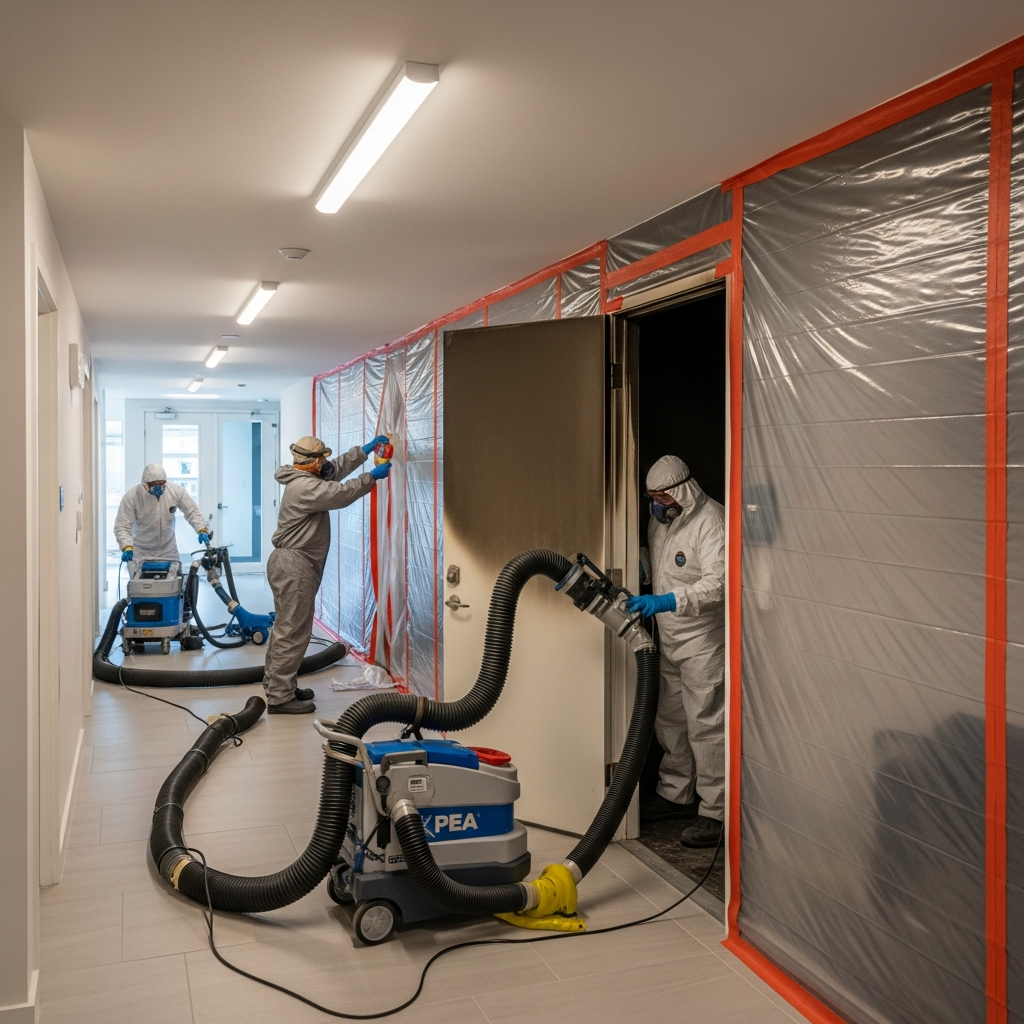
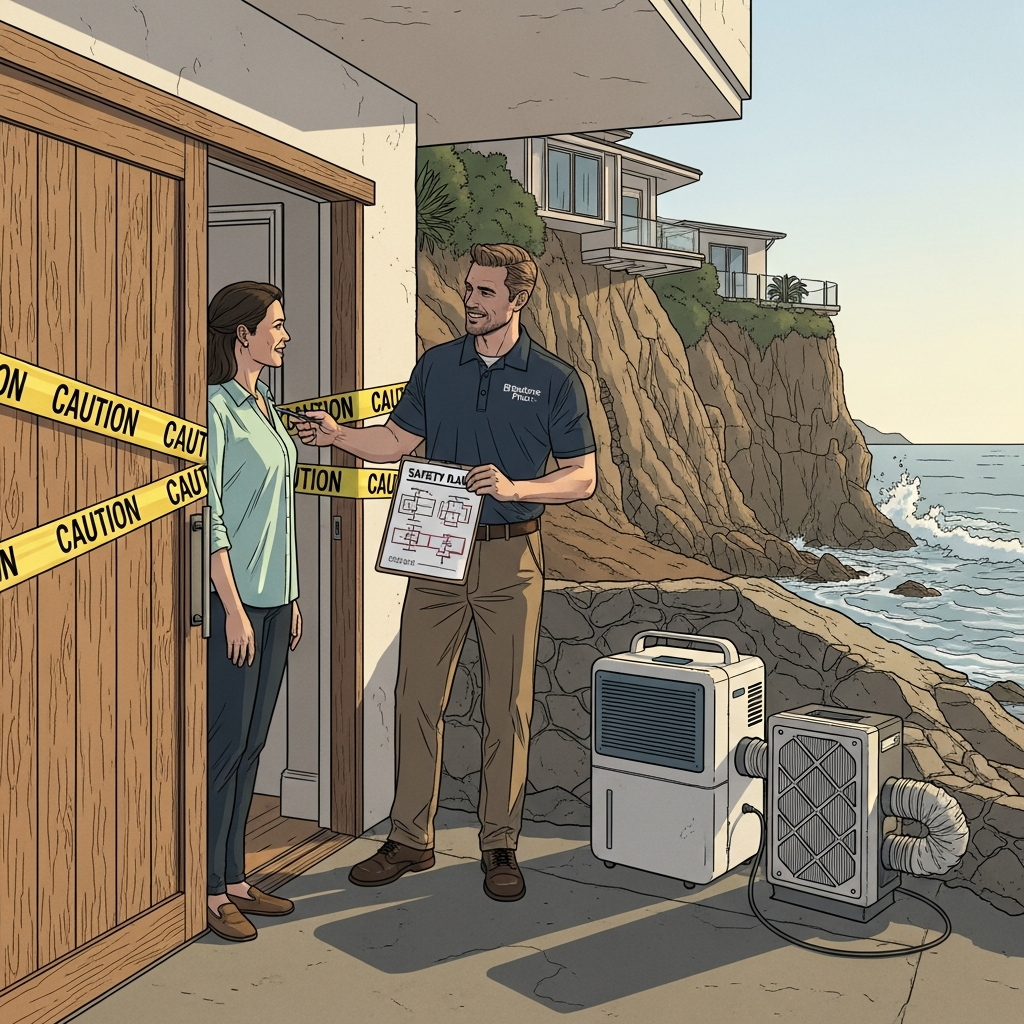
Before we take measurements, we confirm life safety. That means checking for downed lines, compromised framing, and air quality concerns. Utilities are evaluated, and if necessary, systems are isolated so the inspection can proceed safely. In Malibu’s coastal breeze, airborne particulates can shift quickly; establishing negative air in affected zones early protects occupants and inspectors alike.
Structural Assessment: Reading the Frame
Structural inspection looks for charring depth, heat exposure patterns, and the condition of connectors and fasteners—areas vulnerable to both heat and, later, salt-assisted corrosion. We examine roof members, beams, and bearing walls, mapping any deflection or weakness. In hillside homes, fire impacts can vary from floor to floor; a methodical, room-by-room approach creates a true picture of what needs reinforcement or replacement.
Smoke Migration: Mapping the Invisible
Smoke behaves like water and wind. It finds openings, follows pressure differences, and settles where air slows down. Using light particulate testing, thermal imaging, and the simple truth of a trained nose, we trace its pathways into soffits, light cans, attic voids, and behind built-ins. Malibu’s architecture celebrates volume and views, which also means more pathways for smoke to circulate. A good inspection maps these routes so cleaning and sealing can target the right surfaces the first time.
Moisture Detection: Preventing Secondary Damage
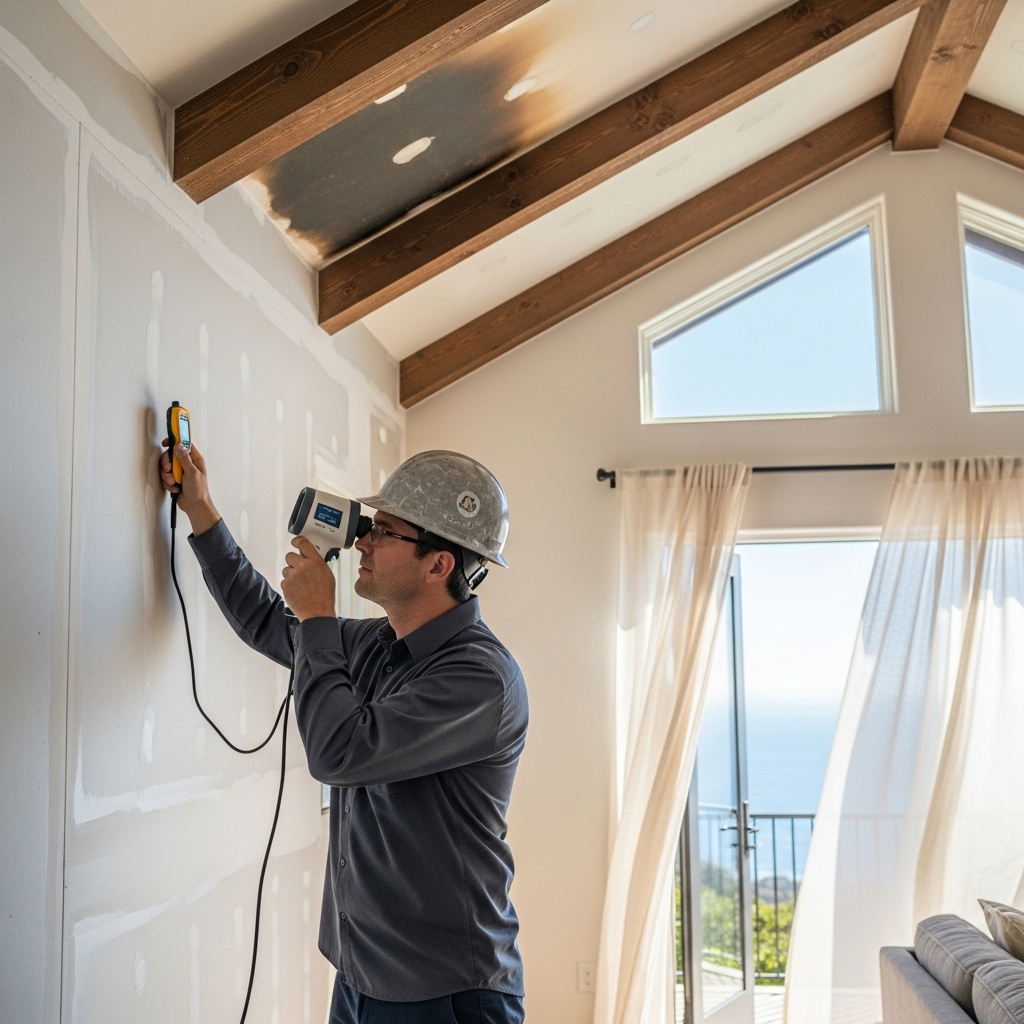
Water introduced during firefighting or from broken lines doesn’t announce itself loudly. Moisture meters and thermal cameras reveal what the eye can’t: insulation retaining water, subfloor dampness, or hidden leaks that began during the event. In Malibu’s marine climate, careful drying is essential. The inspection sets drying goals and identifies areas where removal, rather than in-place drying, is the safer, faster path.
HVAC and Mechanical Systems: The Circulatory Check
Your HVAC system can become a vehicle for soot if it ran during or after the event. We assess filters, coils, housings, returns, and supply branches for contamination. Measurements and photos inform whether cleaning will suffice or whether components need replacement. Documenting this early ensures the scope accounts for IAQ and prevents odor reemergence after final cleaning.
Surfaces, Finishes, and Cleanability
From plaster and stone to engineered wood and fine textiles, each surface demands its own plan. Inspection identifies which materials respond to dry sponging versus alkaline washes, which should be sealed post-cleaning, and which are more economical to replace. This isn’t guesswork. Spot tests and manufacturer guidance feed the recommendations so the work aligns with your standards and the home’s design language.
Contents: Stabilization and Prioritization
Inspections include contents that matter most to you—artwork, heirlooms, documents, and custom furniture. We triage items for immediate stabilization, recommending climate-controlled pack-out when appropriate. For Malibu homeowners, proximity to Encino facilities is a benefit, allowing delicate items to be treated without delay while structural work moves ahead on site.
Corrosion Risks in a Coastal Environment
Salt and soot together create corrosive conditions for metal components and electronics. The inspection flags vulnerable systems and recommends neutralization or protective measures. Window and door hardware, electrical panels, appliances, and even hidden connectors in framing merit attention. The earlier these are stabilized, the better their long-term performance.
Documentation: Building a Case for the Plan
Nothing stalls a project like unclear documentation. A complete inspection package includes photos, annotated diagrams, moisture and particulate readings, and a clear narrative tying findings to recommended actions. For Malibu properties, we also account for access constraints and weather exposure, anticipating how wind or marine layer might affect scheduling and material choices. Insurers appreciate this level of clarity, which supports faster approvals and fewer disputes.
Scope of Work: From Findings to Action
The scope is the bridge between inspection and restoration. It sequences tasks so stabilization, cleaning, deodorization, and rebuild steps occur in the right order. In Malibu, that sequence often includes exterior measures—securing openings and protecting against coastal winds—so interior work proceeds without recontamination. A well-structured scope maximizes efficiency and occupant safety.
Mid-Project Reinspection and Quality Control
Inspections don’t end once work begins. Mid-project reinspections confirm that drying goals are met, odor thresholds are dropping, and previously hidden issues aren’t emerging. Adjustments are documented, keeping everyone aligned. This is also the point where a second look at HVAC cleanliness or attic voids can catch lingering concerns before final polish.
Final Verification: Confidence Before Re-Occupancy
Before you move back in, a final inspection verifies that the plan delivered. Surfaces test clean, air quality meets targets, mechanical systems run without odors, and finishes appear as expected. Checklists are useful, but a methodical walkthrough with you—pointing out what was done and why—makes re-occupancy comfortable and informed.
Choosing Inspectors With Local Insight
Encino-based teams serving Malibu bring a dual perspective: inland resources and coastal awareness. They understand how canyon access, marine fog, and seasonal winds influence both the inspection and the schedule. That insight translates into fewer surprises and smoother progress, with recommendations calibrated to how your home actually lives across the seasons.
Frequently Asked Questions
How soon after a fire should an inspection occur?
As soon as the site is safe and released by authorities. Early findings shape stabilization and prevent secondary damage from moisture, corrosion, or recontamination.
What tools are used to find hidden smoke and moisture?
Thermal imaging, moisture meters, borescopes, particle counters, and good old-fashioned visual inspection work together to reveal issues invisible to the naked eye.
Will an inspection disrupt what’s left of my home?
Inspections are minimally invasive. Where access is needed behind finishes, small, strategic openings are used and documented, preventing guesswork during repairs.
How do inspection results affect insurance?
Clear, detailed findings support accurate scopes of work and estimates, which help adjusters approve the right measures the first time, reducing delays.
Do I need a separate inspection for contents?
Contents are typically included in the initial inspection, with specialized conservators brought in for high-value items as needed. Early stabilization protects sensitive pieces.
If your Malibu home needs an assessment you can trust—and a plan that turns careful findings into decisive action—reach out to a local team practiced in thorough inspections and clear reporting. Begin with a focused, professional fire damage restoration evaluation, and take the first confident step toward a safe, comfortable return home.