When a fire event touches a Malibu home, the clock starts immediately. Heat, water, and smoke begin a cascade of secondary effects that can be slowed but not paused, and the first hours shape everything that follows. I have stood with homeowners on cool mornings after long nights, watching the marine layer roll back to reveal the outlines of what remains. In those moments, what you need is not just equipment; you need a calm, practiced plan. The right team for emergency response in our area understands local winds, canyon access, coastal corrosion, and the way smoke migrates in complex architecture. Connecting quickly with seasoned fire damage restoration professionals ensures that every early move protects your safety and preserves options for the recovery ahead.
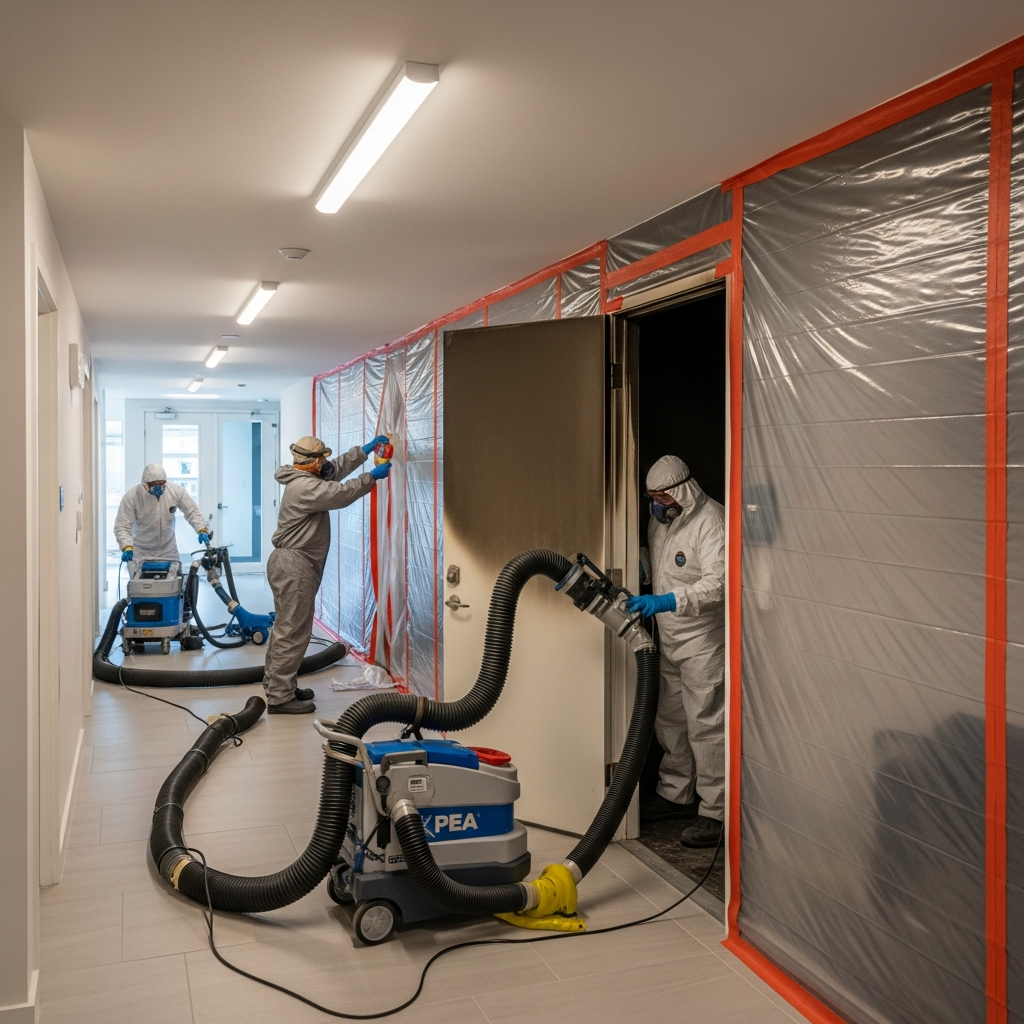
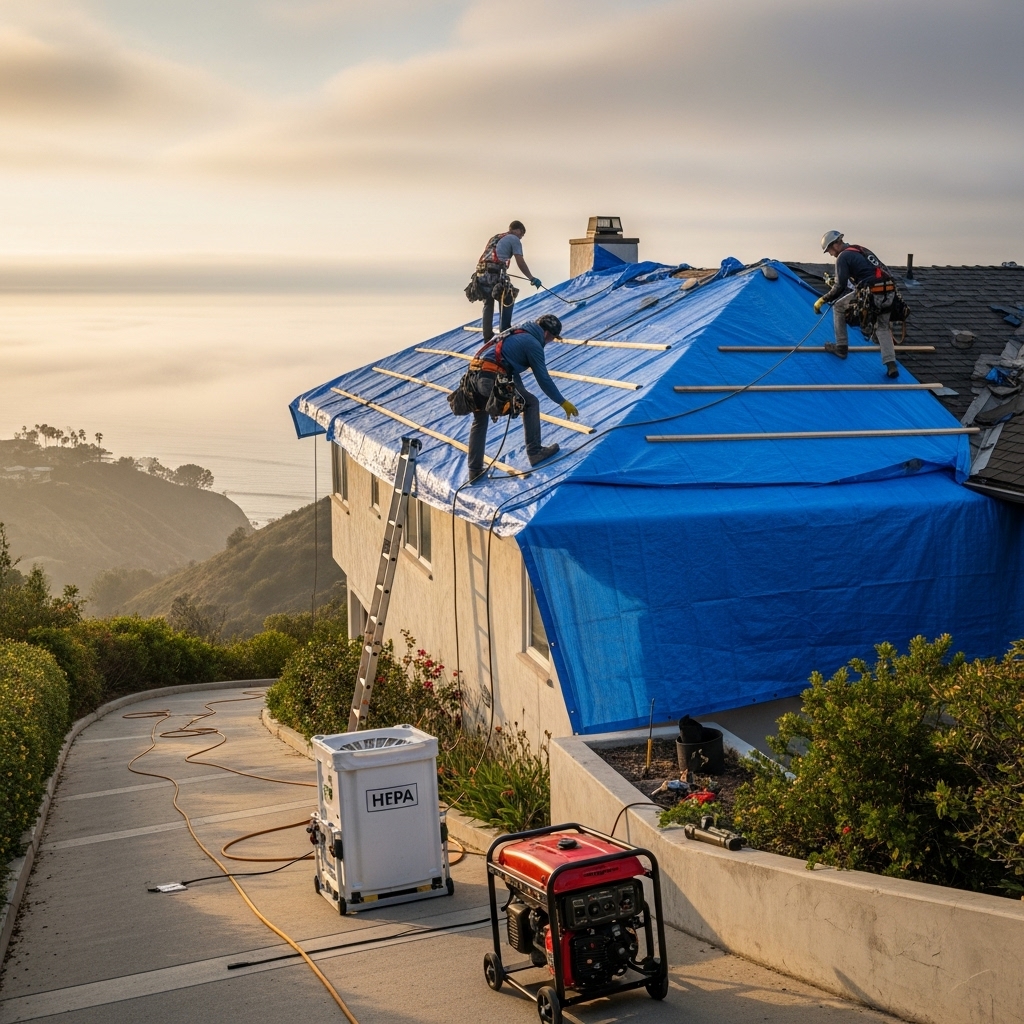
Emergency services begin with safety. Coordination with the fire department, confirmation that utilities are secure, and assessment of structural stability come first. Then comes stabilization: boarding and tarping to keep weather out, establishing containment to prevent cross-contamination, and setting HEPA filtration to reset air quality. Water introduced during firefighting is extracted and managed, because unchecked moisture becomes a second emergency in our coastal climate. The tone of these first steps should be deliberate and respectful, acknowledging the emotional landscape as much as the physical one.
What to expect in the first 24 to 72 hours
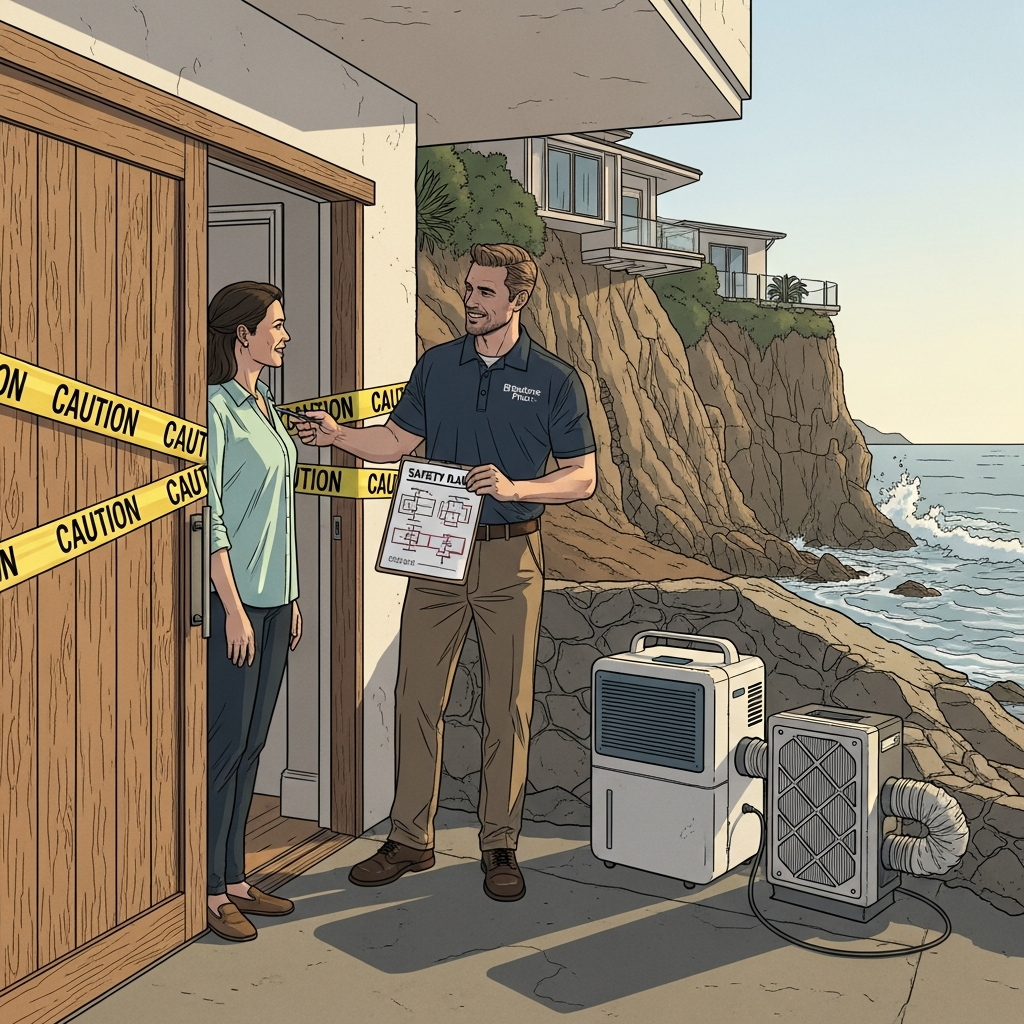
The initial window is about preventing further damage. Crews will photograph and record conditions, not as a formality but as a foundation for decisions and insurance coordination. If you need to retrieve essentials—documents, medications, a cherished object—the team will help you do so safely. Corrosion control measures are applied to sensitive metals and electronics, especially important within sea air where residues can activate quickly. Structures are inspected for hidden heat signatures, and thermal imaging can help identify areas of concern within insulated cavities or roof assemblies.
In Malibu, weather is a collaborator and sometimes a complicating factor. Santa Ana winds can accelerate odor movement and embers can lodge under eaves or within vents. The marine layer can increase humidity and re-activate residues. Emergency teams plan around these patterns. They choose containment locations strategically, think about pressure differentials between indoors and outdoors, and schedule roof work for safe windows. They also consider site-specific challenges—steep driveways, narrow pads, and protected vegetation—and adjust staging accordingly.
Contents, custody, and calm
People often worry most about the things that carry memory. A good emergency response includes a thoughtful approach to contents. Items that must be moved are photographed in place, inventoried, and either cleaned on site or packed for transport to a controlled facility. This is done with chain-of-custody protocols that ensure traceability. Textile deodorization, artwork conservation, and electronics evaluation are coordinated with specialists who understand both technique and sentiment. In every case, communication is steady and empathetic.
Air quality and odor control
Emergency teams do not spray fragrances; they manage air. HEPA filtration captures particulates while source removal reduces the fuel for lingering odors. Negative air setups are used where appropriate to keep clean areas clean. When deodorization methods like hydroxyl or controlled fogging are introduced, they are part of a system that includes cleaning and protection—never a replacement for those steps. Malibu homes, with their open plans and large volumes, require careful thinking about air changes and airflow paths so that interventions are effective.
Protecting the structure you do not see
Water in the wrong place is as dangerous as smoke. Drying goals are established early, using meters to measure progress in wood framing, subfloors, and sheathing. Drying is not rushed; it is measured. Too fast and finishes can warp; too slow and microbial growth becomes a risk. Emergency crews stage equipment to balance airflow and heat while keeping noise and power demands compatible with neighborhood rules and site limitations. Every move is a trade-off, and the best teams explain their rationale as they go.
Somewhere in the middle of the emergency phase, the site starts to feel more stable. The air clears, hazards are marked and controlled, and the plan for next steps takes shape. This is a good time to gather with your project lead and walk the property, discuss what has been accomplished, and preview the assessment and mitigation phases that follow. It is also a good moment to validate that your chosen Malibu fire damage restoration partner is maintaining documentation, respecting neighbors, and caring for your property with the attention it deserves.
Working with adjusters and officials
Emergency response intersects with insurance and permitting, even in the first days. The team communicates with adjusters to set expectations around emergency measures, provides daily logs and photo updates, and requests approvals when items beyond emergency scope become necessary. They coordinate with city officials when structural safety is in question or when temporary measures affect egress or utilities. This keeps the project both compliant and moving, and it keeps you from being the messenger in the middle.
Community-minded operations
In Malibu’s neighborhoods, emergency work happens in the public eye. Respect for neighbors and common spaces is essential. Crews manage parking on narrow roads, keep staging tidy, and honor noise windows where possible. They also help you communicate with your HOA or neighboring properties about the plan and timeline. Good community relations do more than smooth logistics; they reflect the values we hold as stewards of this coastline.
From emergency to mitigation to rebuild
The handoff from emergency services to mitigation is not a stop-and-start; it is a continuum. As conditions stabilize, assessment deepens. Selective demolition is planned to reveal concealed spaces. Cleaning strategies are tailored to each surface and room. Deodorization moves from gross removal to fine-tuning, always guided by testing and by your lived experience walking the space. Rebuild planning begins sooner than you might expect, as finishes are cataloged and specialty trades are consulted to sequence their return.
Resilience for the future
As the dust settles—literally and figuratively—it is natural to think about how to make the home more resilient. Emergency responders with a long view will offer guidance on protecting vulnerable eaves, improving ember resistance at vents, clarifying defensible space strategies, and maintaining HVAC systems that are less susceptible to smoke infiltration. Malibu homes and landscapes are beautiful because they live in conversation with nature, and resilience is part of that conversation.
Frequently asked questions
What should I bring to the first site meeting after the fire?
Bring any available insurance information, a list of urgent items you need retrieved, and your questions. The rest is on the team—site safety, documentation, and early stabilization. If you have floor plans or photos from before the event, those can help orient everyone quickly.
How long does the emergency phase usually last?
It varies with the size and complexity of the event, but the goal is to stabilize within days, not weeks. Board-ups, tarps, extraction, filtration, and corrosion control are front-loaded. As the site holds stable conditions, the project transitions to deeper assessment and mitigation planning without losing momentum.
Can anything be cleaned immediately, or should everything wait?
Some items benefit from immediate attention, particularly metals and electronics vulnerable to corrosion. Other materials are better addressed after documentation. Trust your team to balance urgency with thorough record-keeping so that recovery is both technically sound and well supported for claims.
Is it safe to walk the site?
Only after it is cleared by the fire department and the restoration team confirms structural stability and air quality precautions. When you do enter, you will likely be accompanied and given protective equipment. The priority is your safety and the protection of conditions that have been stabilized.
What about pets and wildlife during emergency work?
Crews can help locate and secure pets, and they will take care to protect wildlife corridors and vegetation. Noise, lights, and traffic are minimized where possible, and boundaries are set with containment and temporary fencing to keep both animals and people safe.
Start your recovery today
If you are facing the aftermath of a fire and need steady hands right now, reach out to trusted professional fire damage restoration specialists who know Malibu inside and out. A calm, well-sequenced response in the first hours lays the foundation for a smoother recovery and a healthier home.