Emergency Fire Damage Restoration in Malibu California
When a fire strikes in Malibu, speed and judgment define the next several days. The ocean may be calm, but ash can still drift across the water and onto your property by morning, and the smell of smoke seems to find every pathway into a home. In these moments, the right emergency response protects what remains and sets the stage for a full recovery. As a local advisor who has stood with families on driveways still warm from the night’s events, I can tell you that effective action is not about rushing blindly; it is about moving quickly in the right order. Pairing that urgency with experienced fire damage restoration methods ensures that decisions made in hour one support success in week six.
The first objective is always safety. Once the fire department releases the site, the assessment begins with structural soundness: rooflines, eaves, and load paths that may have been compromised by heat. Inside, responders check floors for sponginess from water saturation, ceilings for sag, and walls for heat lines that indicate deeper damage. Gas and electrical services are evaluated and often shut off pending inspection. These steps might feel slow, but they prevent secondary injuries and preserve evidence needed for accurate scoping and insurance documentation.
Securing the Property
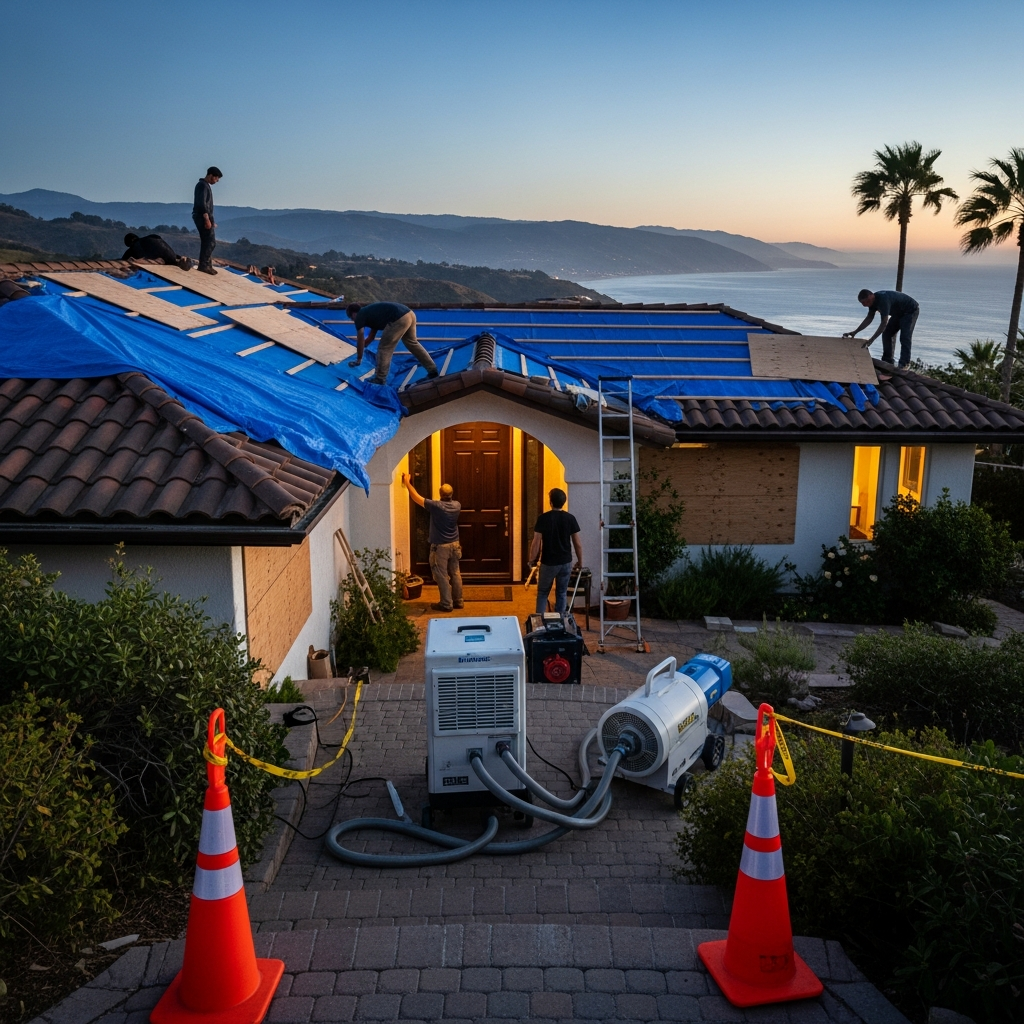
Board-up and tarping are the visible signatures of an organized emergency response. Openings that once held windows and doors are secured to keep weather and wildlife out, and roofs are covered to prevent rain or marine layer moisture from entering. In Malibu, tile roofs are common, and walking them without causing breakage demands specialized methods and soft-footing systems. Equally important is perimeter control—temporary fencing if needed—to deter trespassing during vulnerable hours. A secure site allows crews to focus on stabilization without distraction and offers you peace of mind in a moment when so much feels uncertain.
Contents triage happens simultaneously. Crews identify items that are both at risk and quickly salvageable—documents, medications, heirlooms—and move them to cleaner, safer zones. For electronics exposed to smoke, earlier attention can prevent corrosion on circuit boards. Clothing and textiles that smell heavily of smoke are bagged and labeled for specialized cleaning. The goal is to prevent odor setting and material degradation while ensuring you retain access to essentials for day-to-day life.
Water, Drying, and Preventing Secondary Damage
Most fires involve water. The combination of heat, ash, and moisture creates a perfect environment for microbial growth if not addressed quickly. Emergency teams deploy extraction tools, air movers, and dehumidifiers to establish controlled drying. In coastal climates, outdoor air may not help; salty humidity can slow the process. Instead, crews create interior microclimates—sealed zones where moisture, temperature, and airflow are managed with intention. Materials that can’t be dried in place without risk, such as saturated insulation or severely damaged drywall, are removed strategically to speed recovery and protect indoor air quality.
Monitoring is as important as the equipment itself. Moisture meters and thermal imaging cameras reveal what the eye can’t see, guiding crews to hidden pockets behind baseboards, under cabinets, or within wall cavities. Quick, targeted openings prevent weeks of lingering dampness, which can complicate odor removal and finishing work later. Documentation of drying progress also supports insurance reviews and gives you visible milestones during a stressful time.
Soot, Smoke, and the Path of Air
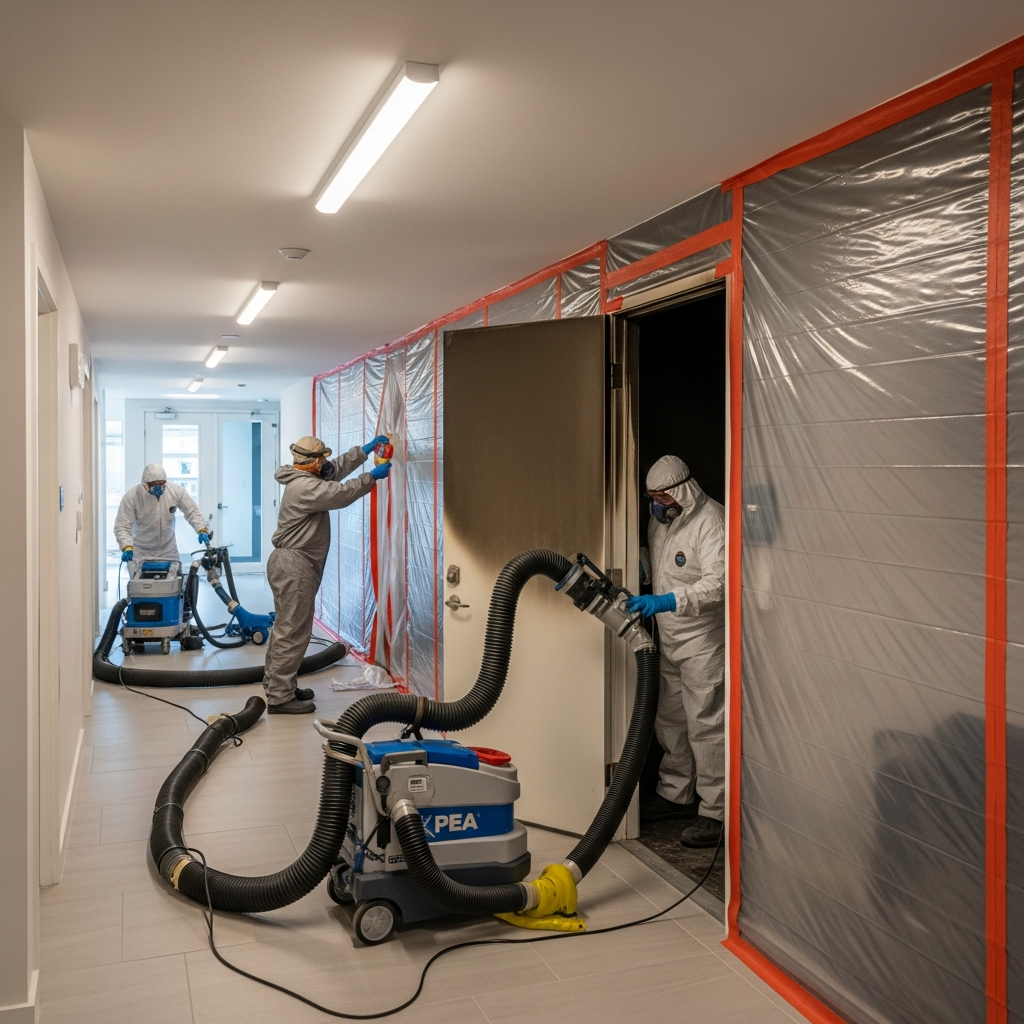
Emergency cleaning focuses on preventing soot from spreading and setting. Dry soot is removed with HEPA vacuuming and light agitation, while wet or oily soot requires different chemistry. Protein smoke from kitchen incidents often leaves an invisible film that clings to surfaces but announces itself with strong odor. Malibu’s open-plan homes and vaulted ceilings encourage air to move freely, carrying residues along paths of least resistance. Understanding those paths—supply and return vents, stairwells, clerestories—shapes containment and cleaning strategies that keep progress from unraveling.
HVAC systems are treated with caution. Running a contaminated system can distribute particles throughout the home. Emergency teams will often isolate and seal registers, replace filters, and plan for thorough cleaning before reactivation. In cases where the system was off during the fire and the return paths remained protected, more limited interventions may be appropriate. Either way, no system should be brought back online without a deliberate check.
Stabilization of Structure and Finishes
Heat can compromise more than the obvious. Fasteners may lose temper, laminated beams can delaminate, and tempered glass might hide damage that appears days later as spider-webbing. Emergency stabilization addresses these risks by shoring where needed, removing hazards like loose plaster or falling tiles, and protecting surfaces that will be saved. Careful masking and floor protection preserve finishes in areas slated for cleaning rather than replacement. Where char remains on structural members, techniques like abrasive removal followed by sealing help control odor and prepare for rebuild.
Exterior elements deserve focused attention. Soot on stucco can telegraph through new paint if not treated correctly, and embers can lodge under roof tiles and in gutters. Deck boards—particularly older redwood—need inspection for heat checks and surface scorching that may not be obvious at a glance. Addressing these items early prevents costly rework and ensures that when you move from emergency mode to restoration, the canvas is ready.
Communication and Coordination
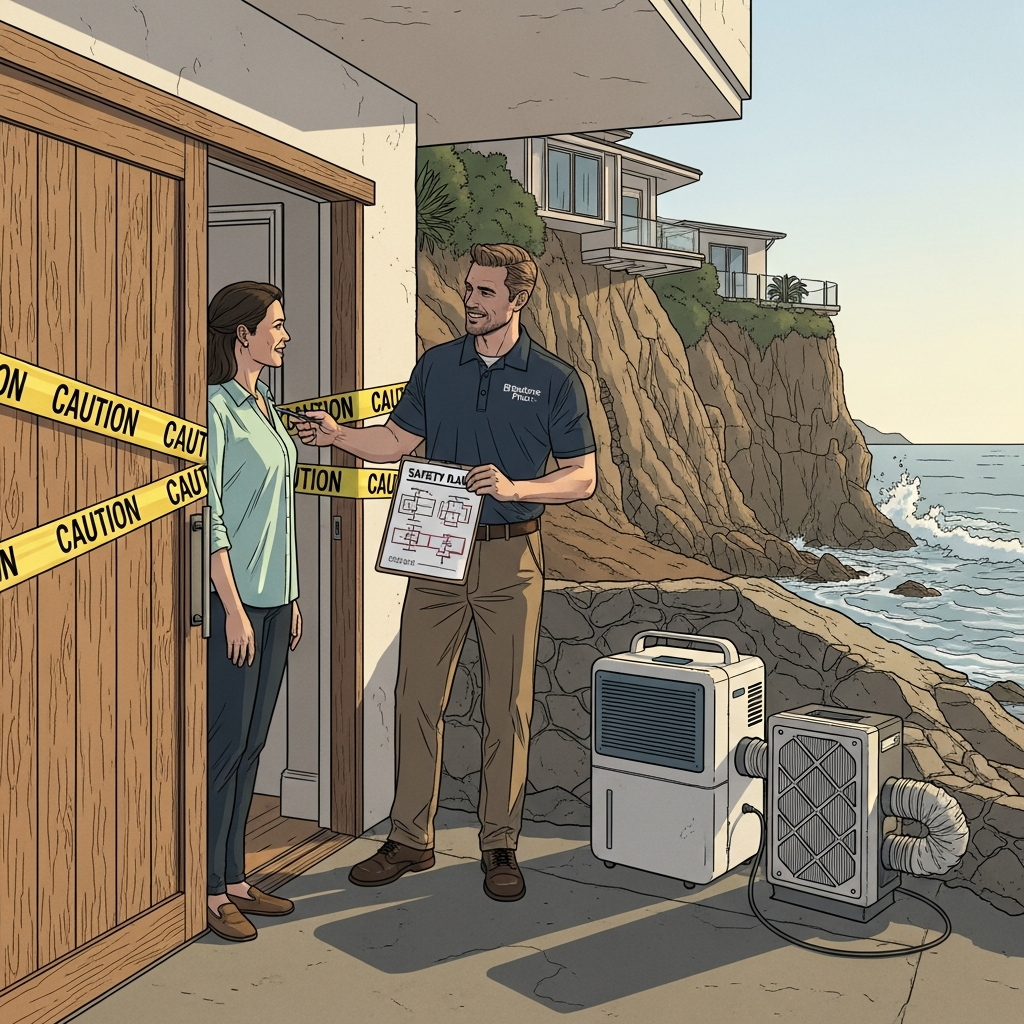
In the rush of the first days, communication can either settle nerves or stoke them. Strong teams appoint a single point of contact who walks you through the daily plan, explains what’s happening and why, and anticipates paperwork needs for your insurer. Daily photo logs, simple diagrams of containment zones, and a living inventory of contents create transparency. When unknowns arise—as they often do—clear choices are presented with implications for time, health, and the sequence of work. That clarity is a relief at a time when you have decisions to make and energy to conserve.
Coordination extends to municipal partners. Malibu’s inspectors, waste management protocols, and coastal considerations all shape how debris is handled and how quickly you move to rebuild. Experienced emergency responders set the table for smooth permitting by documenting conditions, stabilizing with code-compliant methods, and preserving as much of the structure as possible without compromising safety.
Health, Air Quality, and Sensitive Occupants
Emergency work is as much about air quality as it is about surfaces and structure. HEPA filtration, negative air pressure, and smart containment protect both workers and occupants. For families with respiratory sensitivities, young children, or older adults, your team can tailor sequences to minimize exposure. They may recommend temporary relocation for specific phases while ensuring you retain access to essential belongings. Pets are part of the plan too—crews should secure gates and doors and schedule access to avoid unnecessary stress for animals unsettled by the disruption.
Odor can be psychologically potent. While permanent deodorization happens after thorough cleaning, emergency measures reduce intensity and prevent odor from setting deeper into porous materials. The goal is not to mask but to control conditions so that final treatments work effectively and last.
From Emergency to Restoration
There’s a turning point in every project when the site no longer feels like a crisis and begins to feel like a work-in-progress. You’ll notice it in the rhythm of the crew, in the reduction of debris, and in the clarity of next steps. Contents move to cleaning facilities, structural assessments solidify into plans, and schedules form around lead times for materials. This is when a seamless handoff to the restoration team matters most. Strong companies keep the same project lead or introduce you to a counterpart who already knows your home’s story, ensuring continuity and preserving momentum born from the first hours.
As restoration advances, decisions about cleaning versus replacement come into focus. Solid-wood doors with surface smoke may be worth refinishing; hollow-core doors with odor trapped in paper layers typically are not. Stone countertops might clean well; laminate with bubbled edges usually won’t. The emergency team that documented conditions in detail gives the restoration crew a head start on these calls, shortening review cycles and aligning everyone on goals.
Insurance, Documentation, and Advocacy
Emergency response is a documentation engine. Photographs of initial conditions, moisture maps, soot tracking, and contents inventories all become part of the narrative your insurer uses to evaluate scope. Well-organized records reduce back-and-forth, and proactive communication prevents misunderstandings. Your restoration partner can help translate technical findings into plain language: what was affected, why specific methods are necessary, and how health and structure benefit from each step. This advocacy is not about conflict; it’s about clarity that supports fair, timely decisions.
In Malibu, custom features are common—artisan tile, hand-built cabinetry, specialty windows. When those are affected, the path forward may involve craftsmen and longer lead times. Early recognition of these realities keeps expectations aligned and gives you choices: prioritize certain rooms for faster return to service, or aim for whole-home completion. Neither path is right or wrong; what matters is that it fits your life.
Resilience and Looking Ahead
In the weeks after a fire, many homeowners begin to think about the next season—wind events, holiday gatherings, children returning from school breaks. Emergency decisions ripple into that future. Installing ember-resistant vent screens during rebuild, improving attic access seals, or rethinking storage that previously blocked egress are small changes that strengthen safety without changing the character of your home. Defensible space refreshes and subtle design tweaks can coexist with restoration so that when you return, you return to a home that’s both familiar and quietly more resilient.
Community matters here. Neighbors look out for one another, and local professionals often collaborate to share resources and knowledge, especially during larger events. Choosing a team rooted in Malibu means tapping into that network—roofers who know the tiles on your street, cleaners who understand local soot profiles, carpenters who respect the salt air’s effect on fasteners. The sum of these details is a recovery that feels less like an ordeal and more like a passage back to normal life.
Frequently Asked Questions
Q: How quickly should emergency crews respond after the fire is controlled? A: As soon as the site is released and safe. Early stabilization—board-up, tarping, water extraction—prevents secondary damage and speeds overall recovery.
Q: Is it safe to run the HVAC after a fire? A: Not until it’s assessed. Running a contaminated system can spread soot and odor. Sealing registers and inspecting ductwork come first, followed by cleaning and filter replacement before reactivation.
Q: What items should be prioritized for immediate removal? A: Medications, important documents, irreplaceable heirlooms, and electronics benefit from early attention. Textiles with heavy smoke odor should be bagged and labeled for specialty cleaning.
Q: Can I stay in the home during emergency work? A: Sometimes, depending on damage extent and air quality. Your team will advise on safety, containment options, and when temporary relocation is best for health and comfort.
Q: How does emergency work connect to the insurance process? A: Detailed documentation—photos, moisture and soot mapping, contents inventories—feeds the claim and supports accurate scoping for full restoration.
Ready for Steady, Skilled Help
If you’re navigating the first hours or days after a fire in Malibu, you deserve calm, capable guidance. Start a conversation with local professionals who can secure your property, protect your health, and map a clear route from crisis to completion. When you’re ready to move forward with a team that leads with clarity and care, reach out to experienced fire damage restoration specialists who understand Malibu’s homes, climate, and community.