In an emergency, minutes matter. Malibu’s hills and canyons are beautiful but challenging, and when a fire strikes, the right sequence of actions in the first hours can protect the structure, preserve belongings, and prevent a small problem from becoming a major setback. Whether the incident involves a single-room fire suppressed by sprinklers or a broader event that brings smoke and water throughout the home, emergency restoration is about decisive, safety-first steps that position you for a smooth recovery.
From the moment fire officials clear the scene, clarity replaces urgency. A structured plan addresses hazards, secures openings, and initiates drying and soot mitigation. The goal is to stabilize the environment quickly so deeper cleaning and repairs can proceed efficiently. When you are choosing help, look for a team with local experience who understands Malibu’s weather, access routes, and permitting environment, and who can begin professional fire damage restoration without delay.
Safety First: Power, Structure, and Air
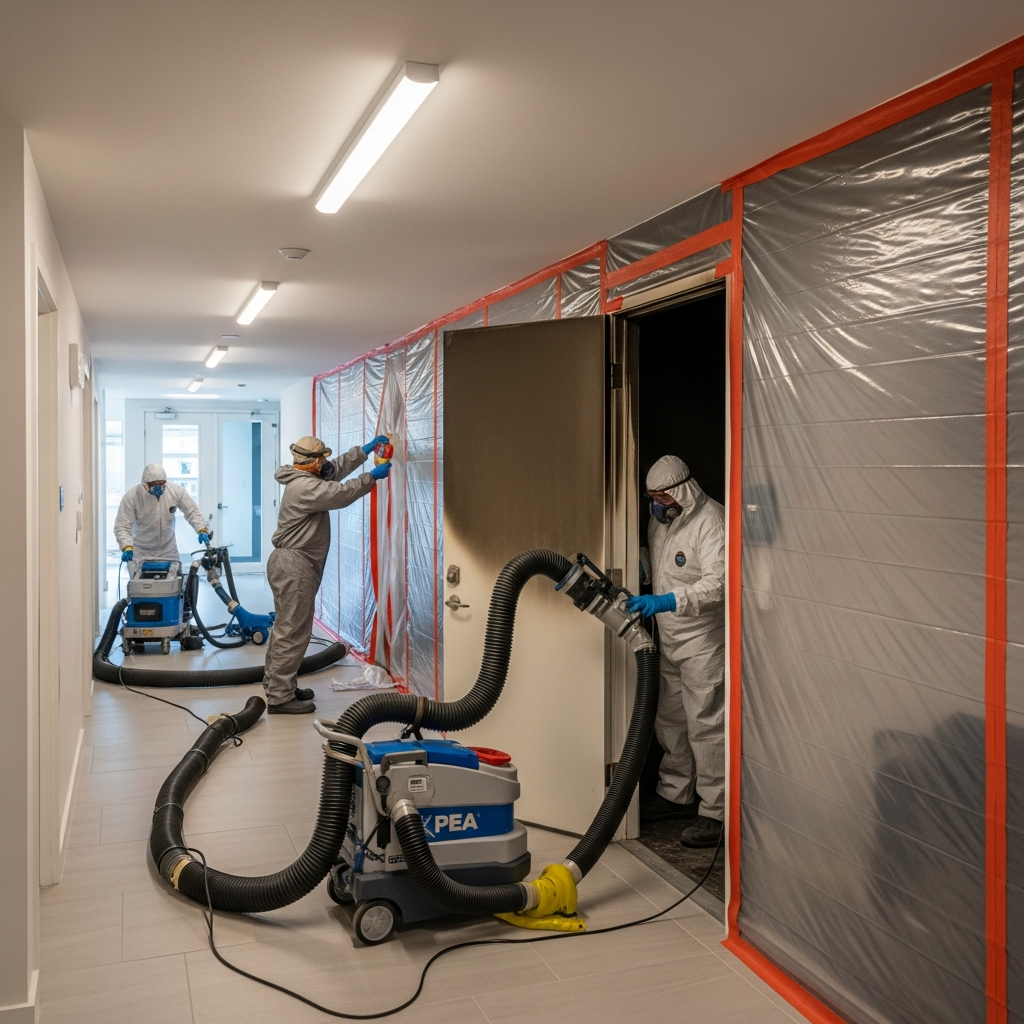
Emergency restoration begins with a safety walkthrough. Power may remain off until an electrician confirms circuits are safe. Structural elements are checked for heat stress, charring, and water load. If the roof is compromised, tarping prevents intrusion from fog or overnight mist, which are common along the coast. Air becomes the next priority—ventilation is established without spreading soot, and HEPA filtration runs as crews work. This protects occupants, neighbors, and the restoration team itself from fine particulate exposure.
Board-Up and Weatherproofing
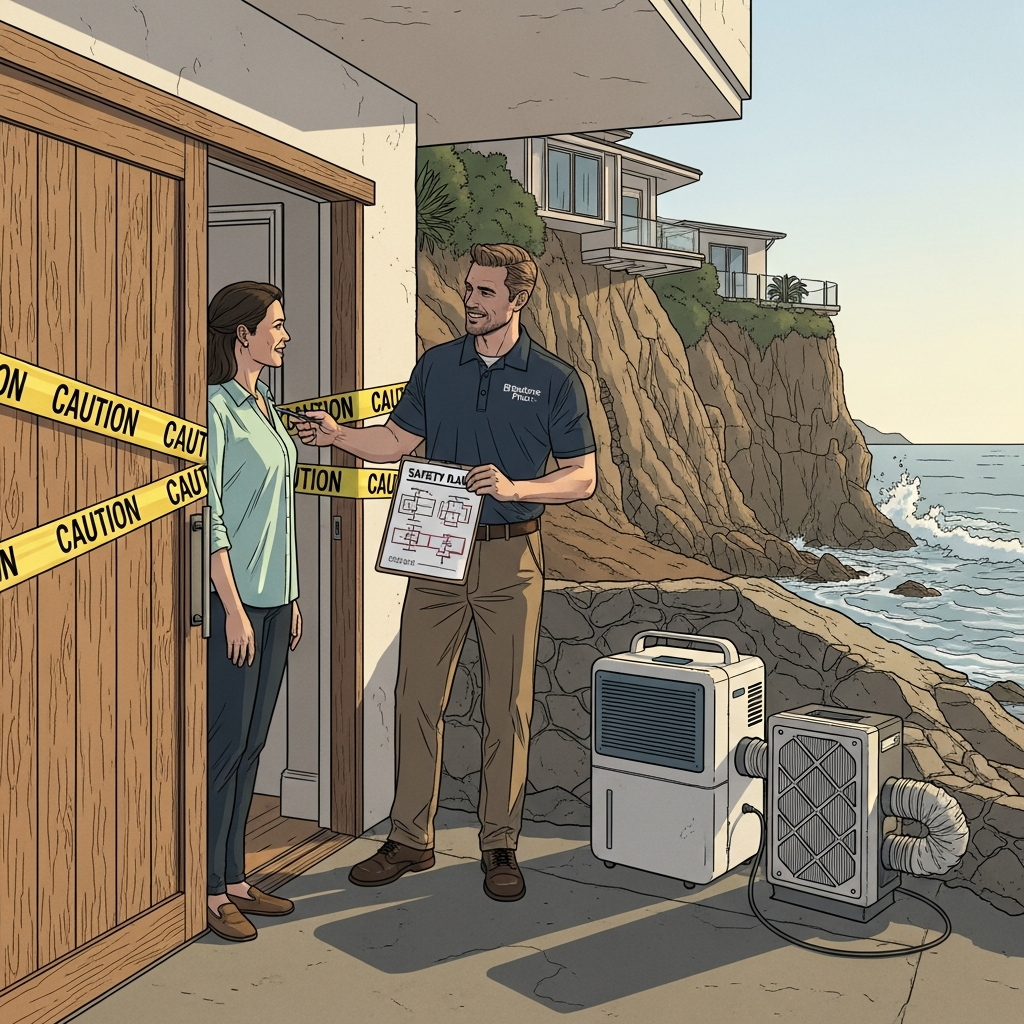
Securing the building matters in Malibu’s variable winds. Board-ups close broken windows and doors; roof tarps keep moisture out while preventing embers from entering if nearby hotspots flare later. Proper fastening avoids damage to finishes when tarps are removed. Crews document every measure with photos for insurance and for your peace of mind, creating a record that confirms stabilization was prompt and thorough.
Water Extraction and Rapid Drying
Water from firefighting can be as damaging as smoke if left to linger. Extraction begins immediately, followed by moisture mapping with meters and infrared cameras. Drying strategies depend on the structure and weather; marine layers demand careful control of humidity, while warm afternoons allow for more aggressive airflow. The aim is to dry cavities and finishes to target levels before secondary issues arise, setting the stage for successful cleaning and odor control.
Soot Control and Source Removal
Emergency work includes the first pass at soot mitigation. HEPA vacuuming and dry sponging remove loose residues. Teams test small sections to choose the right cleaners for each material, avoiding smearing and etching. Kitchens, where protein soot is common, receive early attention to stop odors from setting. Electronics are powered down, tagged for evaluation, and staged away from damp zones. Contents are triaged—what to clean in place, what to pack out, and what to protect until a fuller assessment is complete.
Communication with Insurers and Inspectors
Emergency restoration thrives on documentation. Crews compile condition photos, readings, and inventories from hour one. Malibu’s permitting and inspection environment benefits from this transparency. When adjusters and inspectors review the property, they see a clean timeline: what was damaged, what was stabilized, and what requires further action. This early clarity minimizes delays and keeps the project moving.
Mid-Course Corrections and Weather Shifts
In the first few days, conditions can change quickly. Winds may pick up, rain could brush the coast, or access might be limited temporarily. Local experience means adjusting the plan gracefully—tightening containment if ash drifts, switching drying strategies if humidity spikes, and resequencing tasks so work continues safely and steadily. At this midpoint, it is often helpful to revisit the hallmarks of effective fire damage restoration to ensure the emergency phase is leading smoothly into detailed cleaning and repairs.
Protecting What Matters Most
Emergency response is also about people. Sentimental items, important documents, and daily necessities receive fast attention. Valuables are photographed, wrapped, and moved to safe zones. If temporary housing is needed, crews help identify items to take with you and those better left for professional cleaning. This careful triage limits disruption and preserves continuity even as work begins in earnest.
Transitioning from Emergency to Full Restoration
As drying stabilizes and the environment is safe, emergency efforts hand off to comprehensive cleaning and repair plans. Detailed scopes outline surface cleaning, deodorization, material replacement, and finishing work. The home shifts from crisis mode to a measured, visible path forward. For Malibu homes, this often includes HVAC cleaning, attic and crawlspace checks, and attention to corrosion-prone fixtures exposed to both soot and salt air.
FAQs
How fast can crews arrive after a fire?
Local teams strive to mobilize as soon as authorities release the site. Rapid arrival enables effective board-up, water extraction, and soot control, which limit secondary damage and improve salvage outcomes.
Should I open windows to air out the house?
It depends on outdoor conditions. If the air outside is smoky or humid, open windows can worsen contamination and slow drying. Controlled ventilation with filtration is safer during the emergency phase.
What can I do while I wait for help?
If safe, limit movement inside to avoid spreading soot. Do not power on electronics or run the HVAC. Gather essentials you may need if you must relocate temporarily, and take photos for your records.
Will removing wet materials increase odor?
Removing saturated materials often reduces odor by eliminating reservoirs that feed microbial growth. With proper containment and HEPA filtration, removal is performed safely without spreading particles.
Is it normal for odors to fluctuate during the first week?
Yes. As materials dry and cleaning progresses, odors can intensify briefly before subsiding. This is why air management and methodical source removal are crucial parts of the emergency plan.
When does insurance get involved?
Notification typically happens immediately after the incident. Clear documentation from the emergency phase supports your claim and helps align expectations for the next steps.
Take Action Now
When a fire disrupts your home, early decisions set the tone for recovery. Choose an emergency team that knows Malibu and can respond decisively, safely, and compassionately. If you are ready to regain control and protect what matters most, arrange prompt, professional fire damage restoration and move from crisis to clarity today.