Fire recovery in Malibu carries its own set of challenges, shaped by canyon winds, coastal moisture, and a building stock that ranges from vintage bungalows to modern hillside retreats. If you have ever walked a property after a fire, you know that the obvious damage is only part of the story. Hidden issues can undermine a well-intended cleanup, and small missteps early on can ripple into bigger problems months later. Understanding the common pitfalls of restoration—and how to avoid them—puts you in control of the process from day one. It also highlights the value of bringing in professionals experienced in fire damage restoration in Malibu, where local conditions make a measured approach essential.
Every property is different, but patterns do emerge. Malibu’s topography funnels wind through canyons, sending smoke deep into attic spaces and beneath eaves. Salt air increases corrosion risk when soot meets moisture. Access can be tricky on narrow hillside roads, which affects staging and scheduling. Knowing what typically goes wrong helps you ask better questions and set clear expectations before work begins.
Underestimating Smoke Migration
A common misstep is assuming that smoke damage is confined to the room where flames were visible. Smoke rides pressure differentials and air currents, moving unpredictably through a house. It slips into closets, behind built-ins, and into the return side of HVAC systems. If cleaning is limited to visibly affected rooms, odors tend to linger and reappear during warm afternoons or the first time the heater runs. A whole-home assessment—paired with HVAC cleaning and strategic deodorization—prevents that frustrating cycle.
Incomplete Soot Removal
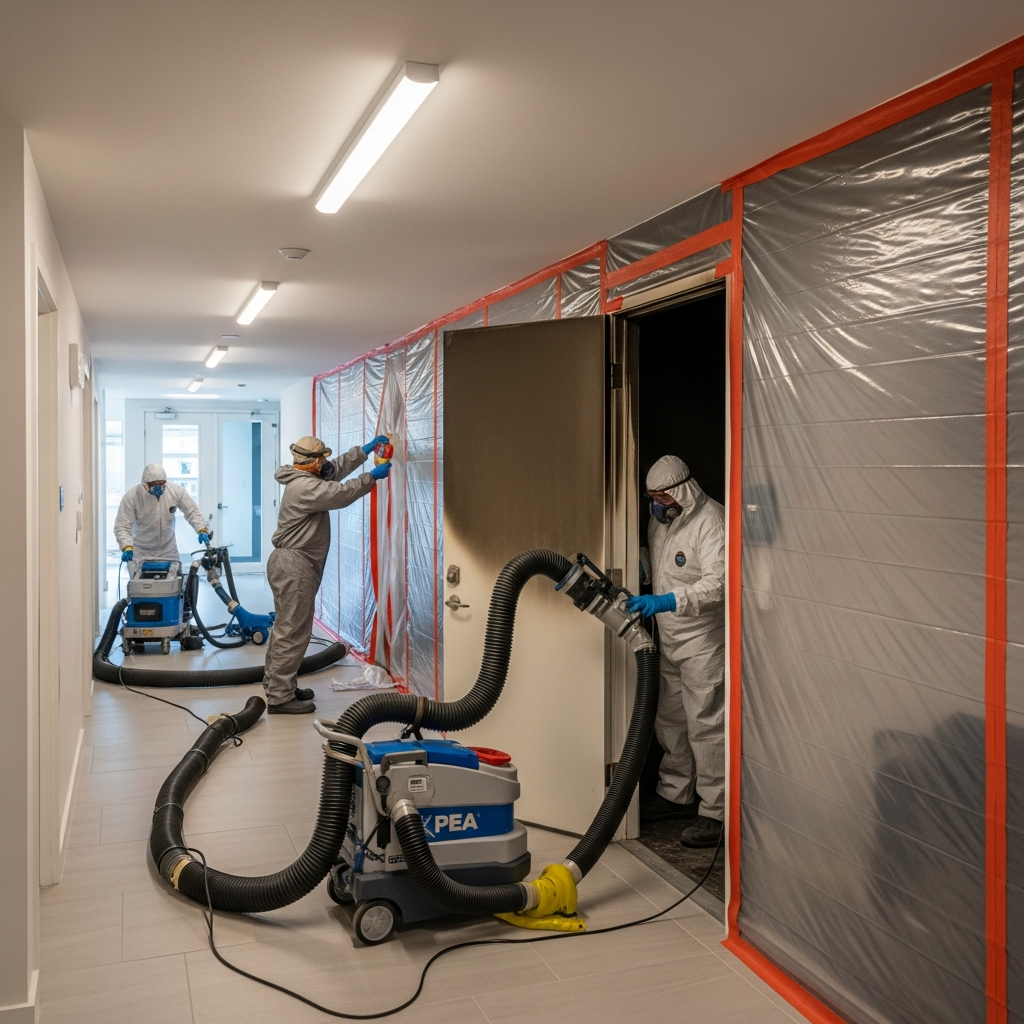
Soot is not a single substance. Dry soot behaves differently than oily residues from kitchen fires or protein burn. Cleaning methods must match the residue. Using the wrong product can set stains or push soot deeper into porous materials. Skipping HEPA vacuuming before wet cleaning is another mistake; it can spread contamination rather than remove it. The cure is disciplined sequencing: capture particles first, then apply residue-specific cleaning agents, followed by careful rinsing and verification.
Overlooking Water and Moisture
Even small fires can generate significant water exposure from firefighting. If water extraction and drying are not immediate and thorough, secondary damage follows: warped flooring, swelling trim, and, most importantly, mold growth. Malibu’s climate complicates this picture because marine layers and cool evenings slow down drying in some areas while sunny exposures bake others. Moisture mapping with meters and thermal imaging helps identify hidden dampness, and equipment placement must be adjusted as conditions change.
HVAC Contamination
Homeowners are often surprised by how much soot collects in ductwork, coils, and air handlers. If the HVAC system is turned on prematurely, it redistributes particles and odors throughout the home. Proper restoration includes shutting down affected systems, changing filters, and cleaning components methodically. Only after clearance readings and visual inspection should the system be returned to service.
Corrosion and Electrical Concerns
Soot plus moisture equals corrosion, particularly in Malibu’s salt-air environment. Copper wiring, circuit boards in appliances, and metal fixtures can tarnish or corrode faster than expected. Electrical systems warrant careful inspection, and electronics should be evaluated before use. Wiping surfaces without addressing the corrosive potential is not enough; targeted cleaning and, in some cases, replacement prevent intermittent failures that appear weeks later.
Rushing Demolition or Delaying It
Demolition decisions are another common pain point. Tear out too little and odors or moisture remain. Remove too much and you invite unnecessary reconstruction, cost, and time. The solution lies in measured evaluation: remove materials that are structurally compromised or impossible to clean, preserve what can be saved, and ventilate cavities to complete drying. Selective demolition protects the home’s character while ensuring long-term performance.
Skipping Documentation
When you are eager to move forward, pausing for documentation can feel tedious. But clear photos, moisture logs, and cleaning records are invaluable. They align everyone—homeowner, adjuster, contractor—around the same facts. In Malibu’s custom homes, where finishes may be unique or imported, documentation supports appropriate replacement and prevents disputes later.
Permitting and Access Oversights
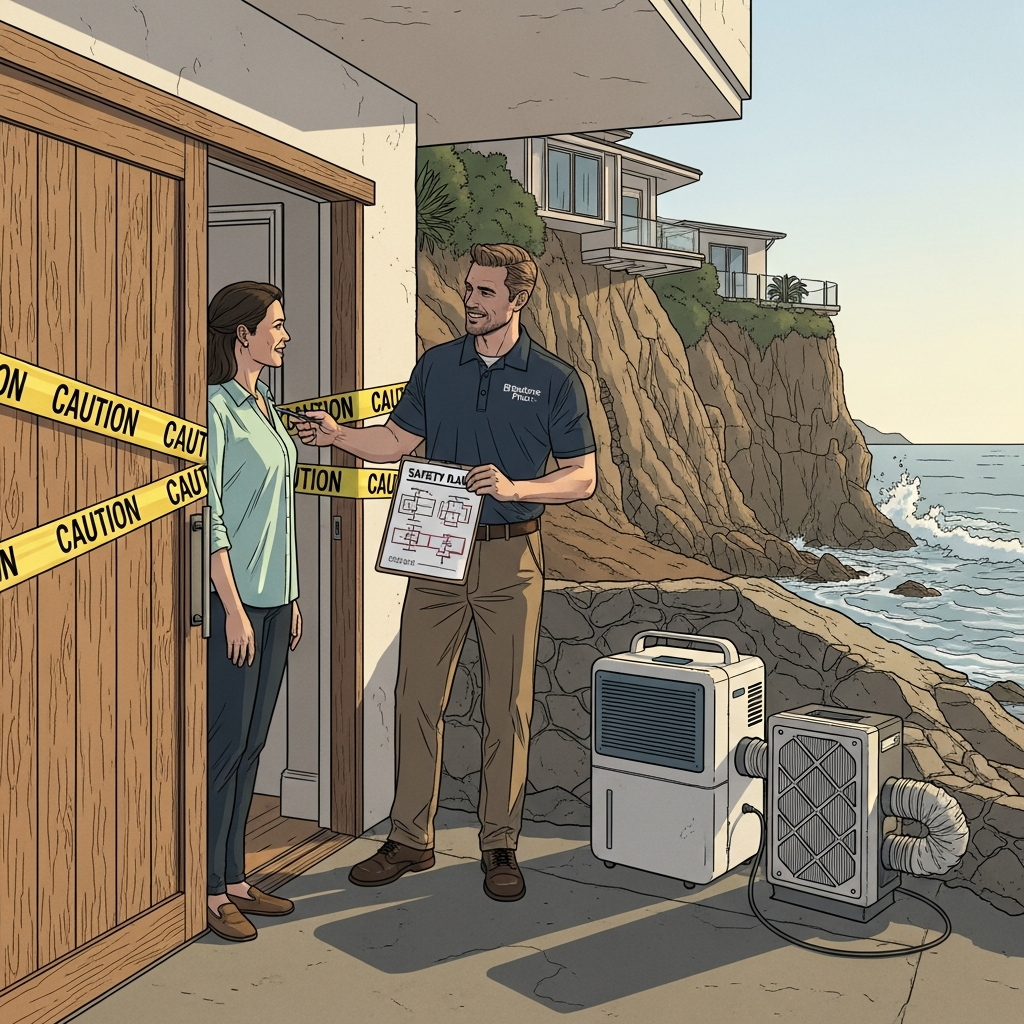
Malibu’s coastal setting brings additional rules for debris handling and site access. Failing to plan for staging, parking, and removal logistics can slow progress unnecessarily. Restoration teams familiar with local expectations sequence deliveries, coordinate with neighbors, and schedule work to minimize impact. That awareness keeps the process moving and preserves good will around the site.
Under-Communicating with the Household
Another issue is communication. Families need to know what will happen, how long it will take, and how to prepare. Without clear updates, frustration builds and decisions stall. The fix is straightforward: regular check-ins, transparent timelines, and a single point of contact who can answer questions promptly. Restoration is smoother when everyone understands the plan and their role in it.
Choosing the Wrong Cleaning Chemistry
Not all cleaning agents are created equal, and more is not always better. Aggressive products can etch stone counters or dull finishes. Residue-specific chemistry and test cleaning in inconspicuous areas avoid accidental damage. In many Malibu homes, custom surfaces—waxed woods, artisan plaster, or specialty metals—demand extra care and a gentle touch.
Mismanaging Contents
Belongings deserve a plan as detailed as the building itself. Without careful inventory and pack-out, items can be misplaced or damaged. Textiles and paper products absorb odors quickly and require swift attention. A good contents strategy is methodical: photograph, tag, and stage items for cleaning, and store them in a controlled environment. Seeing cherished pieces restored and returned boosts morale at a moment when reassurance is sorely needed.
Ignoring Post-Restoration Verification
Perhaps the most avoidable mistake is skipping verification at the end. Visual cleanliness is not enough. Air quality readings, odor checks during temperature swings, and moisture rechecks prove that the job was done right. Verification closes the loop and prevents callbacks triggered by a hot day, a cold snap, or the first run of the HVAC.
How to Stay Ahead of Problems
Preparation helps. Know who you would call, understand your insurance policy basics, and keep important documents accessible. If a fire occurs, resist the urge to start wiping surfaces. Instead, ventilate if safe, keep the HVAC off, and wait for a professional assessment. When choosing a provider, ask about their approach to HVAC, documentation, and moisture mapping. You want a partner who explains each step and backs their decisions with measurable results. Specialists in fire damage restoration in Malibu will be able to describe how they adapt to local climate and access challenges, which speaks volumes about their readiness.
The Payoff: A Cleaner, Quicker Recovery
When common issues are anticipated, the path forward is smoother. Materials are preserved, odors do not return, and schedules hold. You save time, reduce stress, and regain the comfort of your home sooner. Malibu’s beauty is matched by the community’s resilience, and thoughtful restoration is part of that strength.
Frequently Asked Questions
Why does my home still smell like smoke after cleaning?
Persistent odor usually means residue remains somewhere—often in HVAC components, porous materials, or hidden cavities. A targeted search paired with source removal and proper deodorization typically resolves the issue.
Can I clean soot myself?
Light surface soot on nonporous materials can sometimes be addressed carefully, but using the wrong method can set stains or spread contamination. Professional assessment ensures the right approach for each material.
How long should drying equipment run?
Until moisture readings confirm materials have returned to acceptable levels. Stopping too soon risks hidden dampness and later mold growth. Progress should be verified with meters, not guesswork.
Is my HVAC safe to use after a fire?
Not until it has been inspected and cleaned. Running the system prematurely can spread soot and odors. Restoration typically includes filter changes, duct cleaning, and checks of coils and cabinets.
What about electronics exposed to smoke?
Electronics are susceptible to corrosion from acidic soot. They should be evaluated and, if needed, cleaned or replaced before being powered up to avoid damage.
Do I need permits for debris removal?
Depending on the scope and location, permits or notifications may be required. Restoration teams familiar with Malibu coordinate this responsibly to keep the project on track.
Take Control of Your Restoration
If you are facing fire damage, you do not have to navigate the process alone. Align with experts who know the terrain, respect your home’s character, and communicate at every step. Start your recovery with specialists in fire damage restoration in Malibu and move forward with confidence.