Walk any stretch of Malibu after a fire, from canyon ridgelines to oceanfront enclaves, and you will notice patterns. Homes may tell different stories, but the problems we find inside them repeat with a kind of stubborn familiarity. Knowing these common restoration issues is powerful because it turns surprises into expectations and expectations into solutions. Over time, I have learned that the challenges Malibu presents—salt air, steep lots, open-plan designs, and heavy sun exposure—shape the way smoke, soot, and suppression water behave. If you are looking around your place and feeling overwhelmed, take heart: most of what you are seeing has been seen before, and there are proven responses. For guidance as you triage and plan, resources like keyword can help you understand what should happen first, what can wait, and how to avoid missteps.
Hidden Soot in HVAC and Return Paths
One of the most frequent and frustrating issues in Malibu homes is soot hiding in HVAC systems and return air pathways. Even in rooms that look untouched, a thin film can linger inside ductwork, behind registers, and in chases where air moves freely. When homeowners turn the system back on too soon, that soot redistributes, seeding clean rooms with odor. The fix involves more than swapping filters; it calls for full inspection and cleaning of ducts, air handlers, coils, and returns. On occasion, sections of ducting that are inaccessible or compromised are replaced outright. The lesson is simple: do not let a clean room breathe through a dirty system.
Corrosion Accelerated by Coastal Air
Malibu’s beauty carries a corrosive secret. Salt in the air mixes with acidic soot to etch metals quickly. We see pitting on chrome fixtures, tarnish on brass hardware, and even discoloration on stainless steel appliances. Outdoor kitchens and balcony railings are particularly vulnerable. Early neutralization and protective treatments mitigate this, but the window is short. If you are near the waterline or in a wind-exposed canyon, assume corrosion is already underway and act accordingly. The sooner residues are addressed, the more you can preserve.
Odors Trapped in Porous Materials
Not all materials share the same relationship with smoke. Wool rugs, natural fiber upholstery, and open-grain woods can hold onto odor tenaciously. Malibu homes often feature these textures for their warmth and organic feel, but they require specialized care after a fire. Dry cleaning for textiles, controlled deodorization, and sometimes a combination of washing and sealing for wood elements may be necessary. The mistake we see is treating everything with the same cleaner and expecting uniform results. Odor that lingers is usually a sign of residues that remain or porous items that need offsite treatment.
Water Intrusion and Hidden Moisture
Suppression water follows gravity, and in Malibu’s stepped foundations and split-level designs, it finds unexpected paths. Moisture can wick up into baseboards and behind built-ins, travel along floor joists, and pool in low spaces like crawl areas. Left unchecked, it breeds mold and weakens materials. Precision moisture mapping, selective demolition, and aggressive dehumidification are the antidotes. Checking below tile assemblies, behind shower walls, and around radiant floor systems is critical, especially in homes where plumbing runs and mechanical spaces are tucked into the hillside.
Soot Shadows and Aesthetic Surprises
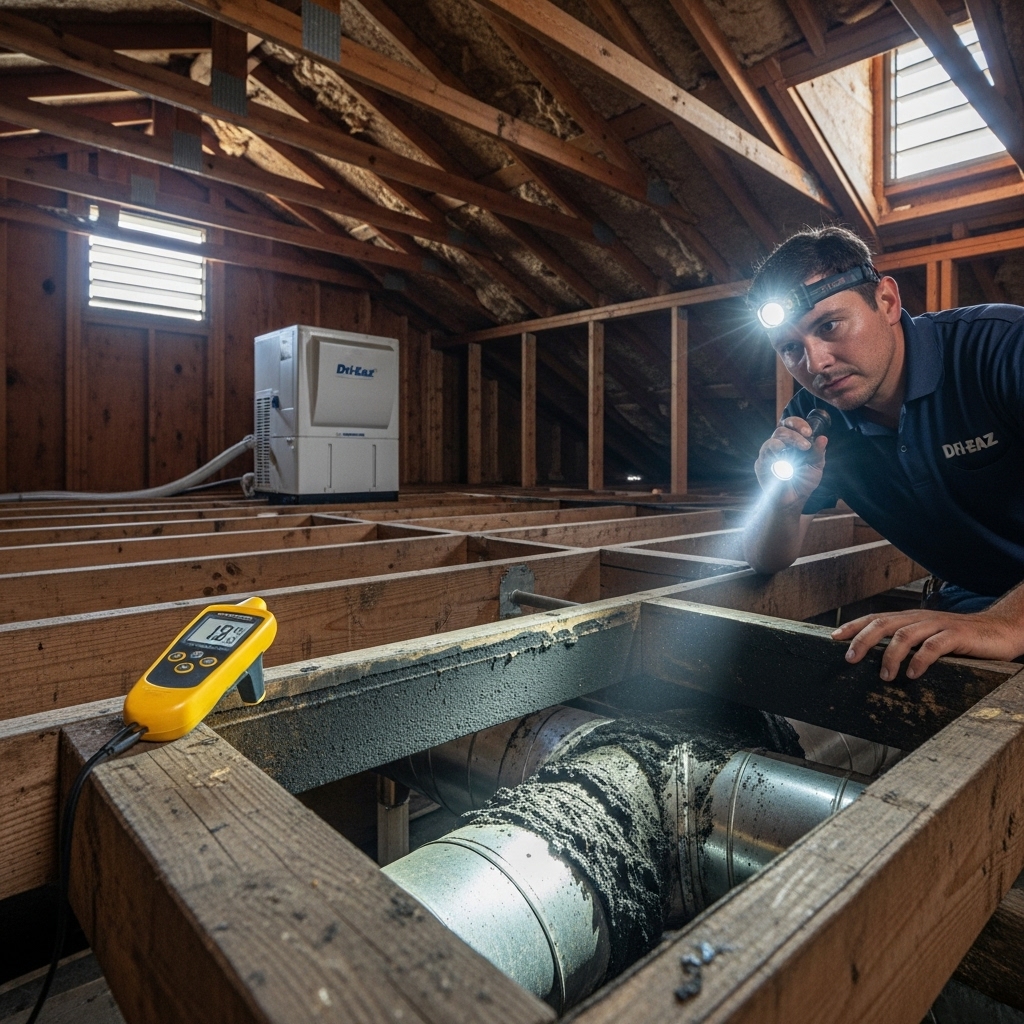
Soot has a way of revealing airflow patterns—what we call soot shadowing. You will see darker outlines around picture frames, where air eddies, or on insulation facing in attics where gaps allow particles to pass. These patterns are not just cosmetic; they are clues to how air moved during the event. Cleaning them requires patience and the right sequence of dry and wet methods. Painting over soot is a common misstep that leads to stains bleeding through and odors persisting. Proper cleaning, followed by sealing where appropriate, produces lasting results.
Exterior Envelopes: Vents, Eaves, and Soffits
Malibu’s architecture frequently incorporates generous eaves and soffits, which can accumulate ash and embers. Soffit vents and attic intakes often become gateways for contamination. After a fire, it is common to discover insulation laced with ash near these openings. The solution may involve replacing localized insulation, installing ember-resistant vent screens, and sealing small gaps. Ignoring these pathways leaves a reservoir of odor that can reappear with temperature swings or wind events.
Decks, Railings, and Outdoor Spaces
Outdoor living is part of Malibu’s identity, but decks and railings are vulnerable after a fire. UV exposure and heat can stress finishes, and soot combines with salt spray to age materials prematurely. If a deck surface looks dusty but cleans up easily, you are in luck. If water beads oddly or the wood feels greasy after cleaning, residues may still be present and additional treatment is warranted. Railings, especially stainless or powder-coated metal, benefit from early cleaning and protective polish to slow corrosion.
Electrical Nuances and Safety Checks
Smoke is conductive, and if residues find their way into electrical panels or junction boxes, they can create risk. Malibu homes with extensive lighting controls and integrated systems deserve special attention. A licensed electrician should inspect panels, breakers, and connections for contamination. Where smell persists within wall cavities, it is sometimes a clue that smoke traveled along conduit runs or cable pathways. Addressing these zones requires collaboration between electricians and restorers to ensure that cleaning does not compromise components.
Windows, Doors, and Seals
Large openings are a signature of coastal design, but seals and tracks become repositories for fine ash. Sliding door tracks, window weep holes, and gaskets need detailed cleaning. If ignored, these areas reintroduce dust and can affect operation. For ocean-facing homes, salt amplifies wear; lubricants and seal conditioners appropriate for coastal environments extend the life of hardware that might otherwise fail prematurely after exposure.
Permits, Documentation, and Scope Creep
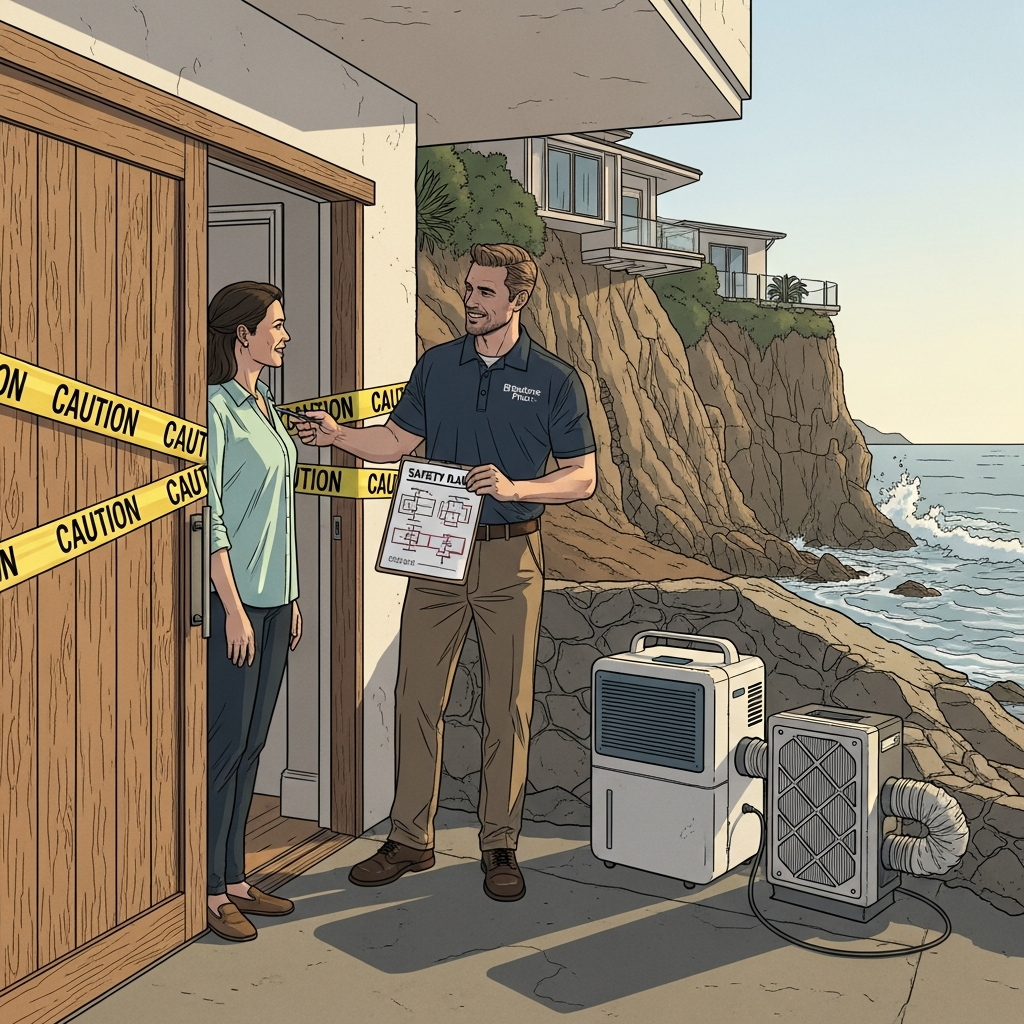
Another common issue is underestimating the scope of work, which leads to delays and scope creep. Malibu’s permitting landscape can be complex when exterior work is involved, especially near the coast or on hillsides. Clear documentation from the outset—moisture readings, photo logs, content inventories—supports insurance communication and helps separate urgent mitigation from later repairs. Without that clarity, projects stall. A thoughtful plan, aligned with local expectations, keeps momentum and reduces surprises.
Expectations and Communication
Restoration work is intense at the beginning but can feel slow once demolition and drying are complete. Homeowners sometimes expect odors to disappear immediately, yet true deodorization follows a sequence. Setting expectations about timelines and milestones keeps frustration at bay. Regular updates and walk-throughs turn questions into shared understanding and ensure that small concerns do not become big ones.
Neighbors and Community Impact
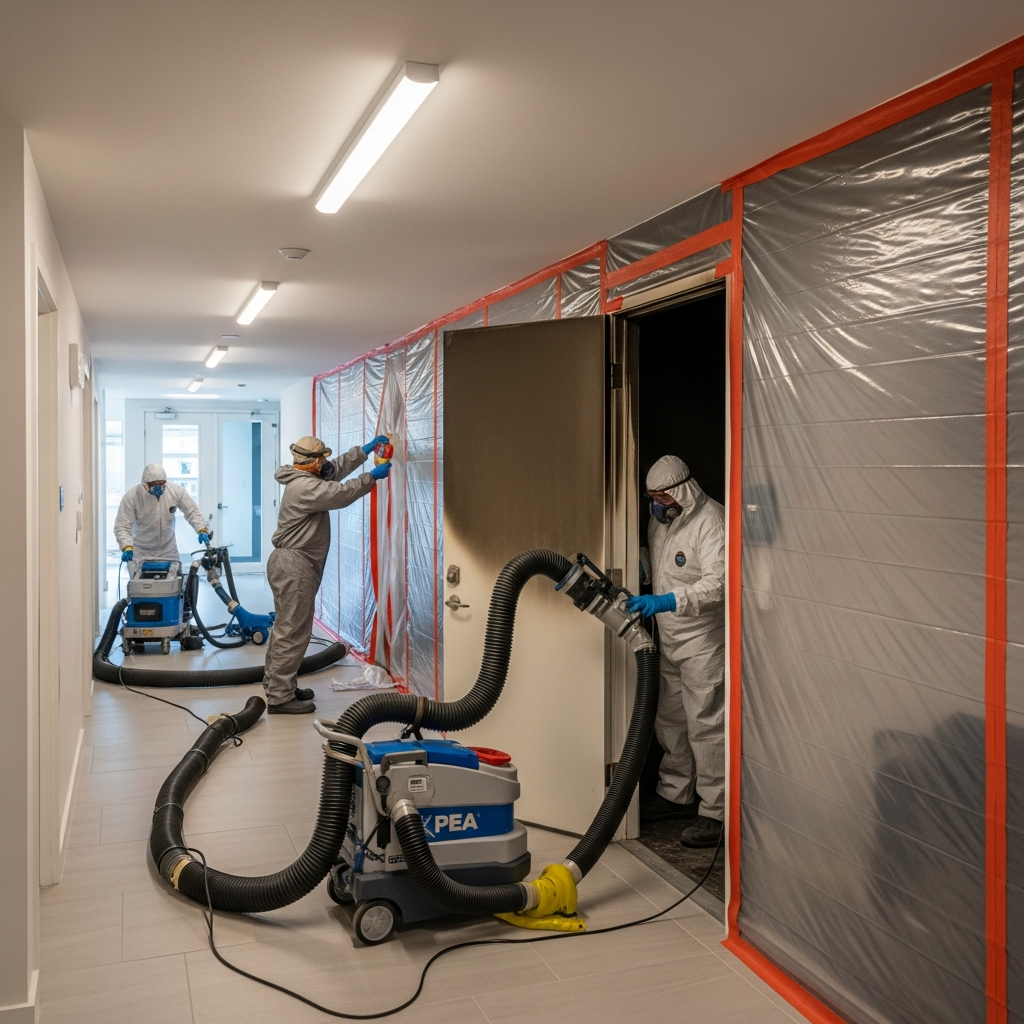
Malibu’s roads are narrow and neighborhoods intertwined. Dust control, staging, and respectful hours are essential, particularly when multiple homes are in recovery at once. Clear signage, tidy containment, and thoughtful coordination help preserve goodwill and keep access routes unobstructed for everyone.
FAQ
Q: Why does odor return after things looked clean?
A: Odor resurgence usually means residues remain in hidden areas or the HVAC redistributed particulates. Reassessing ductwork, returns, and porous items often reveals the source, which can then be addressed with targeted cleaning or replacement.
Q: Can I handle some cleaning myself?
A: Light dry cleaning in unaffected areas is fine, but in affected zones, DIY efforts can smear residues and drive them deeper. Professional sequencing—dry, then wet, then sealing—prevents these complications.
Q: How do I know if metal fixtures are at risk?
A: If you see haze or tiny pits forming, corrosion is underway. Early neutralization and protective treatment can arrest it. In coastal air, assume risk and act promptly.
Q: What about attic insulation?
A: Insulation near vents can trap ash and odor. Localized removal and replacement, along with improved vent screening, often resolves persistent smells from above.
Q: How long should drying take after suppression?
A: It depends on materials and conditions, but with proper dehumidification and airflow, structures typically stabilize within days to a couple of weeks. Moisture mapping guides decisions about what can be dried in place versus removed.
From Issues to Answers
Every Malibu home tells a slightly different story after a fire, but the issues are familiar—and solvable—when you know where to look and how to respond. Start with an honest assessment, stabilize the environment, and work through the details with a team that understands coastal living. When you are ready to turn knowledge into action and want a partner attuned to Malibu’s nuances, reach out through keyword. With the right focus, common problems become manageable steps on the path back to a safe, clean, and welcoming home.