Running a business in Malibu demands agility. Tourist seasons ebb and flow, marine weather has a mind of its own, and logistics along the Pacific Coast Highway can turn on a dime. When a fire or heavy smoke disrupts operations—whether in a restaurant near the pier, a boutique off Cross Creek, or a studio tucked into a canyon—every hour counts. Commercial restoration isn’t simply about cleaning surfaces; it’s about orchestrating a return to productivity that preserves brand reputation, safeguards staff and customers, and protects the investments you’ve made in space, equipment, and inventory.
Over years of supporting local businesses, I’ve seen how the right first steps can shave days or even weeks from downtime. Transparent planning, staged reopening strategies, and decisive coordination are the heartbeat of effective commercial fire damage restoration. When executed with precision, these projects reconnect you with your customers sooner, restore team morale, and prevent the slow bleed of lost opportunities that can follow a chaotic response.
Stabilization With Operations in Mind
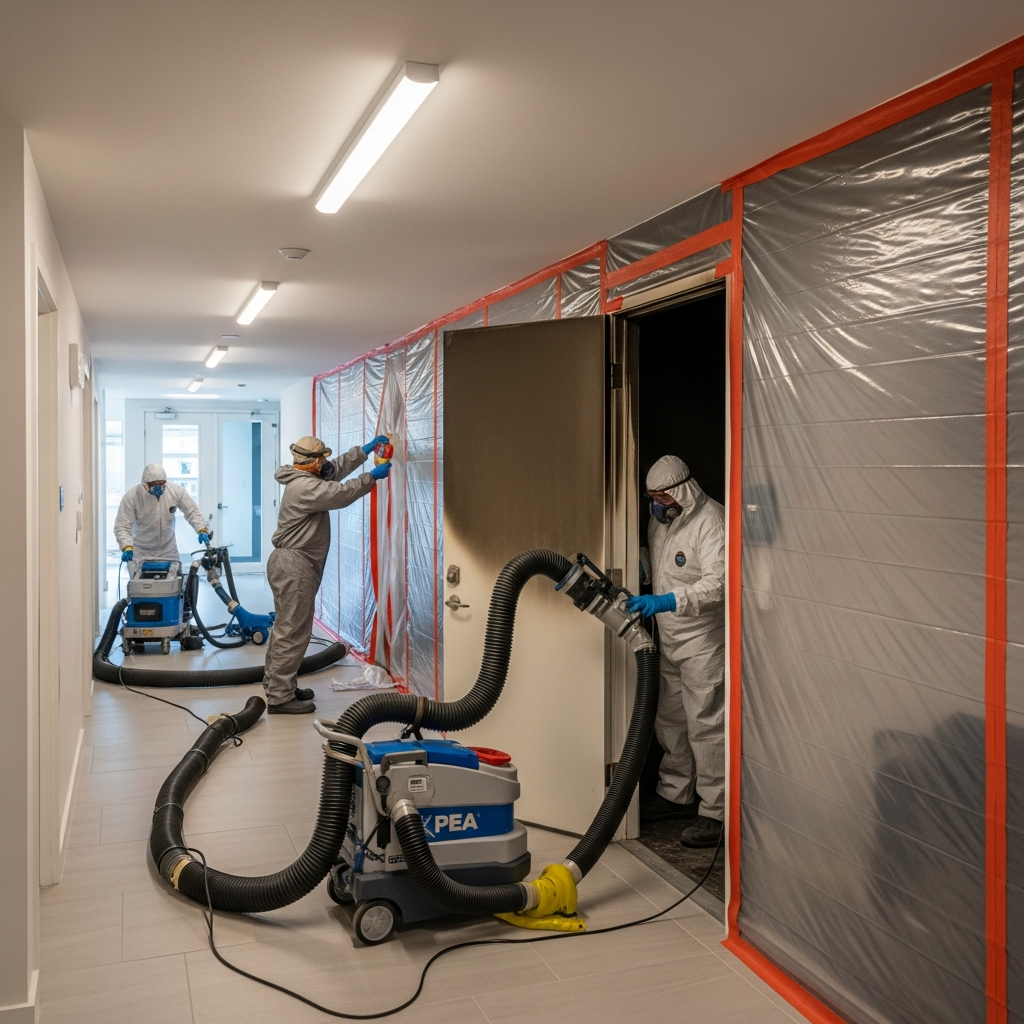
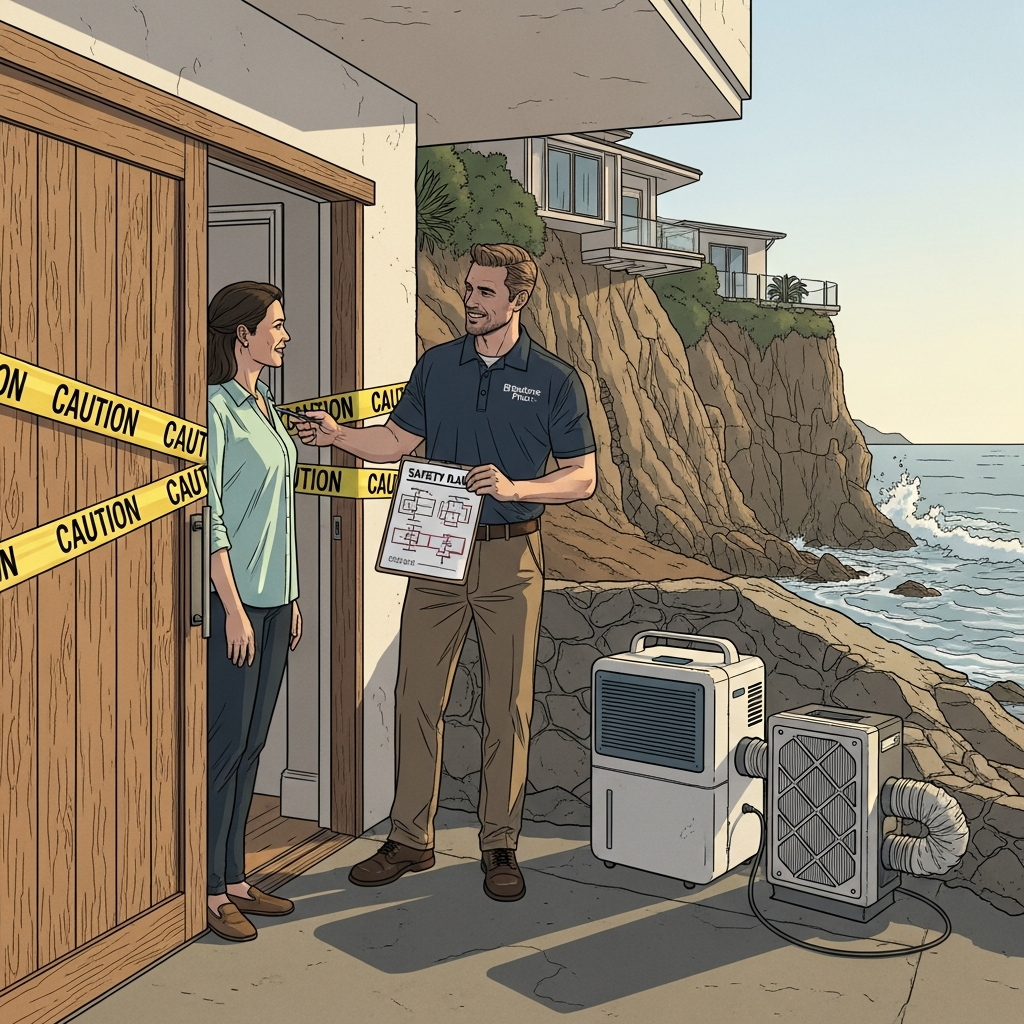
Commercial properties require rapid site stabilization that accounts for safety and continuity. Board-up and roof protection happen alongside early air filtration to create workable zones for assessments and limited operations when feasible. Access routes for deliveries and staff are preserved where possible, and sensitive areas—such as kitchens, stockrooms, or studios—are prioritized for triage and protection. Clear signage, controlled entry, and documentation reassure stakeholders and keep the process professional.
Business-Focused Assessment
An assessment for business isn’t just about damage; it identifies bottlenecks to reopening. For restaurants, that might be HVAC cleanliness, food safety considerations, and the condition of hood systems and finishes. For retail, it’s inventory integrity, point-of-sale equipment, and customer-facing surfaces. For offices and studios, it’s electronics, document preservation, and air quality. In Malibu’s coastal climate, we also consider salt exposure on metals and humidity interactions that can influence cleaning choices and timelines.
Cleaning Sequences That Support Reopening
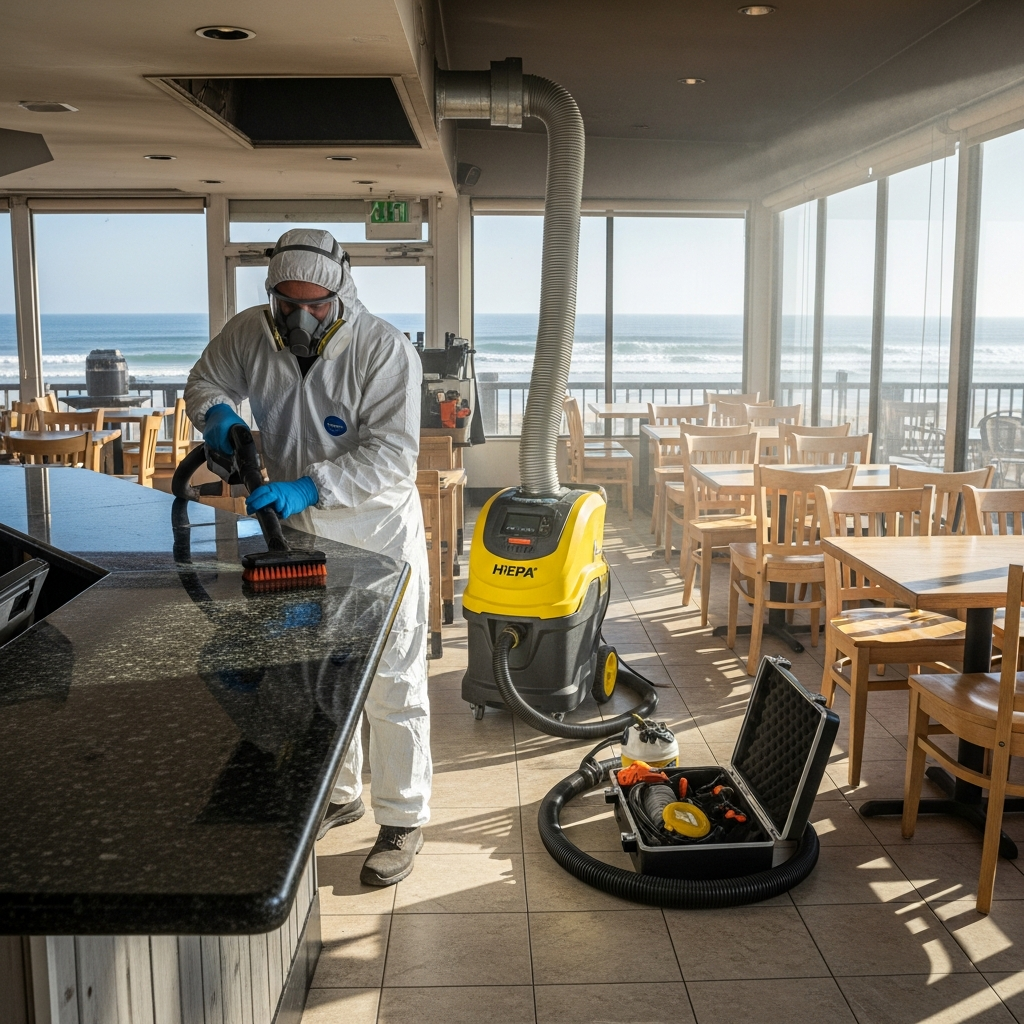
Cleaning is staged to align with business priorities. Public areas and revenue-generating spaces are addressed first, while back-of-house and storage zones follow in a managed sequence. Dry removal of soot, targeted wet cleaning, and layer-by-layer deodorization prevent re-soiling and reduce the chance of odors returning with the next onshore breeze. Verification gives decision-makers confidence to reoccupy spaces responsibly, one zone at a time.
HVAC, Electronics, and Sensitive Equipment
Commercial air systems often move large volumes of air through expansive ductwork. Addressing HVAC early protects indoor air quality and prevents recontamination of freshly cleaned zones. Electronics—from POS terminals to audio rigs and studio gear—need prompt evaluation, as soot plus humidity can accelerate corrosion. Decisions to stabilize, clean, or replace are supported by condition assessments, not guesswork, safeguarding critical operations.
Inventory, Fixtures, and Displays
Retail and hospitality spaces rely on the look and feel of their displays. Soot can dull finishes and embed unpleasant odors that turn customers away. Careful cleaning and deodorization bring luster back to fixtures and protect delicate materials like leather, fabrics, and natural wood. For perishables and sensitive stock, triage and documentation are key, allowing for swift decisions and minimal ambiguity in subsequent claims processes.
Clear Communication With Stakeholders
Owners, managers, insurers, landlords, and sometimes HOAs all have a stake in commercial projects. Regular updates, shared schedules, and photographic progress records keep everyone aligned. When scheduling constraints arise—night shifts to avoid daytime disruption, or quiet hours for neighboring tenants—coordination preserves goodwill and keeps the broader business community running smoothly.
Mid-Project Verification and Phased Reopening
As milestones are met, verification supports phased reopening. A front-of-house space might return to limited service while back-of-house areas continue under controlled work. Clear signage informs staff and visitors about what’s open and what’s in progress. This approach shortens downtime without compromising quality, and it’s exactly where specialized fire damage restoration experience proves invaluable.
Compliance, Documentation, and Confidence
Commercial properties operate under multiple layers of oversight. While specific requirements vary, thorough documentation—cleaning logs, verification data, and scope narratives—helps demonstrate due diligence. The goal is to pair craftsmanship with clarity so you can demonstrate to customers and partners that the space is not only open but also healthy and ready.
Design and Resilience Upgrades
During rebuild, businesses can weave resilience into aesthetics. Durable finishes that clean easily, improved ventilation at key points, smarter storage that keeps combustibles away from heat sources, and ember-resistant exterior details all support long-term stability. Malibu’s relaxed elegance shines brightest in spaces that feel effortless because their systems are working quietly in the background.
Team Morale and Customer Trust
How you respond to a setback becomes part of your brand story. Transparent updates, visible progress, and a timely, confident reopening renew customer trust. For teams, a clear plan reduces anxiety and restores momentum. A well-managed restoration isn’t just a repair—it’s a message that you care about quality, safety, and the community you serve.
FAQ: Commercial Fire Damage Restoration in Malibu
Q: How quickly can we resume partial operations?
A: It depends on the scope and layout, but with smart phasing, front-of-house or low-impact areas often resume limited operations sooner while deeper cleaning continues elsewhere. Verification ensures each reopened zone meets cleanliness and air quality goals.
Q: What are the top priorities for restaurants?
A: HVAC cleanliness, hood and vent systems, food-contact surfaces, and odor control come first, followed by finishes and guest areas. Sequencing these tasks correctly shortens downtime and protects brand reputation.
Q: How do you handle sensitive electronics and equipment?
A: Early evaluation guides stabilization and cleaning, reducing the risk of corrosion and performance issues. Decisions are documented so stakeholders understand the rationale for each step.
Q: Can customers tell if smoke damage was handled poorly?
A: Usually, yes. Lingering odor, hazy glass, and dull finishes undermine confidence. Thorough cleaning, deodorization, and verification create the crisp, neutral environment customers expect.
Q: How do you minimize impact on neighboring tenants?
A: Careful scheduling, containment, and communication keep corridors and shared systems clean and quiet. The aim is to be a good neighbor during a challenging time.
Q: What documentation should we expect?
A: Scopes of work, photo logs, verification results, and progress updates. These materials support decision-making and make external communications—for insurers, landlords, or stakeholders—straightforward.
Every business in Malibu thrives on connection—between owners and teams, brands and customers, and spaces and the sea. If fire or smoke has interrupted those connections, let’s restore them with purpose. We’ll prioritize the areas that bring revenue back first, coordinate with your stakeholders, and move step-by-step until the last detail meets the standard your customers expect. When you’re ready to turn disruption into a strong comeback, reach out for meticulous fire damage restoration that gets your doors open and your business humming again.