Fires do not keep business hours, and neither do the teams that care for Malibu homes when the unimaginable happens. Night or day, weekday or holiday, the need is the same: stabilize the property, protect what remains, and set a course for restoration that respects both the craft of building and the rhythm of our coastal neighborhoods. As someone who has met crews at midnight off PCH and watched dawn rise over a tarped roof in the canyons, I can say that true 24/7 readiness is as much about mindset as machinery. It is the discipline to arrive prepared, to communicate clearly in the dark, and to begin the work that will make tomorrow’s steps possible. The first call to experienced fire damage restoration professionals sets that tone and brings order to disorder.
After-hours operations have a distinct character in Malibu. Road conditions, marine fog, and wind influence safety plans. Quiet hours shape how generators are staged and where air filtration runs. Security matters more at night; securing openings and establishing safe perimeters is built into the first wave of actions. Through it all, the best teams preserve dignity—covering personal items before moving them, keeping lights directed and noise controlled, and communicating with neighbors or security at gates so everyone understands what is happening and why.
Arriving prepared at any hour
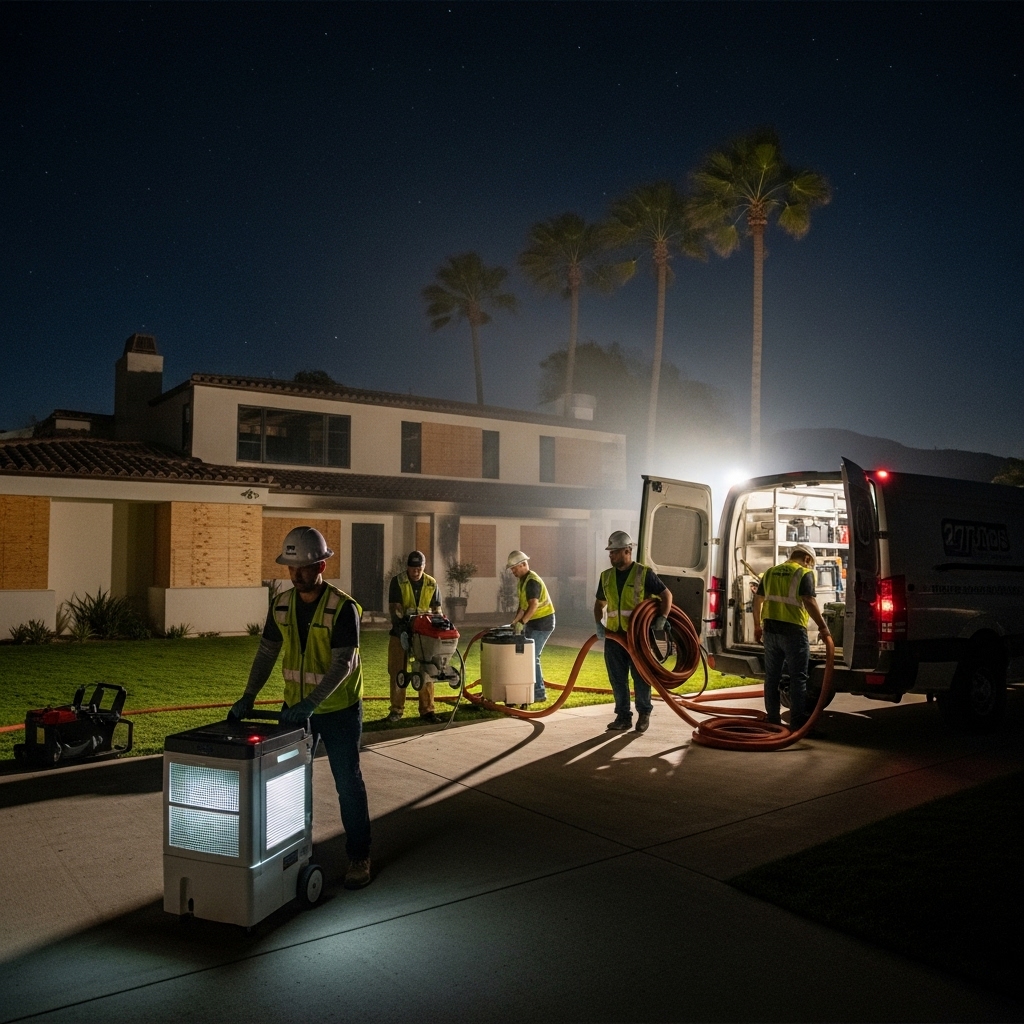
Twenty-four-seven capacity is not just a promise on a website; it is a system. Trucks are stocked with board-up materials, roof tarps, extraction and drying equipment, HEPA filtration, and corrosion control supplies. Crew leaders carry checklists that keep the sequence tight even when adrenaline is high. In Malibu’s varied terrain, readiness includes being able to reach hillside properties safely and to stage equipment without blocking narrow roads. A well-drilled team moves deliberately, documenting conditions and setting containment before the first wall is touched.
Working clean in the dark
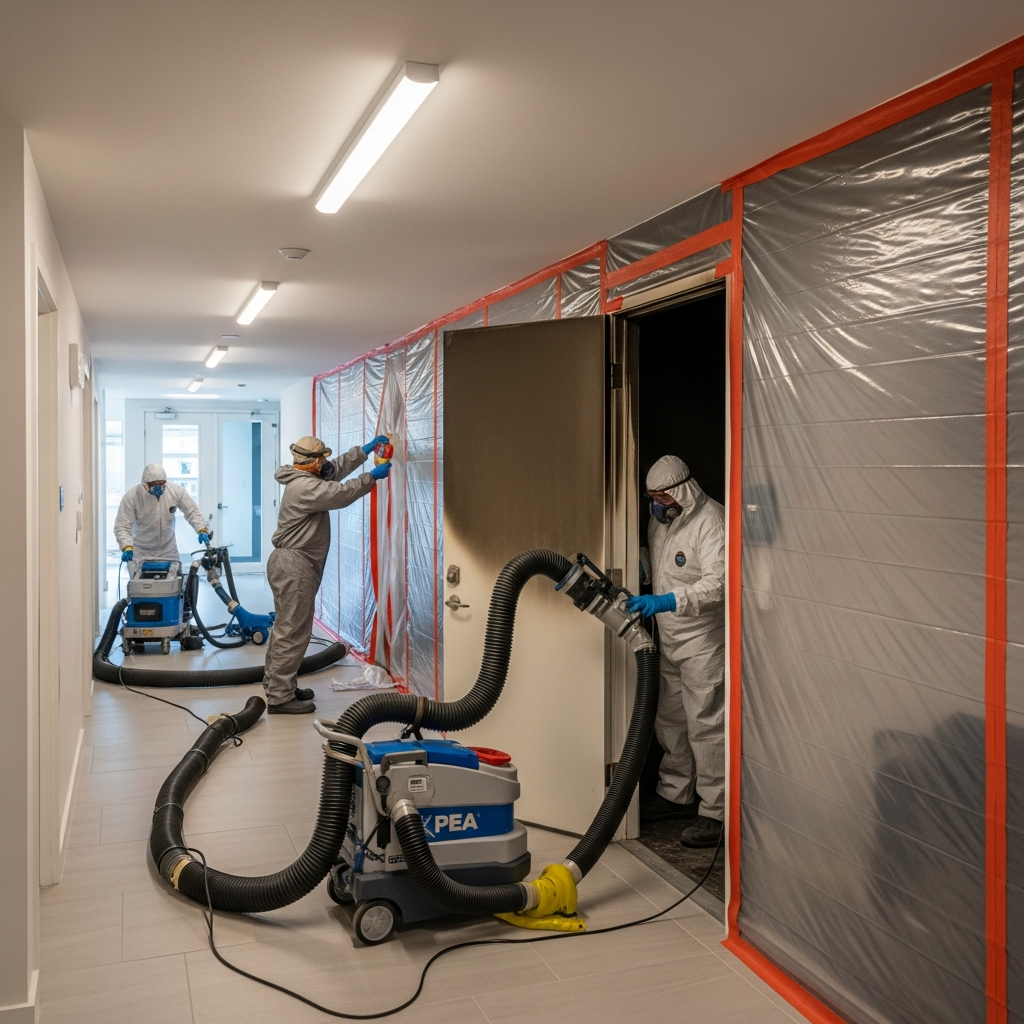
Night work demands extra care. Temporary lighting is positioned for safety and privacy, pathways are protected, and debris is handled quietly. Negative air and HEPA filtration help control particulate movement while doors and windows are sealed thoughtfully to maintain balance between ventilation and containment. On windy nights, roof tarping strategies adapt, using enhanced anchoring and coordinated work to minimize exposure. The objective is to do the critical work immediately without creating tomorrow’s problems tonight.
Technical depth on demand
True round-the-clock service means technicians who can make sound decisions in real time. That includes evaluating structural stability, making calls about temporary shoring, setting drying goals for water introduced by firefighting, and beginning corrosion control on metals and electronics. It also means understanding Malibu’s microclimates—the way marine air can reactivate residues and how canyon winds can move odors through spaces—and planning around those dynamics even when the sun is down.
Communication that steadies the process
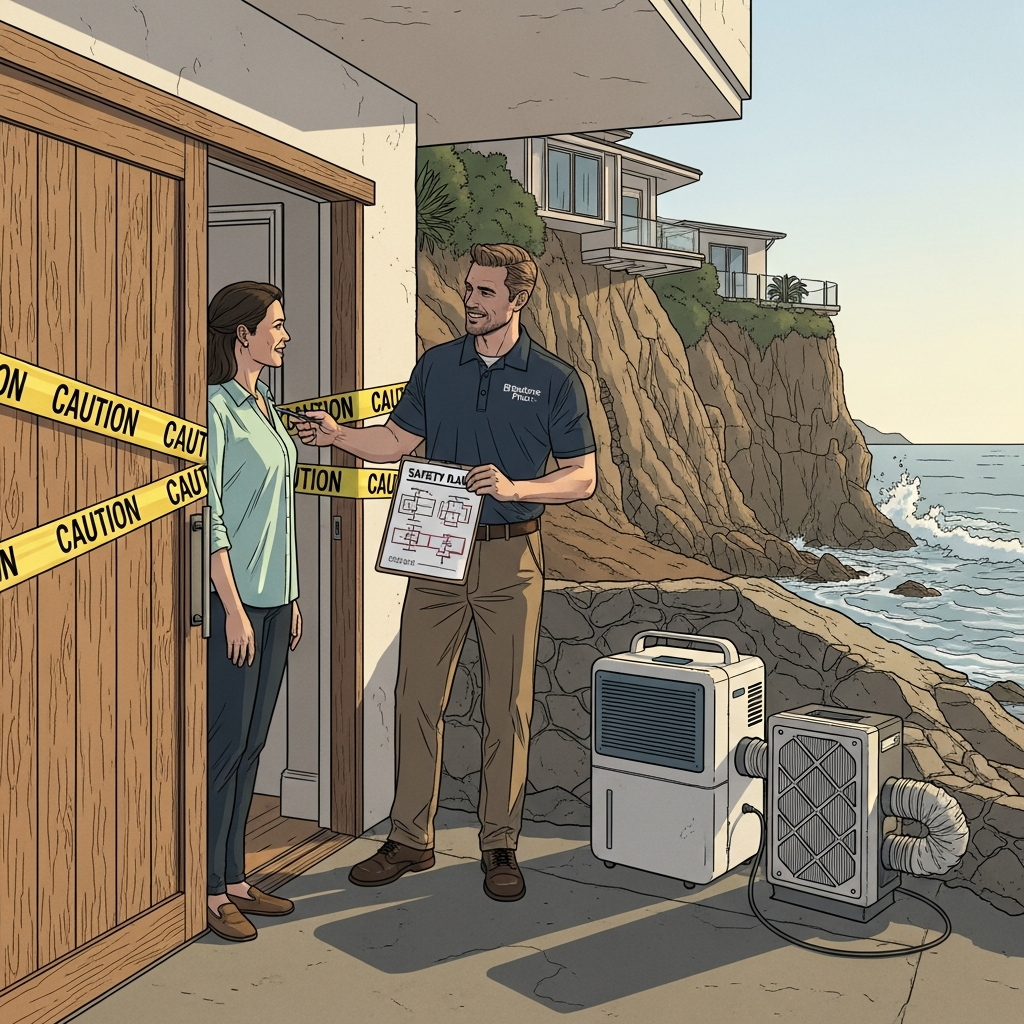
In the middle of the night, clarity is kindness. Good teams provide a simple briefing before work begins, outline the first objectives, and establish how updates will be delivered. They create a safe moment for you to identify urgent retrievals and then help you get them. As the work proceeds, they document with photos and notes, building a record that will matter in daylight when adjusters, inspectors, and families reconnect to evaluate next steps.
Continuity from night to day
What begins at 2 a.m. should carry seamlessly into the next phase by 2 p.m. The best companies plan for handoffs between shifts, so that the morning crew already knows what was done, what remains, and what has been observed. That continuity protects quality and momentum. It also respects neighbors and neighborhoods by preventing redundant site setup and minimizing traffic. In Malibu, where many communities rely on private roads, that kind of efficiency is part of being a good steward.
Midway through a restoration, homeowners often tell me that the turning point came when they could breathe easily again inside the home. That change is not accidental; it is the result of disciplined containment, filtration, and source removal that starts the very first night. It is also the moment to reassess. Are we meeting drying targets? Are odors diminishing as expected? Are discoveries behind walls being handled methodically? Having the right Malibu fire damage restoration partner means these questions get answered before you ask them, with data and clear plans for any needed adjustments.
Neighbors, HOAs, and the night shift
Respect for community rules is central to after-hours work. Crews coordinate with security at gated entries, park thoughtfully, and manage lighting to prevent glare into neighboring windows. If temporary power is required, generators are chosen and sited to meet noise expectations. Work areas are screened, and signage explains that emergency stabilization is underway. These measures honor the quiet of our evenings while recognizing the urgency that brings teams out at odd hours.
Safety without shortcuts
Night does not excuse haste. Personal protective equipment, fall protection, and lockout/tagout for compromised electrical systems are standard, not situational. Crew leads maintain a deliberate pace and pause to reassess when conditions change. The overtime mindset is replaced with the right-time mindset: do the important things now, set up the rest to be done well in daylight.
Preparing for rebuild during mitigation
Even during the night shift, rebuild begins in small ways. Finishes are cataloged and photographed, samples are captured where needed, and specialty trades are flagged for early involvement. Malibu’s custom homes often require lead times for certain materials, and early identification shortens the path back to normal. A company that thinks this way is not just doing 24/7 mitigation; it is doing 24/7 restoration.
Frequently asked questions
Is there anything I should do before the crew arrives after-hours?
Ensure your personal safety first and wait for clearance from the fire department. If you can, have identification and any essential documents or medications ready to retrieve with assistance. Once the team arrives, they will guide every step, from safety to stabilization.
Will nighttime work bother my neighbors?
Emergency stabilization can be performed with respect for quiet hours. Crews manage lighting, power, and noise prudently and communicate with neighbors and security when appropriate. The aim is to protect your home while also preserving community calm.
How is security handled overnight?
Openings are boarded or tarped, temporary fencing may be installed, and lock boxes or secure entry plans are established for returning crews and inspectors. Valuables are either secured on-site or inventoried and removed to a controlled facility based on your direction and the situation.
Does after-hours work change the overall plan?
No. It starts the plan sooner. Night operations focus on safety and stabilization so that daylight mitigation and assessment can proceed efficiently. Documentation from the night crew becomes the foundation for the next phase, reducing delays and miscommunication.
How quickly will the home feel livable again?
That depends on the extent of damage, but the earliest improvements come from air quality controls and targeted cleanup. Many homeowners notice a difference once HEPA filtration, containment, and initial source removal are in place, often within the first day or two.
Here when you need us, day or night
If you are facing a fire event at an inconvenient hour—and they all are—reach out to trusted professional fire damage restoration specialists who answer the call any time. The right team will steady the moment, protect your home, and carry momentum into daylight, so you can move forward with clarity.