When the Call Cannot Wait: Malibu’s After-Hours Fire Response
In Malibu, the hours right after a fire are a race against time. Smoke that lingers for a day can settle into porous materials for months; water from suppression can begin warping floors and feeding microbial growth within hours. The coastal breeze that makes summer evenings so pleasant also pushes soot into cracks you did not know existed. That is why 24-hour emergency response is not a luxury here—it is the standard that protects your home’s structure, your indoor air quality, and your sense of stability. The best outcomes begin with a calm, methodical arrival: safety checks, strategic containment, and a clear plan for the next twelve to twenty-four hours. If you are searching for dependable help after-hours, look for local fire damage restoration in Malibu that knows the terrain, the codes, and the urgency.
Late-night calls in Malibu often involve hillside properties, winding roads, and neighborhoods where access can be narrowed by response vehicles. A well-prepared emergency team anticipates this reality—preloading equipment for tight setups, confirming power availability, and planning for temporary lighting and ventilation even when utilities are compromised. The goal is simple: stabilize fast, prevent secondary damage, and set a clean, safe foundation for the days ahead.
The First Hour: Safety, Stabilization, and Strategy
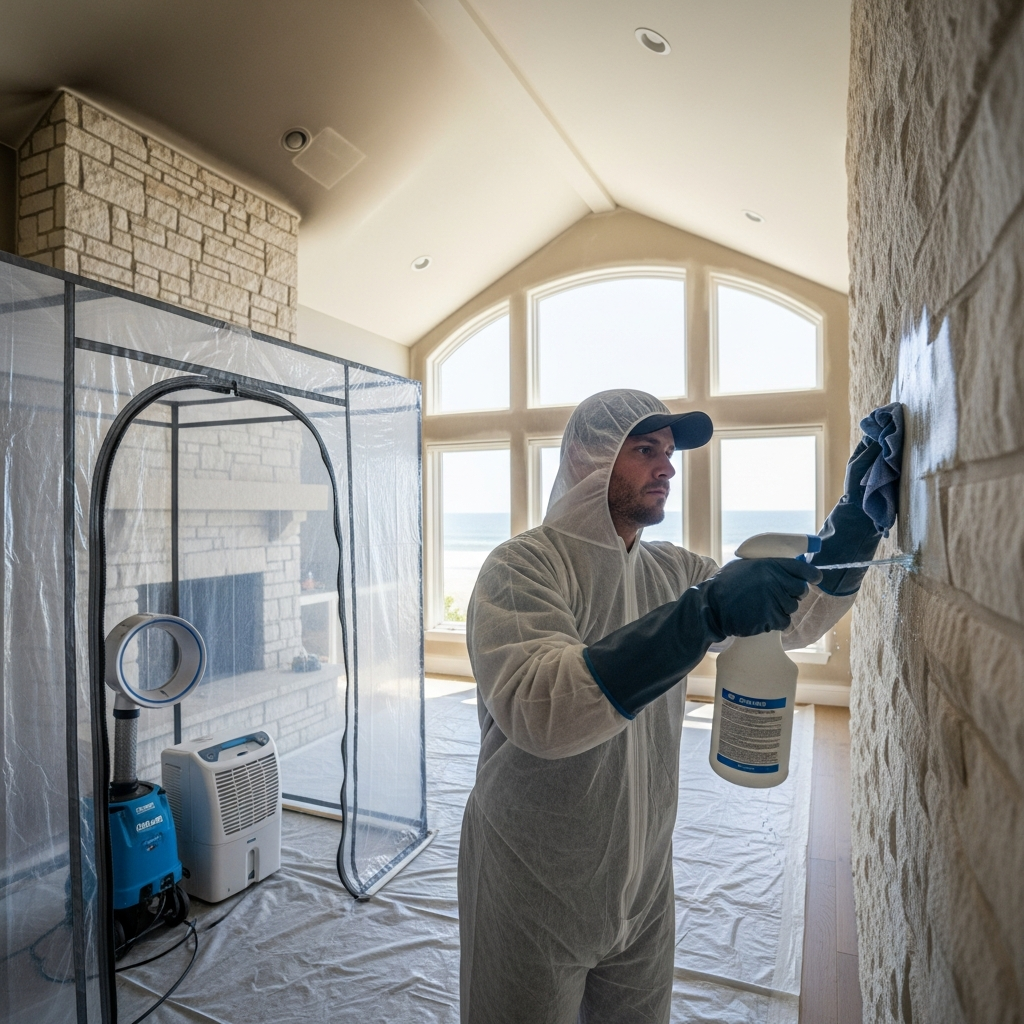
Every responsible emergency response starts with safety. Structural elements must be checked, utilities tested, and hazards marked. On arrival, technicians establish containment barriers that seal off unaffected areas, then deploy negative air machines to capture airborne particulates. Even in the dark, documentation begins—photos, moisture readings, and an initial inventory of contents. This creates a baseline for insurers and for the plan that will guide your project from chaos to order.
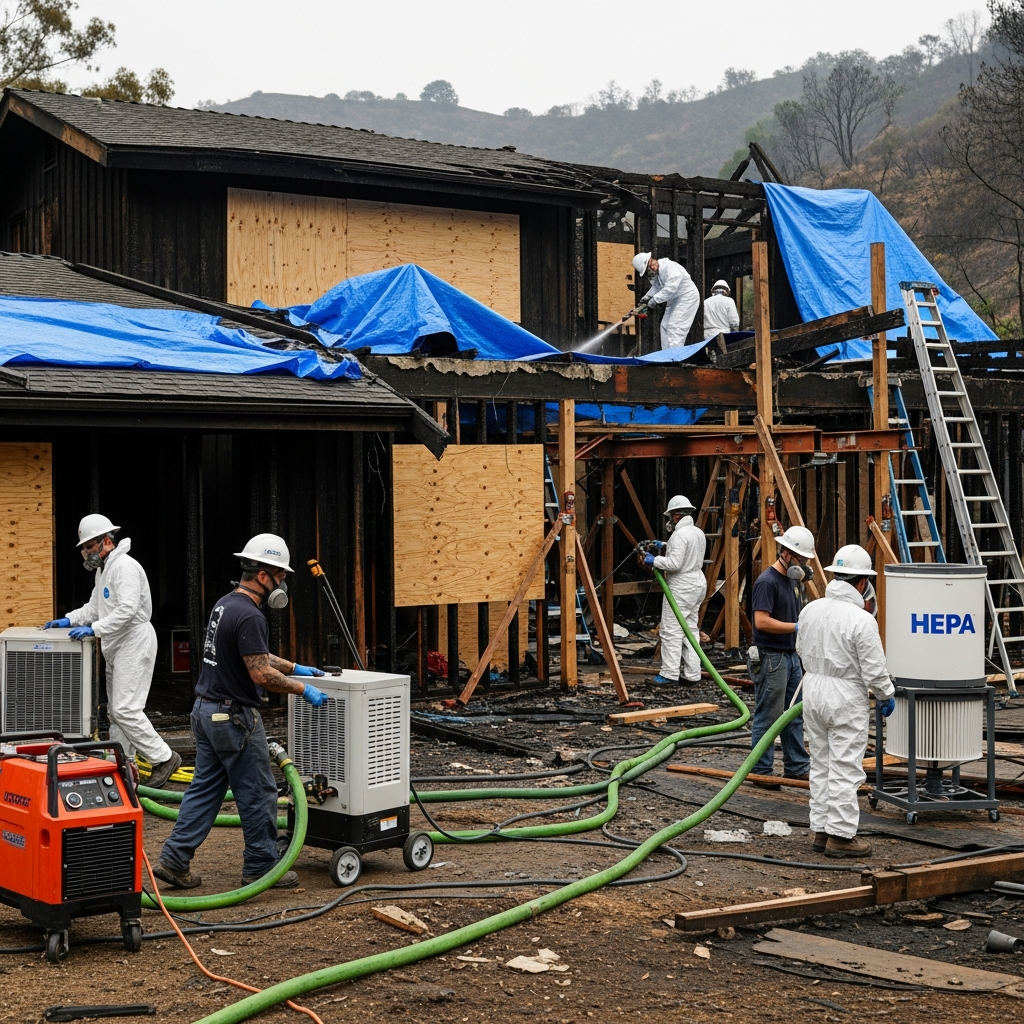
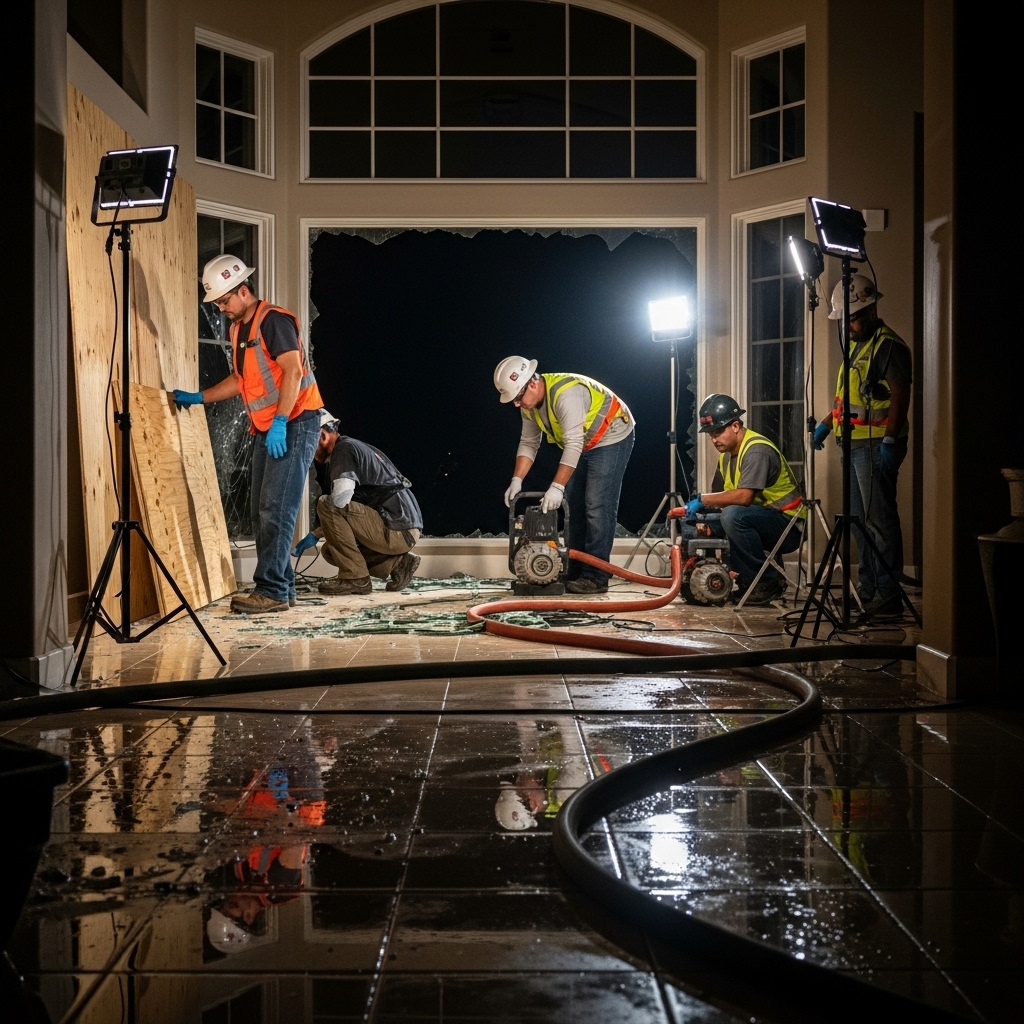
Board-up and property security often follow. Malibu’s coastal winds and canyon gusts can drive soot and ash into exposed spaces. Promptly securing windows, doors, and any roof openings reduces intrusions and protects contents. A licensed team also approaches water from suppression immediately, extracting standing water and deploying drying equipment calibrated to the property’s unique architecture and materials. Without this, wood floors can cup, cabinetry can swell, and odors become harder to neutralize.
Managing Smoke and Odor in a Coastal Climate
Smoke is a complex mixture of particles and compounds that behave differently depending on the source material and burn conditions. Protein smoke from a kitchen event clings stubbornly and can be invisible while producing strong odors; synthetic materials leave oily residues; natural materials produce dry soot that can smear if handled incorrectly. Malibu’s marine layer complicates this, pushing particulates into hidden cavities and spreading smells across open floor plans. The right emergency response isolates airflow pathways, sets up HEPA filtration, and begins targeted cleaning to prevent residues from embedding deeper. During this phase, a methodical approach prevents the frustration of re-odor that occurs when cleaning sequences are rushed.
Odor control is not about masking. It is about removing and neutralizing the source, then validating with clear air quality benchmarks. An experienced team will tailor cleaning solutions to material type, use dry methods before wet cleaning when appropriate, and treat HVAC systems thoughtfully, confirming when ducts need cleaning versus when filtration alone can suffice. These early choices affect the entire project timeline and the comfort of any occupants who remain on site.
Coordination With Insurers and Inspectors—Even After Hours
Good emergency responders do not wait for business hours to start meaningful documentation. They assemble clear notes, photographs, and readings that help adjusters see what happened and why certain actions were necessary. In Malibu, where homes often include custom finishes, these details matter. Showing the extent of smoke migration, the presence of moisture in cavities, and the protective measures installed overnight sets the stage for smoother approvals in the coming days. A transparent paper trail, established from the first hour, is your best ally when decisions later hinge on what was done early.
Inspectors and utility providers may also be involved. If gas needs to remain shut off or electrical systems require evaluation, a knowledgeable team will coordinate the next steps and line up the right specialists. In a fast-moving situation, having a single point of contact simplifies a complicated moment.
Contents Protection and Pack-Out
One of the most overlooked aspects of emergency work is the handling of belongings. In Malibu, family collections, instruments, and specialty furnishings are common. A seasoned team triages contents, separating salvageable items for stabilization and arranging pack-out for sensitive materials that need controlled conditions. Textiles might head for specialized cleaning to stop odor absorption; electronics may be slated for evaluation to prevent corrosion; documents and art are handled gently, labeled, and tracked. Good chain-of-custody practices prevent losses and ensure that what matters to you returns in order, not chaos.
During these steps, homeowners benefit from regular updates. Even at 3 a.m., knowing what is secure, what is drying, and what comes next brings relief. Emergency restoration is not only technical—it is about clarity during a stressful time.
Adapting to Malibu’s Power and Access Challenges
Power shutoffs associated with fire weather events are part of life here. A reliable 24-hour team plans for temporary power when needed, positions equipment to function efficiently, and schedules check-ins to adjust settings as conditions change. In hillside neighborhoods, equipment placement must respect access routes and noise considerations. These logistics matter. They determine how quickly environments stabilize and how well neighbors coexist with necessary activity during off-hours.
Waterfront and canyon microclimates also influence drying and odor control strategies. Coastal humidity affects dry times; canyon winds can redistribute fine soot if containment is not robust. Teams familiar with Malibu adapt their approach accordingly, protecting your progress from local variables.
From Emergency to Restoration
The handoff from overnight stabilization to full restoration is seamless when the same team documents and executes both phases. After the first day, the focus shifts from triage to detail: material-specific cleaning, selective demolition of unsalvageable components, deeper odor remediation, and preparation for repairs. By this point, you should have a clear, phased plan and a communication rhythm that keeps you informed without overwhelming you. Midway through, it helps to check your initial goals against current results, confirming that the home’s air feels fresher, visual residues are diminishing, and sensitive rooms remain protected. If you discovered your provider by searching for trusted fire damage restoration in Malibu, this is where their local experience proves its worth.
Expect your team to talk openly about what can be cleaned versus what should be replaced, and why. This is where both scientific testing and aesthetic judgment come together, especially with high-end finishes. A balanced approach respects budgetary realities while safeguarding long-term durability and indoor air quality.
Care for Health, Home, and Routine
Emergency restoration can be intrusive, but it should never feel chaotic. The right company aligns work hours, staging, and noise with your household’s needs. They will create safe access routes, clarify when areas are off-limits, and offer guidance on returning to partial occupancy when appropriate. In Malibu, where many properties serve as both residences and creative workspaces, balancing urgency with privacy is essential.
As the days progress, post-cleaning verification brings confidence. Air scrubbers are removed methodically; containment barriers come down when it is safe; and rooms return in a sequence that matches how you live, not just how crews prefer to work. That sense of order is the hallmark of professional care.
Frequently Asked Questions
Q: What should I do immediately after a fire before the team arrives? A: Ensure everyone’s safety, limit foot traffic, avoid touching soot-covered surfaces, and do not run HVAC systems. If safe, open windows slightly to ventilate, but only if advised by professionals.
Q: Can emergency crews start work even if the power is off? A: Yes. Teams plan for temporary power and lighting and will adapt drying and filtration strategies to current conditions.
Q: How quickly can odors be reduced? A: You should notice improvement within the first twenty-four to forty-eight hours as source materials are addressed, residues are removed, and air filtration runs continuously.
Q: Will emergency work affect my insurance claim? A: Documented emergency actions protect your home and often prevent larger problems. Clear reports and photos help adjusters validate the necessity of each step.
Q: Can I stay in the home during emergency mitigation? A: It depends on safety, air quality, and the availability of contained living areas. Your team will advise based on measurements and practical considerations.
Q: How are valuables handled overnight? A: Crews secure accessible points, photograph and label items, and arrange pack-out for sensitive belongings that require controlled conditions.
If you are facing the aftermath of a fire right now, do not wait for morning. Call a team that can stabilize tonight and guide tomorrow. Begin your recovery with professionals who deliver around-the-clock care and proven fire damage restoration in Malibu tailored to our coast and canyons.